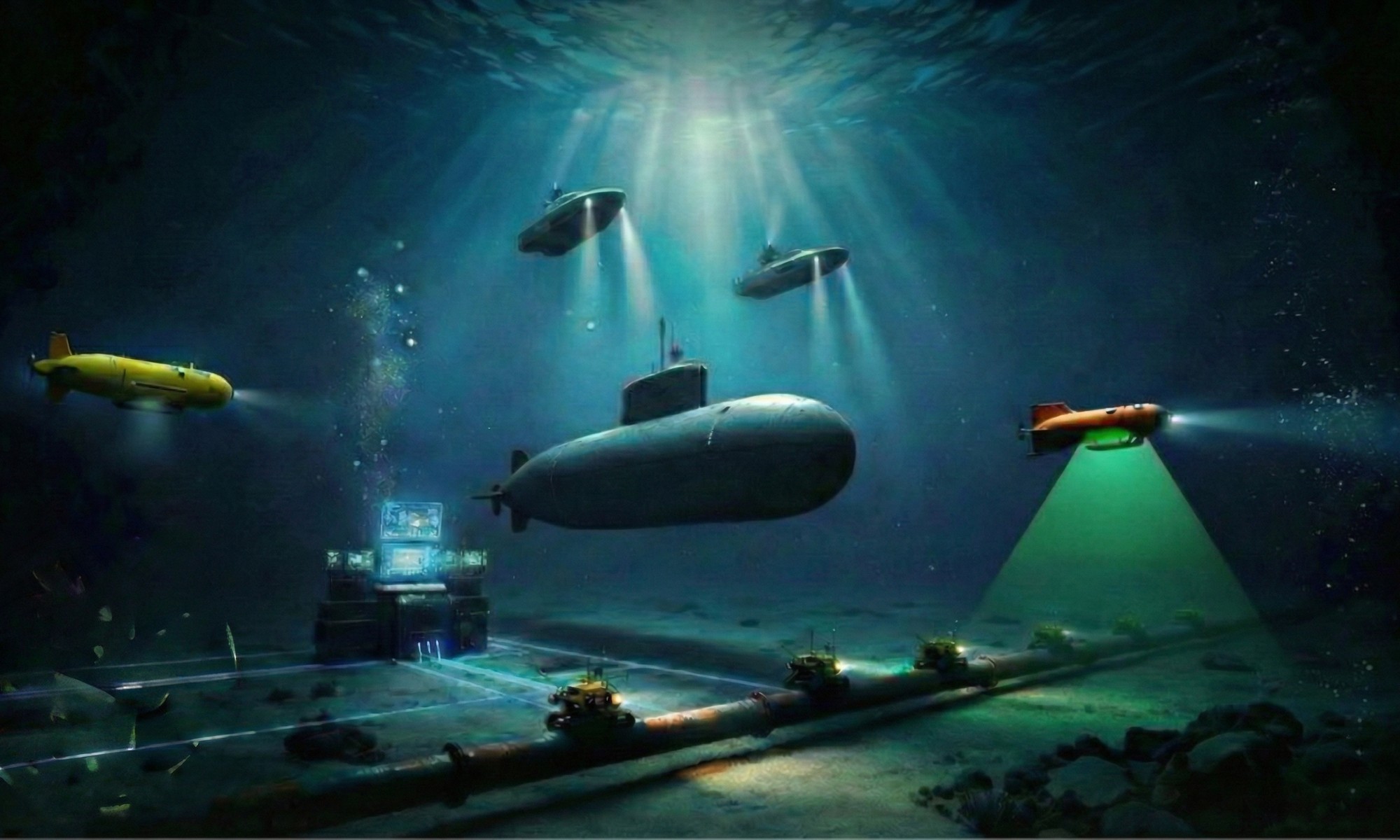
Strategic Ping: XPONENTIAL 2026 and the End of Autonomy Theater

Executive Summary

XPONENTIAL 2026 in Detroit sent a clear signal: maritime autonomy is moving out of the demo tank and into operational reality. The most important story was not a flashy new unmanned hull. It was the hard infrastructure behind autonomy at scale: resilient navigation, assured PNT, communications, manufacturing capacity, sensor integration, and defense-linked logistics.

XPONENTIAL/AUVSI 2026 (credit Xponential)

For maritime operators, the question is changing. It is no longer, “Can we build an unmanned boat?” The real question is, “Can we trust it, scale it, protect it, navigate it under electronic attack, and plug it into real naval and commercial missions?” That is where the serious money, risk, and opportunity now sit.

Autonomy Is Growing Up

XPONENTIAL 2026 framed autonomy as something that must survive contact with the real world. Air, ground, and maritime platforms can no longer live as beautiful prototypes on a trade show floor. They need to operate in weather, traffic, clutter, contested spectrum, defense workflows, ports, chokepoints, and logistics chains.

That matters for the maritime sector because the ocean is a brutal test environment. Saltwater does not care about your investor deck. GPS can be jammed. Communications can disappear. Currents move the platform. Biofouling attacks the sensors. A harbor full of ferries, barges, fishing boats, pier structures, and confused humans is not a clean autonomy problem.

This is why Detroit was an interesting place for the conversation. The city brings manufacturing discipline, mobility thinking, cross-border logistics, and Great Lakes port activity into the autonomy discussion. Maritime autonomy needs exactly that kind of industrial reality check. We do not need more science projects. We need systems that can be built, maintained, deployed, and trusted.

Maritime Autonomy Enters the Defense Conversation

One of the more important signals was the visible presence of maritime autonomy in the policy and defense narrative. The USV Operational Outcomes panel, involving U.S. Navy and Japan Maritime Self Defense Force leadership, pointed directly toward distributed maritime operations and Indo-Pacific deterrence.

That is not a small detail. It means unmanned surface vessels are no longer being treated as exotic side platforms. They are being discussed as part of future force structure, distributed sensing, logistics, surveillance, and operational reach.

The co-location with the Michigan Defense Expo also mattered. It put USV, UUV, port security, coastal surveillance, and defense industrial base conversations in the same room. That is where maritime autonomy starts to become real. Procurement, production, sustainment, and operational integration are often less glamorous than a new hull design, but they decide whether the system actually reaches the fleet.

[Video: Scaling Maritime Autonomy]

The Real Technology Battle: PNT, Comms, and Trust

The strongest technical message from XPONENTIAL was simple: autonomy fails fast when navigation, timing, and communications fail.

Assured PNT in GPS-denied, spoofed, or jammed environments was front and center. For maritime and subsea systems, this is critical. A USV can carry the best sonar payload in the world, but if it cannot hold position, maintain track, understand its own location, or move data reliably, the sensor becomes an expensive passenger.

I have personal experience of this: my USVs were GPS spoofed by the Russian Navy during exercises in the Baltic.

For AUVs and ROVs, the challenge is even sharper. Underwater platforms already operate in a low-bandwidth, high-latency, navigation-poor environment. Add electronic warfare, contested ports, or defense operations, and the autonomy stack must become far more resilient.

The same applies to sensor fusion. Radar, EO/IR, AIS, sonar, inertial navigation, acoustic positioning, and mission software must work as one system. The platform is only the carrier. The capability comes from the payload, data pipeline, autonomy logic, and operator trust.

A USV is not the capability. A USV enables the capability.

The Provocative Takeaway

XPONENTIAL 2026 showed that maritime autonomy is entering its industrial phase. The winners will not be the companies with the most dramatic renderings of unmanned vessels. The winners will be the ones solving the boring, brutal problems: power, payloads, PNT, comms, production, cybersecurity, sustainment, and mission integration.

USVs and Mission Integration

For sonar and maritime autonomy professionals, this is the moment to pay attention. The future will not be decided by hull shape alone. It will be decided by what the platform can sense, how it navigates when GPS lies, how it communicates when bandwidth collapses, and whether the system can produce useful decisions instead of just more data.

The ocean does not reward hype. It rewards systems that work.

Call-To-Action

Please comment and provide your point of view so we all can learn from each other.


Originally published in the Strategic Pings ))) newsletter on LinkedIn on 2026-05-18. Subscribe there to get new editions first.

Strategic Pings: The Sonic Warrior Beneath the Waves

Executive Summary

The ocean is not silent. It never was. Long before humans invented sonar, marine animals had already mastered acoustic detection, deception, deterrence, communication, and, in some cases, outright sonic assault. Whales use sound as long-range sensors and social networks. Snapping shrimp generate cavitation shockwaves. Lobsters rasp warnings at predators. Crabs drum through the seabed. Cleaner shrimp clap to advertise services. Baleen whales sing across ocean basins, while human noise increasingly jams their acoustic world.

The provocative lesson is simple: nature did not copy sonar. Sonar copied nature. And in many ways, nature is still ahead of us.

The Ocean Was Never Silent

We like to call it the “silent world.” Beautiful phrase. Terrible acoustics.

Anyone who has ever listened through a hydrophone knows the truth. The ocean is not quiet. It crackles, booms, clicks, rasps, whistles, sings, snaps, and occasionally sounds like someone dropped a frying pan into a submarine cable trench.

[Video: Physics of Acoustic Warfare]

In water, sound is king. Light disappears quickly. Radio waves are mostly useless. Smell is slow. But sound travels. It bends with temperature and salinity. It reflects from the seabed. It finds prey, mates, rivals, and danger.

Before navies, survey companies, and offshore operators filled the ocean with pings, propellers, echosounders, seismic guns, and thrusters, marine animals had already turned sound into a survival tool. Some use it as radar. Some as a password. Some as a warning. And some use it as a weapon.

Underwater Sonic Warriors

The Sperm Whale: The Deep Ocean’s Heavyweight Sonar

The sperm whale is not just a whale. It is a biological acoustic weapons platform with a digestive system.

These animals dive into the dark ocean and use powerful clicks to hunt squid at depths where sunlight is irrelevant. Scientific work has measured sperm whale clicks at apparent source levels above 230 dB re 1 μPa peak-to-peak at 1 meter. That is not whale poetry. That is serious acoustic power.

Toothed whales, including dolphins, orcas, and sperm whales, use clicks to navigate and identify objects. NOAA describes whale clicks as a way to identify physical surroundings, distinguish objects, and communicate socially.

The strategic point is obvious. Echolocation is not “animal noise.” It is active sonar, refined by evolution, packaged in blubber, and powered by fish.

The Snapping Shrimp: Small Body, Violent Physics

Then we have the snapping shrimp. Tiny animal. Ridiculous acoustic signature.

This little crustacean closes its specialized claw so fast that it creates a high-speed water jet. That jet forms a cavitation bubble. When the bubble collapses, it produces a shockwave and even a flash of light. Nature reported that the collapse indicates pressures and temperatures of at least 5,000 K inside the bubble.

Think about that. A shrimp does not need electronics, batteries, firmware updates, or a NATO stock number. It uses a claw, water physics, and bad attitude.

For sonar people, snapping shrimp are more than a curiosity. In shallow tropical waters, they can dominate the acoustic background. To us, it is clutter. To them, it is lifestyle.

The Spiny Lobster: Acoustic Deterrence

Not every sonic warrior attacks. Some simply say, “Back off.”

Spiny lobsters produce warning sounds using a stick-slip mechanism, similar in principle to a bowed string. Nature reported that this allows them to produce strident warning sounds against predators, even during vulnerable molting periods when their armor is soft. (Nature)

That is elegant engineering. When the armor is weak, increase the acoustic signature. In defense terms, it is deterrence by noise.

And the signal is not trivial. Research on European spiny lobsters found source levels up to 167 dB re 1 μPa for larger animals.

Crabs and Cleaner Shrimp: Sound as Social Protocol

Crabs take a different approach. Fiddler and ghost crabs use rapping, drumming, and substrate vibration. They are not just making noise into the water column. They are using the seabed as a communication channel.

Cleaner shrimp are even more diplomatic. Some clap their claws to advertise cleaning services to reef fish. In one study, cleaner shrimp were more likely to clap when hungry, and clapping individuals were more likely to clean than non-clapping individuals.

In human terms, this is acoustic branding. In reef terms, it says: “Don’t eat me. I am the dental hygienist.”

Baleen Whales: Long-Range Communications Under Attack

At the other end of the scale are baleen whales. Blue, fin, humpback, and right whales use low-frequency sound for communication across enormous distances. NOAA notes that baleen whale frequency ranges overlap with vessels, seismic airguns, pile driving, and echosounders. Human-made sound can mask calls and make it harder for marine mammals to hear each other.

NOAA also uses behavioral disruption thresholds of 120 dB rms for continuous noise and 160 dB rms for impulsive noise in marine mammal assessments.

Here is the uncomfortable part. We often talk about protecting marine life by reducing plastic, spills, and habitat damage. All valid. But we rarely talk enough about acoustic habitat.

For many marine animals, sound is not background. It is their primary sensor.

The Strategic Ping

The ocean is not silent. It is a contested acoustic battlespace.

Whales run biological sonar. Shrimp fire cavitation shockwaves. Lobsters use acoustic deterrence. Crabs drum through the seabed. Cleaner shrimp advertise with sound. Baleen whales operate long-range communication networks that we are increasingly jamming.

So maybe the real lesson is this:

We did not invent underwater acoustics. We industrialized it.

And before we get too proud of our transducers, beamformers, and signal processing, remember this: somewhere on a reef, a shrimp is stunning prey with a bubble. No software license required.


Originally published in the Strategic Pings ))) newsletter on LinkedIn on 2026-05-11. Subscribe there to get new editions first.

Strategic Pings: From Single Beam to Synthetic Clarity

Executive Summary

Side scan sonar has evolved from a military seabed reconnaissance tool into one of the most important technologies in underwater survey, mine countermeasures, offshore energy, archaeology, and critical infrastructure protection. The journey is not just about prettier sonar pictures. It is about better decisions.

The evolution is clear: single beam side scan made the seabed visible. Multi-beam side scan, represented by systems such as the Klein 5000, improved coverage, resolution, and survey efficiency. Newer high-speed multi-beam systems such as the Klein 5900 push that concept further, enabling rapid wide-area search at operationally useful speeds. Then comes the next leap: synthetic aperture sonar, with systems such as Kraken KATFISH, delivering near-photographic seabed imagery with high and consistent resolution across the swath.

The provocative truth is simple: traditional side scan still matters. But vague seabed imagery is becoming harder to defend.

The Evolution of Side Scan Sonar

Side scan sonar did not begin as a commercial survey tool. It began as a military necessity. After World War II, navies needed a better way to detect mines, inspect the seabed, and understand what was hiding in the acoustic shadows. Early systems were heavy, specialized, and built for defense laboratories rather than practical offshore crews.

But they introduced something revolutionary: an acoustic image of the seabed.

That changed everything.

[Video: Evolution of Sidescan Technology]

The classic starting point is single beam side scan sonar. It transmits one fan-shaped acoustic beam to port and one to starboard. As the towfish, hull-mounted system, or AUV moves forward, each ping paints a narrow strip of seabed. Line by line, the system builds an acoustic image. Strong returns appear bright. Shadows appear dark. Objects become visible not only because of what they reflect, but because of the shadows they cast.

This remains a powerful concept. Single beam side scan is relatively simple, robust, cost-effective, and still very useful for search operations, route surveys, archaeology, harbor work, and general seabed imaging.

Martin Klein - the "Father of commercial Sidescan", and his Klein 5000
Martin Klein – the "Father of commercial Sidescan", and his Klein 5000

But physics is not sentimental.

In traditional single beam side scan, along-track resolution is limited by beam width, range, altitude, ping rate, and platform speed. The farther out you look, the larger the acoustic footprint becomes. In plain English, the image gets softer with range. At higher speeds, ping spacing can also become a problem. Push too fast and you may lose coverage, smear details, or reduce classification confidence.

This is where multi-beam side scan entered the story.

The Klein 5000 is an important reference point. Instead of using one beam per side, the Klein 5000 V2 generates multiple adjacent, parallel sonar beams on each side while using beam steering and dynamic focusing. The result is sharper along-track resolution at higher tow speeds and full bottom coverage compared with what conventional single beam side scan can normally achieve.

Left: Old analog Sidescan Sonar - Right: Multibeam Sidescan Sonar
Left: Old analog Sidescan Sonar – Right: Multibeam Sidescan Sonar

That is a major distinction. Multi-beam side scan is not the same as a bathymetric multibeam echo sounder. A multibeam echo sounder is primarily designed to measure depth. A multi-beam side scan is primarily designed to create acoustic imagery, but it uses multiple side-looking beams to improve image quality, speed tolerance, and coverage efficiency.

The Klein 5000 showed that side scan could become more than a picture-making tool. It could become a high-productivity survey sensor.

Then came the next operational demand: speed.

Modern survey, defense, and mine countermeasure missions cannot always afford slow and careful lawnmower patterns. Sometimes the requirement is rapid wide-area search. Sometimes the platform is a USV. Sometimes the mission is moving faster than the survey department would prefer.

That is where systems such as the Klein 5900 become relevant. Klein describes the 5900 as an ultra-high-resolution side scan sonar with integrated gap filler sonar and co-registered bathymetry for high-speed MCM and surveillance missions. It is designed for survey speeds up to 12 knots while maintaining full bottom coverage, with embedded electronics and AI-enabled processing to support target detection and survey efficiency.

This matters because speed changes economics. It changes mission planning. It reduces vessel time. It increases area coverage. For unmanned systems, this is especially important. A USV without a productive sensor is just an expensive remote-controlled boat with good marketing.

Klein Mantis (replacement of Klein 5000)

But even high-speed multi-beam side scan still lives within the world of real aperture sonar. It is very good sonar. But the physical aperture of the array and the geometry of acoustic imaging still constrains it.

Then comes synthetic aperture sonar, or SAS.

SAS changes the processing philosophy. Instead of treating each ping as an independent image line, SAS coherently combines many overlapping pings as the platform moves forward. In effect, the motion of the vehicle creates a much larger “synthetic” array than the physical sonar itself. The benefit is dramatically improved along-track resolution, and more importantly, resolution that can remain far more consistent across the swath.

A strong practical example is Kraken KATFISH. Kraken describes KATFISH as an actively stabilized towed synthetic aperture sonar system. It uses articulated tailfins and an intelligent autopilot to compensate for towfish motion, supporting high-quality SAS data collection and large-area coverage. Kraken lists real-time constant SAS imagery resolution of 3 cm x 3 cm, post-processed resolution down to 2 cm x 2 cm, survey ranges up to 200 meters per side, and standard operating speeds of 4 to 10 knots.

Kraken KatFish Synthetic Aperture Sidescan Sonar

That is not just a prettier sidescan image. That is a different level of seabed intelligence.

With conventional side scan, range is the enemy of clarity. With SAS, range becomes less punishing. Small objects stand out. Shadows become sharper. Mine-like contacts become easier to classify. Pipelines, cables, debris fields, seabed scars, and infrastructure features become more interpretable.

For mine countermeasures, this can reduce uncertainty. For offshore energy, it can improve route and site assessment. For critical underwater infrastructure, it can support better change detection. For autonomy, it provides the kind of sensor output that automated target recognition systems actually deserve.

But let us be clear: SAS does not make traditional sidescan obsolete. That is too simplistic.

Graph showing performance vs price, with examples of each category of Sidescan Sonars

Single beam side scan remains valuable when cost, simplicity, and robustness matter. Multi-beam side scan remains highly relevant when survey productivity, coverage, and image quality must be balanced. High-speed multi-beam systems such as the Klein 5900/Mantis are powerful tools for defense, UXO, offshore, and rapid survey missions. SAS systems such as Kraken KATFISH (or THALES TSAS), sit at the premium end, where resolution, classification confidence, and wide-area seabed intelligence justify the added complexity.

Summary

The evolution of sidescan sonar is really the evolution of underwater understanding.

First, we learned to see the seabed. Then we learned to survey it efficiently. Now we are learning to classify it with confidence.

Detection is cheap. Understanding is expensive. And in the modern underwater battlespace, vague pictures are becoming a luxury we can no longer afford.

Call-To-Action

Please comment and if you have any questions, please feel free to message me.


Originally published in the Strategic Pings ))) newsletter on LinkedIn on 2026-05-05. Subscribe there to get new editions first.

Sea Air Space – Executive Summary

Sea-Air-Space 2026 marked a clear turning point for the maritime
defense industry. The main message was that naval innovation is moving
from experimentation to fielded capability. With more than 16,000
attendees, 57 countries, and around 430 exhibitors, the exhibition
showed that maritime power is once again central to global security,
deterrence, logistics, undersea infrastructure, and great-power
competition.

The key strategic theme was the emergence of a “Golden Fleet”
concept: a high-low force structure combining large, survivable
command-and-strike ships with distributed autonomous systems,
information warfare, and a more resilient industrial base. The proposed
BBG(X) battleship concept symbolized the return of mass, magazine depth,
electrical power, and survivability as decisive factors in future naval
warfare.

Autonomy was another dominant theme. Systems such as HII’s ROMULUS
USV, Saildrone’s 52-meter Spectre, Anduril’s Dive family, Ocean Aero’s
Triton, and General Atomics’ UUV showed that unmanned systems are no
longer side projects.

They are becoming operational fleet components designed for
persistence, reach, sensing, and distributed effects.

The exhibition also highlighted a shift in sensor strategy. While no
major new sonar launch stood out, the focus moved toward integrated
sensor architectures, layered torpedo defense, resilient navigation,
ISR, autonomy stacks, and combat-system integration. In short, the value
is no longer in the sensor alone, but in how it connects, processes, and
contributes to decision advantage.

The final takeaway is provocative but simple: the future fleet will
not be defined by one perfect ship, drone, or sonar. It will be defined
by integration, production scale, software speed, and operational
relevance. A platform without payload, data links, autonomy, and a real
concept of operations is no longer a capability. It is just expensive
displacement.


Originally published in the Strategic Pings ))) newsletter on LinkedIn on 2026-04-28. Subscribe there to get new editions first.

Strategic Ping: Sea-Air-Space 2026

The Fleet Is No Longer Waiting for the Future

Sea-Air-Space 2026 did not feel like a normal defense exhibition. It felt like the maritime industry being told, politely but firmly, that PowerPoint season is over.

The show brought together more than 16,000 attendees, 57 countries, and around 430 exhibitors. That scale matters. It shows that the maritime domain is no longer a specialist corner of defense thinking. It is central to deterrence, logistics, energy security, undersea infrastructure, and great-power competition. The sea is back on the strategic menu, and not as a side dish.

[Video: Video Overview of SAS 2026]

From Experimentation to Fielded Capability

The strongest message from the exhibition was simple: the era of experimental autonomy is ending. The era of fielded capability is beginning.

For years, naval autonomy has been filled with elegant renderings, controlled demonstrations, and carefully polished future roadmaps. At Sea-Air-Space 2026, the conversation shifted. The question was no longer, “Can it work?” The question became, “Can it be produced, integrated, updated, deployed, and sustained at scale before the next crisis removes the luxury of choice?”

That is a very different question.

The big strategic theme was the move toward what some are calling the “Golden Fleet”: a high-low maritime architecture built around large, survivable command-and-strike platforms, distributed autonomous systems, information warfare, and a more resilient industrial base. In plain English: big ships for power, unmanned systems for reach, software for speed, and distributed shipbuilding for volume.

The Return of Mass

The most provocative symbol of this transition was the proposed BBG(X), the so-called Trump-class battleship concept. Whether one loves or hates the idea of bringing back the capital ship, the logic behind it is worth understanding.

Modern naval combat is becoming a brutal equation of range, magazine depth, electrical power, survivability, and the ability to command distributed assets. Smaller platforms may simply not have enough margin for hypersonic weapons, directed energy, railguns, aviation capacity, and command-and-control all at once. At some point, physics becomes very impolite.

The BBG(X) concept is therefore less about nostalgia and more about volume. More displacement. More power. More weapons. More margin. The idea is to stop merely “swatting arrows” and start “killing the archer.” That phrase may be provocative, but it captures the strategic shift from defensive interception toward offensive sea-control dominance.

Autonomy Moves to the Production Line

But the show was not only about large combatants. In many ways, the more important story was autonomy moving from the marina to the production line.

HII’s ROMULUS USV program stood out because it represents exactly this shift. Four AI-enabled ROMULUS 151 vessels entering production is not just another unmanned surface vessel announcement. It is a signal that USVs are becoming fleet components, not science projects. The integration of Warship OS with Applied Intuition points toward coordinated autonomy, common control, and faster mission updates across multiple platforms.

HHI ROMULUS USV
HHI ROMULUS USV

Saildrone’s Spectre also attracted attention. At 52 meters, it pushes the USV category into a different conversation. This is not a small harbor demonstrator. It is a persistent, open-ocean platform with payload capacity, endurance, and strategic relevance. The direction is clear: uncrewed surface vessels are growing up.

Saildrone Spectre
Saildrone Spectre

Below the surface, the exhibition also confirmed strong momentum in UUVs and hybrid autonomous vehicles. General Atomics displayed its electromagnetic UUV. Ocean Aero showed its Triton autonomous underwater and surface vehicle. Anduril presented elements of the Dive-LD and Dive-XL family. HII reinforced its long position in the unmanned undersea market, including the continued relevance of REMUS after 25 years.

Sensors Are Becoming Systems

Interestingly, there was no major new sonar release at the event. For a sonar person, that is always a little disappointing. We like new shiny arrays. Preferably wet, expensive, and difficult to explain at cocktail parties.

But the absence of a dramatic new sonar launch does not mean the sensor story was weak. The sensor story was integration. Ultra Maritime highlighted layered torpedo defense. SBG and Honeywell showed navigation and inertial sensing products for autonomous platforms and high-vibration environments. Exail and Leonardo DRS focused on ISR, autonomy, and naval combat systems.

That is the real lesson. Sensors are no longer isolated boxes bolted onto platforms. They are part of a combat system, a data architecture, and increasingly an autonomy stack. A sonar without integration is just an expensive underwater microphone with good manners.

The Uncomfortable Truth

The information warfare discussion reinforced the same point. The IWRON construct moves intelligence, cyber, oceanography, and electronic warfare closer to the center of fleet operations. That is not bureaucracy. That is recognition that the next naval fight may be won or lost in the data layer before the first missile leaves the rail.

Sea-Air-Space 2026 showed a naval force in transition from elegance to mass, from experimentation to deployment, and from platform obsession to system integration.

The maritime future is not autonomous, manned, surface, undersea, or airborne.

It is integrated.

And anyone still selling “a platform” without the payload, software, data link, concept of operations, and production strategy is not selling the future.

They are selling a very expensive floating apology.


Originally published in the Strategic Pings ))) newsletter on LinkedIn on 2026-04-27. Subscribe there to get new editions first.

Strategic Pings – The Littoral Shadow

Why the Smallest Submarines May Be the Biggest Problem in Coastal Warfare

For decades, naval prestige has favored scale. Bigger submarines. Bigger combat systems. Bigger sensor suites. Bigger budgets.

But coastal warfare has never cared much about prestige.

In the shallow, noisy, cluttered waters where chokepoints, ports, shipping lanes, and critical infrastructure converge, the modern midget submarine is making a very uncomfortable comeback. Not because it is elegant. Not because it is glamorous. But because it is useful.

That is often how real threats work.

Small Hull. Big Strategic Effect.

A midget submarine does not need global reach. It does not need months of endurance. It does not need a brochure full of exquisite blue-water capability.

It only needs to survive long enough, in the right place, to create operational or strategic effect.

That is what makes these platforms dangerous. Their small size, low acoustic profile, and ability to operate in seabed clutter allow them to exploit what I would call the littoral shadow: the messy acoustic space of shallow water, coastal traffic, thermal variability, biological noise, and bottom reverberation where traditional anti-submarine warfare becomes far less elegant.

In blue water, detection theory looks clean. In the littorals, it often looks like a bad compromise.

And that is where these mini/midget submarines thrive, laying undetected on the sea floor.

An Old Concept That Never Really Went Away

The idea is not new. The Japanese Type A, British X-Class, German coastal mini-subs, and the Italian human torpedo program all proved during the Second World War that a very small undersea platform could achieve an effect wildly disproportionate to its size.

Harbor penetration. Mining. Ambush. Sabotage. Covert insertion. Strikes against capital ships in protected waters.

The details have changed. The logic has not.

What has changed is the modern operating environment. Today’s maritime battlespace is dense with coastal infrastructure, narrow straits, offshore installations, surveillance gaps, and political gray-zone activity. In that environment, small submarines are not relics. They are highly rational tools.

The Proliferation Chain Matters

This is not just a story of submarine design. It is also a story of proliferation.

Post-war Italian designs, particularly those associated with Cosmos, provided a technical foundation for compact littoral submarines. North Korea adapted elements of that small-submarine logic into classes such as the Yugo and later the Yono. Iran then followed with the Ghadir-class, which shares a very similar tactical philosophy and reportedly similar design lineage, while also expanding its undersea portfolio with the Nahang and Fateh classes (Ghadir is basically a stretched North Korean mini-sub). North That progression matters because it shows how a niche capability became a practical regional warfare tool.

North Korea helped demonstrate what a compact submarine could do in real conflict. Iran has taken that lesson and applied it to one of the most strategically sensitive maritime environments on earth: the Persian Gulf and the Strait of Hormuz.

North Korean Mini-Submarine

That is not a minor detail. That is the whole point.

The Ghadir-Class: Compact, Constrained, and Dangerous

The Iranian Ghadir-class is a good reminder that limited size does not mean limited lethality.

Because of space and weight constraints, the boat reportedly relies on a single hull-mounted passive sonar array operating in the medium-frequency range of around 1 to 10 kHz. That gives it a basic but operationally relevant ability for contact detection, target classification, and beamforming. No large towed arrays. No sophisticated sonar payloads.

But this is where people make the wrong comparison.

Iranian Gharid Mini-Submarine

The Ghadir should not be measured against a blue-water attack submarine. It should be measured against its intended operating environment: shallow, congested, tactically compressed waters where engagements are short, clutter is high, and reaction time is limited. As it is shallow water, there is a cut-off frequency, making long passive towed arrays useless.

Iran has also compensated for sonar limitations by fielding a modernized optical and electronic sensor suite. The submarine is reported to carry an advanced periscope fitted with thermal imaging, day and night television cameras, and a laser rangefinder, all feeding digital displays in the control room. It also features a mast-mounted short-range air search radar, giving it improved awareness of helicopters and aircraft while minimizing exposure above the surface.

That matters. In shallow-water operations, situational awareness is often more important than elegance.

The Weapons Fit Is Where It Gets Serious

The Ghadir-class is built around two 533 mm torpedo tubes, and that alone makes it a credible ambush platform in restricted waters.

It can reportedly deploy conventional heavyweight torpedoes such as the Valfajr, but the more provocative weapon is the Hoot supercavitating torpedo, intended to reach extremely high speeds and compress reaction timelines. Whether every published performance figure is fully reliable is almost beside the point. The tactical signal is clear. This platform is designed to create chaos at short notice.

More important still is the reported ability to launch submerged anti-ship cruise missiles, including the Jask-2, which gives the submarine a covert standoff strike option. Add the ability to lay naval mines, and the Ghadir becomes far more than a coastal nuisance.

It becomes a compact A2/AD tool.

Not a fleet submarine. A denial submarine.

And in the Persian Gulf, that distinction matters a great deal.

Why Sonar Specialists Should Pay Attention

From a sonar perspective, this is a very annoying target set.

Shallow water is unforgiving. Reverberation is high. Bottom interaction is messy. Shipping clutter is everywhere. Biological noise is rarely helpful. And a small submarine operating slowly, with low cavitation and limited need to expose itself, becomes difficult not only to detect but to confidently classify. If it sits on the sea floor, almost impossible to detect with standard ASW sonars.

That is the key issue.

Detection is cheap. Understanding is expensive.

A midget submarine sitting quietly in the seabed environment is not just hard to find. It is hard to confirm, track, and act against without wasting time, platforms, and decision bandwidth. That is exactly what a smart regional denial strategy wants.

This is why large-navies-with-large-sensors should not feel too comfortable. The littorals are where elegant ASW concepts go to have a very bad day.

The Real Counter: Persistence Beats Prestige

The answer is not simply more frigates, more helicopters, or more expensive crewed platforms rotating through the same waters.

The answer is persistence, 24/7 persistence.

Persistent monitoring with uncrewed surface vessels. Persistent subsea surveillance. Smarter seabed sensors. Better acoustic libraries. Better classification workflows. Better fusion between autonomous and crewed assets.

You do not beat the littoral shadow with occasional brilliance.

You beat it with systems that stay on station longer, listen better, classify faster, and make the water less forgiving for a boat trying to disappear.

That is where the future fight is heading.

Closing Statement

The smallest submarines are not dangerous because they outperform blue-water boats across the board. They are dangerous because they are optimized for the exact waters where many navies are least comfortable fighting.

Small hull. Short profile. Strategic consequences.

That is not yesterday’s threat. It is already here.

Please comment, so we all can learn from each other.


Originally published in the Strategic Pings ))) newsletter on LinkedIn on 2026-04-19. Subscribe there to get new editions first.