
Executive Summary
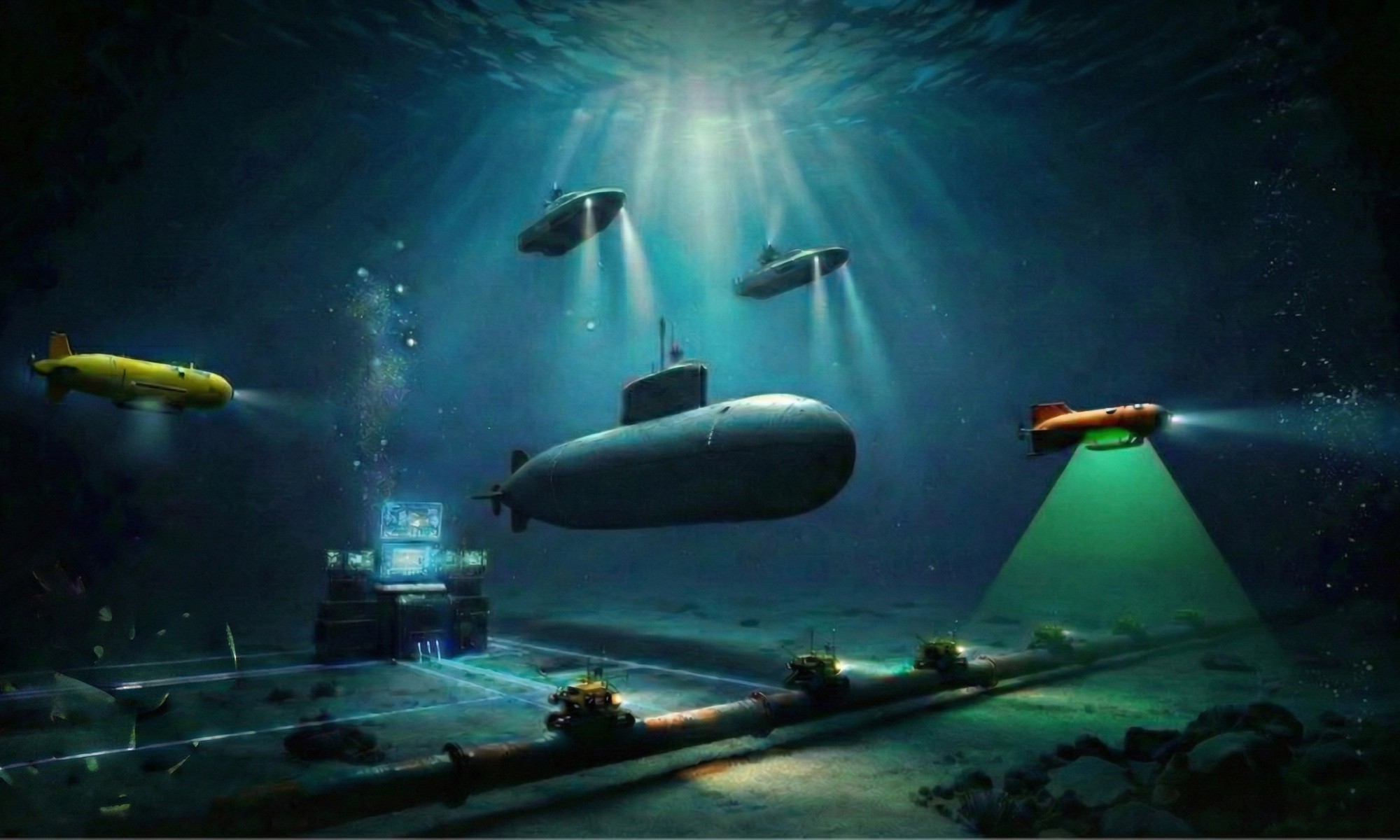
The next chapter of undersea warfare will depend heavily on what our platforms carry, how those payloads work together, and whether they deliver useful results at sea. AUKUS Pillar II is putting that challenge firmly on the agenda. For maritime decision-makers, the implication is clear: select the mission, platform, and payload together. Otherwise, we risk buying some exceptionally expensive underwater delivery vans—with considerable uncertainty about the delivery.
As an ex-submarine guy, I have a personal interest in Australia’s undersea future. I have visited Australia many times and supplied many sonar systems to the Royal Australian Navy over the years. This program touches both my professional experience and my enduring fascination with what happens beneath the waves.
It also touches a familiar industry weakness: we love a handsome hull.
Give us a sleek submarine, an autonomous vehicle, and a dramatic launch photograph, and we are practically reaching for the commemorative plaque.
The less photogenic questions deserve equal billing: What can it detect? What information can it deliver? Can its payload actually do the job?
The ocean remains stubbornly unimpressed by marketing.
AUKUS: Look inside the vehicle
Pillar I’s nuclear-powered submarines understandably dominate AUKUS headlines. Pillar II’s advanced capabilities deserve close attention from anyone making decisions about maritime technology.

On 30 May 2026, the AUKUS partners announced their first Pillar II signature project, focused on payloads and enabling systems for uncrewed undersea vehicles, with delivery starting in 2027. That places the equipment carried aboard these vehicles—and its ability to work across the partnership—at the center of capability development.

My reading is straightforward: the procurement conversation needs to move beyond vehicle specifications and into mission performance.
Range and endurance matter enormously. So do the sensors, processing, communications, and other mission equipment that make those miles worthwhile.
A vehicle can travel a very impressive distance while collecting thoroughly unimpressive information.
Commercial operators have already offered a lesson
Ocean Infinity’s use of multiple HUGIN autonomous underwater vehicles illustrates the value of operating several sensing platforms concurrently. Kongsberg documented this approach during the company’s 2018 search for MH370 and its subsequent survey work.
For defense, I see a useful principle: distribute the work, coordinate the assets, and design the information flow alongside the vehicles.
Calling everything a “swarm” adds excitement to a presentation. Making several vehicles produce reliable, usable results adds capability.
There is a substantial engineering gap between those two achievements. Occasionally, that gap has its own budget.
Excalibur makes the argument tangible
On 30 September 2026, the Royal Navy reported that its experimental uncrewed submarine, XV Excalibur, had successfully launched and controlled a US Navy Mk48 Mod 4 heavyweight torpedo during trials in Scotland.

The experiment used an inert, recoverable torpedo and required a specialist management system. It was an integration milestone within a continuing trials program.
That distinction matters. A successful demonstration provides evidence of what can work. Operational readiness requires further evidence that it works reliably under the conditions and constraints users will face.
Still, the significance is considerable: a British unbrewed platform carried and employed an American payload through deliberate integration.
That is a far more useful conversation starter than another artist’s impression.
The payload decision starts with the mission
The “underwater delivery van” analogy has limits. Hull design, endurance, survivability, and platform noise all influence mission success. Good payload selection respects those constraints from the beginning.

For crewed and autonomous platforms alike, I would put four questions on the table:
What decision must this mission support? Searching an area, examining an object, and monitoring infrastructure can demand different equipment and information.What environment must the payload handle? Depth, water conditions, background noise, and the operating area should shape the choice.What does integration really involve? Space, power, mounting, software, data interfaces, and maintenance belong in the initial discussion.How will the results reach the people who need them? Collection, processing, communication, and interpretation must form a workable chain.
“Compatible” deserves evidence. A connector that fits is an encouraging start; the sea trial is where the relationship gets serious.
Summary
The payload revolution gives us an opportunity to build more adaptable maritime capability across crewed and autonomous fleets. Realizing that opportunity requires disciplined choices about the whole mission.
My view: the organizations that connect operational needs, platform constraints, and payload performance early will get more value from their investment, and fewer unpleasant surprises offshore.
At Strategic Solution Incorporated, I help clients select the right payloads for crewed and autonomous maritime platforms, bringing submarine experience and years of supplying sonar systems to the discussion.
Planning a new platform or upgrading an existing capability? Message me here on LinkedIn to discuss your mission and payload options.
Let’s make sure your next impressive hull carries an equally impressive reason to be at sea.
Originally published in the Strategic Pings ))) newsletter on LinkedIn on 2026-10-06. Subscribe there to get new editions first.