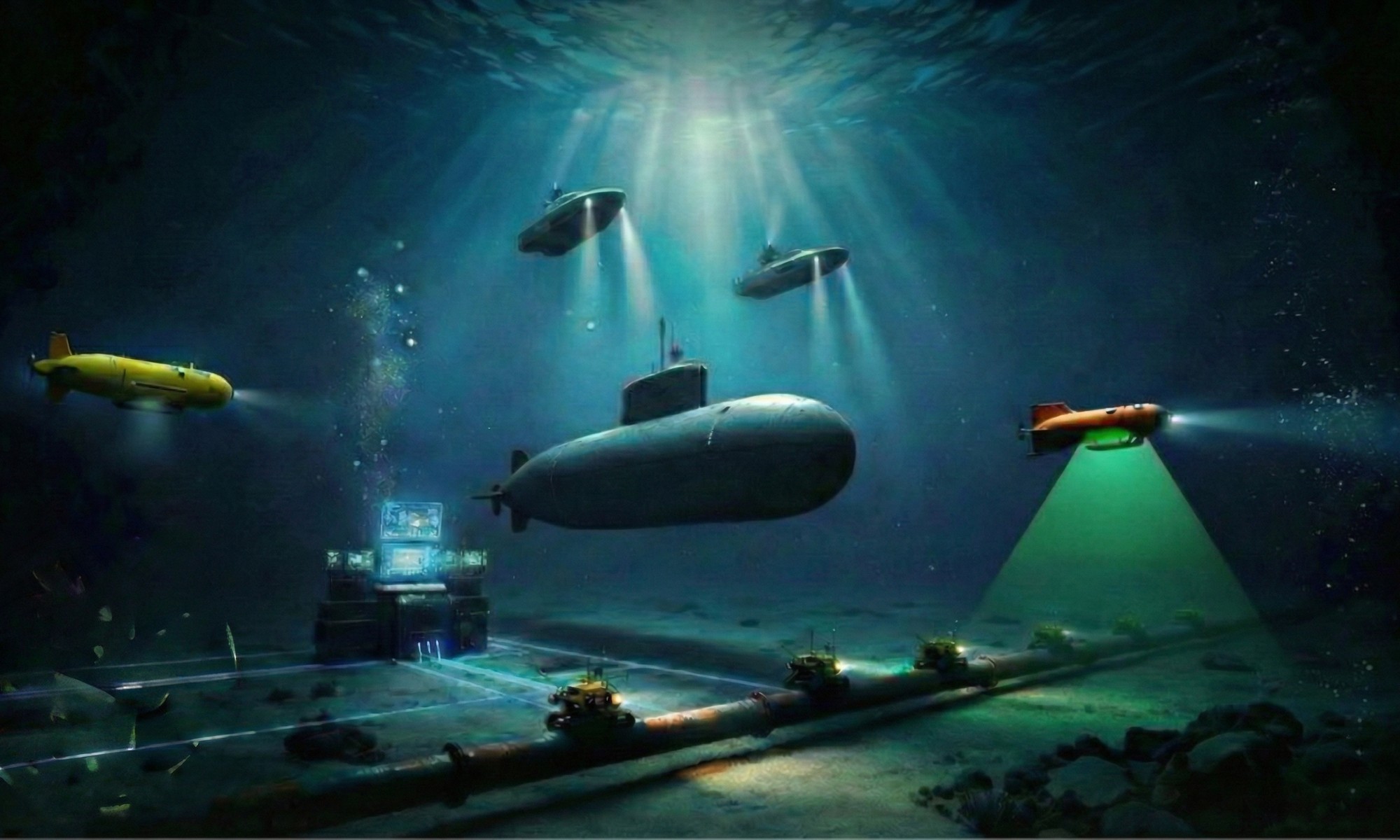
Strategic Pings: The Silent Battle for the Black Sea

Executive Summary

A naval mine does not need to sink a ship to succeed. It only needs to make a captain, port authority, or insurance company hesitate.

That is the logic behind the Mine Countermeasures Black Sea Task Group, created by Turkey, Romania, and Bulgaria. The agreement was signed in Istanbul on January 11, 2024, and the force became operational on July 1. It is not a standing NATO force, although all three participants are NATO members. It is a regional response built around local ships, local crews, and a very real drifting-mine problem.

Turkey provides the largest minehunting fleet. Romania combines Sandown-class sonar with REMUS autonomy. Bulgaria operates upgraded Tripartite minehunters with hull sonar, variable-depth ROV vehicles, and disposal ROVs.

The lesson is simple. Steel does not clear a shipping route. Confidence does. Sonar creates that confidence.

A Task Group Born from Necessity

The first activation included the Turkish support ship TCG Güngör Durmuş, the Aydın-class minehunter TCG Akçay, Bulgaria’s BGS Struma, and Romania’s Alexandru Axente-class minesweeper. Command rotates every six months, and ships change between activations.

By July 2026, the group had completed ten activations. Its mission was then expanded to include protection of critical undersea infrastructure. Mines, pipelines, power cables, and telecommunications routes occupy the same underwater battlespace.

Black Sea with MCM Naval Bases and Russian Naval Mine Threat

The Russian drifting-mine threat in the Black Sea is critical because a single mine can close shipping routes, delay grain and energy exports, raise insurance costs, and force navies to conduct slow, dangerous mine-countermeasure operations across a large area. Once a moored mine breaks free, currents can carry it far from the original minefield, threatening commercial ships, fishing vessels, ports, and coastal infrastructure in Ukraine, Romania, Bulgaria, and Turkey. The mines are difficult to track, cheap to deploy, and can create strategic disruption far beyond their actual number. Attribution also remains contested, with Russia and Ukraine accusing each other, but the operational effect is the same: uncertainty alone can restrict maritime traffic and weaken confidence that vital sea lanes are safe.

Detonation of a Naval Mine in the Black Sea

Sonar is therefore becoming more than a minehunting sensor. It is part of a wider seabed-security architecture.

Turkey: The Heavyweight

Turkey operates eleven minehunters, including six Aydın-class vessels and five older Engin-class ships.

The Aydın class carries the Thales Type 2093 variable-depth minehunting sonar (THALES). Lowering the sonar body lets operators place the sensor in a more favorable part of the water column instead of accepting the acoustic conditions beneath the hull.

Aydın-class MCMV
Aydın-class MCMV

Once the 2093 Sonar detects and classifies a mine-like object, the ship can deploy a PAP-104 Mk5 ROV (ECA). The PAP uses sonar and cameras to relocate the contact, identify it, and place a disposal charge.

Turkey also operates the Gavia AUV (Teledyne), locally called Çakabey, for autonomous reconnaissance and sonar-data collection. It can search ahead of the minehunter while reducing risk to the ship.

The Engin class uses the older DUBM-20B hull-mounted sonar (THALES) with PAP-104 Plus vehicles. Turkey has begun replacing that sonar with the indigenous MATESS system. Old hulls can remain useful when their acoustic eyes are renewed.

NOTE: MATESS (Mine Detection Sonar System) is a high-frequency, high-resolution sonar designed to automatically detect, localize, and support classification of bottom and moored mines as well as other underwater objects, with a focus on ship navigation safety and mine warfare.

Romania: A Fleet in Transition

Romania operates two former Royal Navy Sandown-class minehunters, Sublocotenent Ion Ghiculescu and Căpitan Constantin Dumitrescu.

The first carries the Thales 2093, the NAUTIS mine-warfare command system, and SeaFox (ATLAS) disposal vehicles. SeaFox combines high-resolution homing sonar, optical identification, and a shaped charge in a compact expendable vehicle.

Căpitan Constantin Dumitrescu MCMV

The second Sandown reflects a more autonomous approach. Romanian Navy data lists a REMUS 100 AUV (HII), the ORCA command system, and SeaFox. REMUS 100 uses high-frequency side-scan sonar to map the seabed and detect mine-like objects before a crewed ship enters the danger area.

Romania is running two MCM philosophies in parallel. One centers on traditional shipborne variable-depth sonar. The other pushes the search outward through an AUV. That is not confusion. It is transition.

Bulgaria: The Tripartite Specialist

Bulgaria currently operates three Tripartite-class minehunters, Tsibar, Mesta, and Struma. Seven additional former Belgian and Dutch vessels are planned, but they still require refurbishment.

Tsibar MCMV
Tsibar MCMV

Tsibar has the clearest documented sonar fit. It carries the Thales TSM 2022 Mk III hull-mounted sonar and a Saab Double Eagle Mk III self-propelled variable-depth sonar vehicle. Double Eagle moves the sensor away from the ship and closer to the seabed. SeaFox handles final identification and neutralization.

This creates a layered chain: hull sonar for search, Double Eagle for closer investigation, and SeaFox for disposal. This is similar to the Royal Swedish Navy CONOPS, that I was involved in.

Summary and Call to Action

The task group still relies on conventional minehunters, but the center of gravity is moving away from the ship. Variable-depth sonar, like the 2093, side-scan AUVs REMUS, ROV Double Eagle, disposal ROVs SeaFox, and better command systems are forming a distributed MCM network.

Sunset with a Drifting Russian Mine in the Black Sea

The provocative truth is that the most expensive warship in the Black Sea can still be stopped by one cheap mine and one unanswered sonar contact.

The answer is not simply more ships. It is better acoustic planning, better classification, and a faster path from detection to neutralization.

I see many parallels between these MCM systems and what I worked on for the Royal Swedish Navy, Visby and Landsort Class MCMV.

I help navies, shipyards, and autonomous-platform companies select and integrate sonar payloads that match the mission and environment. So far, I have helped at least 17 different Navies around the World.

If your MCM concept begins with the vessel/vehicle instead of the functional/sonar requirements, the project may already be heading in the wrong direction.

Let’s connect and make sure the next strategic ping becomes a confirmed contact, not an expensive surprise.


Originally published in the Strategic Pings ))) newsletter on LinkedIn on 2026-07-21. Subscribe there to get new editions first.

Strategic Ping: Thales Buys the MCM Toolbox. Who Still Owns the Architecture?

Executive Summary

Thales’s proposed €3.9 billion acquisition of Exail is one of the most important undersea-defense transactions in years. It combines a major sonar, combat-systems, communications, and defense-integration company with a specialist in maritime robotics, synthetic-aperture sonar, inertial navigation, photonics, and autonomous mine countermeasures.

The operational logic is sound. The competitive risk is stronger than many navies may admit.

A vertically integrated supplier can reduce system friction, accelerate delivery, and provide an ITAR-free European route to stand-off MCM. It can also control the sensors, vehicles, navigation, mission software, interfaces, upgrades, and long-term support.

Convenience today can become dependency tomorrow.

The Deal Is Bigger Than MCM

First, a necessary correction: this is not yet a completed merger.

Thales has agreed to acquire the Gorgé family’s 35.51 percent stake and intends to launch a mandatory tender offer for the remaining shares at €134 per share. The offer represents a 44 percent premium to Exail’s unaffected June 25, 2026 share price and values the company at €3.9 billion. Closing remains subject to regulatory approvals.

The timing is no accident.

Navies are moving the sailor away from the minefield and sending robots forward. Exail already provides much of the robotic toolbox: Inspector USVs, A18-M AUVs, T18-M towed systems, UMISAS synthetic-aperture sonars, identification vehicles, disposal systems, inertial navigation, and mission-management software.

Thales brings scale, sonar expertise, combat systems, secure communications, systems engineering, global support, and serious R&D funding.

THALES Autonomous MCM System (credit THALES)

Put them together and you do not simply get another defense contractor. You get a company able to influence almost every layer between detecting a mine-like object and neutralizing it.

The Good News

For naval operators, the advantages are real.

Integration should become faster. Responsibility becomes clearer. The customer gains one industrial organization accountable for the complete mission chain. An ITAR-free portfolio also gives allied and non-aligned navies greater freedom to procure European systems without U.S. regulatory involvement.

Navigation may be equally important.

Exail’s fiber-optic gyroscope technology supports precise operations when GNSS is jammed, spoofed, unavailable, or tactically undesirable. In modern MCM, an AUV that cannot trust its position cannot trust its sonar mosaic either.

The Trap Below the Waterline

The danger is proprietary lock-in.

When one supplier owns the vehicle, sonar, navigation, autonomy, mission software, and support chain, open architecture can quickly become a brochure phrase.

A customer may technically be allowed to integrate a third-party payload while facing interface restrictions, certification costs, warranty concerns, and schedules that make the choice commercially impossible.

The Belgian-Dutch rMCM program deserves particular attention. Naval Group and Exail operate through the Belgium Naval & Robotics consortium. If Exail becomes part of Thales, Naval Group could find a critical robotics partner controlled by a major French competitor.

Belgian rMCM System (Credit Belgian Navy)

That does not automatically create a crisis. It creates legitimate questions around intellectual property, upgrade priorities, data access, and lifecycle support.

“One throat to choke” sounds attractive during procurement.

Twenty years later, it can become one supplier setting the price of every software update.

MCM Is Only the Beachhead

The next contest will likely be persistent uncrewed ASW.

Exail’s DriX family, Thales sonar systems, autonomous mission management, secure communications, and advanced navigation could support distributed networks searching large areas for submarines without keeping crewed ships permanently exposed.

Add machine-to-machine coordination, photonics, and future quantum navigation, and the strategic value extends far beyond clearing mines.

Call to Action

Navies should welcome industrial strength without surrendering architectural control.

Future MCM and ASW contracts should require published interfaces, government-owned data rights, third-party payload integration, modular certification, cyber-secure APIs, and a practical path for replacing sensors, vehicles, and mission software.

Do not buy a black box because the demonstration looked smooth.

Buy the mission capability. Keep the keys to the architecture.


Originally published in the Strategic Pings ))) newsletter on LinkedIn on 2026-07-17. Subscribe there to get new editions first.

The Silent Battlespace: Noise, Power, and the SeaGuard Imperative

Executive Summary

Maritime power is becoming quieter, harder to see, and more difficult to defend.

Navies still measure strength in hulls, aircraft, missiles, and tonnage. Yet the decisive contest is increasingly taking place below the waterline, where sound becomes sight and a relatively inexpensive UUV can threaten assets worth billions.

SeaGuard™ addresses this shift through persistent undersea awareness, protecting High-Value Assets and Critical Undersea Infrastructure from subsurface threats. Ships visit. Aircraft pass overhead. Human observers blink. A distributed acoustic system keeps listening.

The strategic reality rests on three pillars:

  • Maritime power is subsurface power. Commanding the surface means little if the water column and seabed remain a black hole of intelligence.
  • Environmental resilience is operational security. Reducing the sonic fog created by shipping, dredging, construction, and offshore industry is essential for clear acoustic channels and regulatory legitimacy.
  • Technological dominance requires persistence. In a battlespace shaped by asymmetric stealth, 24/7 autonomous monitoring provides coverage that transient naval assets cannot replicate.

Surface control without subsurface awareness is an expensive illusion.

The Mahanian Blueprint, Updated

Alfred Thayer Mahan’s 1890 work, The Influence of Sea Power upon History, remains a powerful framework for maritime strategy. He argued that national influence depended on command of the sea: using the ocean for one’s own purposes while denying that freedom to an adversary.

Alfred Thayer Mahan (credit "The Collector")

We have traded sail for nuclear propulsion and signal flags for autonomous networks, but the logic remains intact.

Mahan identified six determinants of sea power: geography, physical conformation, territorial extent, population, national character, and government character. Chokepoints, harbors, industrial capacity, and political resolve still shape maritime power.

What changed is the depth of the contest. Seabed cables, offshore energy systems, autonomous vehicles, distributed sensors, and acoustic networks now belong in Mahan’s blueprint. Low-cost, high-endurance UUVs can threaten far more expensive platforms, while ports, cables, pipelines, and offshore facilities remain exposed.

Seabed cables, offshore energy systems, autonomous vehicles, distributed sensors, and acoustic networks — Thomas Meurling (Photoshop Beta and Nano Banana Pro)

The updated equation is simple: geography creates opportunity, industry creates capacity, government creates resolve, and undersea awareness prevents strategic blindness.

The Ocean Is Getting Noisier

The sea is filled with merchant traffic, seismic surveys, dredging, offshore construction, naval sonar, fishing activity, and biological sound.

For marine mammals, this noise can reduce communication range. For maritime operators, it can mask weak contacts and complicate classification. Try identifying a whisper beside a highway.

Noise can also delay permits, interrupt operations, damage reputations, and reduce sensor performance. Environmental monitoring and maritime security now share the same task: determine the source, location, movement, and meaning of underwater sound.

Persistence Beats the Perfect View

The Port of Miami deepening project demonstrates the limits of visual monitoring. Confined blasting required mitigation zones and protected-species watches. Aerial observers and boat teams helped, but visual systems remain vulnerable.

Darkness wins. Fog wins. Turbidity wins. Sea state often wins.

Acoustic monitoring extends awareness into the water column and beyond the human eye. It strengthens the watch and reduces the chance that important activity goes undetected. The same applies to port security: a patrol craft can inspect an area, while a persistent system can establish a pattern of life and keep watching after the patrol returns to the pier.

The SeaGuard™ Standard

The strategic frontier has shifted toward protecting Critical Undersea Infrastructure. Fiber-optic cables, energy pipelines, offshore installations, naval bases, and harbor approaches are exposed in a domain many security plans still monitor only intermittently.

SeaGuard - Thomas Meurling (Photoshop and Nano Banana Pro)
SeaGuard – Thomas Meurling (Photoshop and Nano Banana Pro)

Traditional patrols can deter and respond, but they cannot maintain continuous awareness throughout the water column. Ignoring the subsurface is leaving the front door open.

SeaGuard™ changes the model in three ways:

  • Manufacturing excellence. Local production of advanced acoustic arrays supports supply-chain security and technical control.
  • Persistent monitoring. Distributed acoustic coverage creates a continuous shield around High-Value Assets and helps identify UUV threats before they reach their objective.
  • Full-spectrum protection. Autonomous processing, secure communications, and shore-based command functions connect historical maritime theory with modern robotic warfare.

What really makes SeaGuard unique is that it fulfills the complete equation:

Persistent Protection Equation

Detecting a UUV beside the target is technically interesting. Detecting it far enough away to classify, track, and identify is operationally useful. But to complete the chain of Detection x Classification x Identification x Deterrence is the ultimate objective, in which most other systems fail.

Many nations still protect 21st-century infrastructure with 20th-century patrol concepts. Presence is not the same as awareness.

The Strategic Ping

The next maritime surprise may not arrive over the horizon. It may approach slowly, quietly, and several meters below the surface.

The winner will not necessarily own the largest fleet, which has been proven by Ukraine. It will be the force that detects earlier, classifies faster, understands context, and responds before a contact becomes a crisis.

Call to Action

Maritime leaders should ask one direct question: do we truly understand the acoustic environment around our most valuable assets, or are we hoping that a periodic patrol will notice the threat in time?

If your port, offshore facility, naval base, or subsea infrastructure still depends mainly on visual surveillance and occasional platform presence, reassess the defense model.

The water column is already contested. Start listening before someone else decides to test how deaf you are.


Originally published in the Strategic Pings ))) newsletter on LinkedIn on 2026-07-14. Subscribe there to get new editions first.

Strategic Ping: The $3.45B Undersea Power Shift

Lockheed Martin’s planned $3.45 billion acquisition of Ultra Maritime
is not just a defense industry deal. It is a clear signal that undersea
warfare has moved to the center of great-power competition.

Ultra brings acoustic sensors, sonobuoys, towed-array expertise,
autonomous sensing, and torpedo countermeasure technology into one of
the world’s largest defense primes. The result is simple: ASW is
becoming more integrated, more networked, and more prime-driven.

For allied navies, this may strengthen industrial capacity and
long-term supply. For the wider market, it raises a harder question: are
we building resilience, or are we concentrating too much undersea
innovation inside a few giant primes?

The ocean is getting more connected. The undersea domain is getting
more contested. And the winners may be the forces that can sense, fuse,
decide, and act fastest.

Lockheed Martin’s move to acquire Ultra Maritime from Advent
International for $3.45 billion is far more than portfolio expansion. It
is a strategic undersea land grab in the acoustic layer of modern naval
warfare.

For years, ASW was treated like a specialist discipline. Important,
yes. Urgent, not always. That was comfortable thinking. It was also
dangerous.

China’s submarine expansion, Russian Arctic activity, quiet
diesel-electric boats, AIP propulsion, seabed infrastructure threats,
and vulnerable sea lines of communication have changed the equation. If
you cannot detect the threat, you do not control the sea.

Ultra Maritime gives Lockheed Martin a stronger position in the
“find” part of the find-to-strike chain. That matters.

Sonobuoys are no longer just expendable listening devices dropped
from aircraft. They are becoming nodes in a distributed acoustic
network. Add unmanned aircraft, USVs, UUVs, edge processing, AI-enabled
classification, and multistatic tactics, and the traditional ASW picture
starts to look very different.

This is where the acquisition gets interesting.

Lockheed already lives close to the platforms: helicopters, mission
systems, aircraft, command networks. Ultra brings the underwater ears.
Put those together and you get a more vertically integrated undersea
architecture.

Good news? Yes, for scale, supply chain strength, and allied
interoperability.

Bad news? Possibly, if independent undersea specialists keep
disappearing into prime contractor structures.

The uncomfortable lesson is this: Undersea superiority will not
belong only to the navy with the quietest submarine or the biggest
fleet.

It will belong to the force that can deploy sensors faster, process
acoustic data closer to the edge, and turn detection into decision
before the other side knows it has been found.

The $3.45B message is clear.

The future of ASW is not just underwater. It is networked.

And it is becoming prime territory.

#StrategicPings #UnderseaWarfare #ASW #Sonar #Sonobuoys
#UltraMaritime #LockheedMartin #NavalWarfare #MaritimeSecurity
#AutonomousSystems


Originally published in the Strategic Pings ))) newsletter on LinkedIn on 2026-07-10. Subscribe there to get new editions first.

Strategic Pings | Submerged Sovereignty: The Next Contest for the Ocean Floor

Executive Summary

The race for critical minerals has quietly moved offshore. Deep-Sea Mining (DSM) is no longer a distant concept—it is becoming a strategic maritime capability that could reshape energy security, industrial resilience, and geopolitical influence. Yet the greatest challenge is not simply recovering polymetallic nodules. It is operating safely, sustainably, and transparently in one of the most hostile environments on Earth.

The future of DSM will belong to organizations that combine advanced sonar, autonomous underwater vehicles (AUVs), remotely operated vehicles (ROVs), and intelligent environmental monitoring into one integrated operational ecosystem. In the deep ocean, the company that sees best will ultimately operate best.

Deep Sea Mining
Deep Sea Mining

The Ocean Floor Has Become Strategic Infrastructure

For decades, maritime professionals viewed the abyss as a scientific frontier. Today it is rapidly becoming an industrial one.

Driven by accelerating demand for copper, nickel, cobalt, and manganese, governments and industry are reassessing how strategic minerals are sourced. Terrestrial mining faces declining ore grades, permitting challenges, environmental scrutiny, and geopolitical concentration. Consequently, the international seabed has become part of the broader discussion on supply-chain resilience.

But DSM introduces a unique paradox.

Unlike conventional mining, operations occur within a shared global environment where one poorly executed project could undermine public confidence in the entire sector. Technical excellence is therefore no longer sufficient. Operational legitimacy has become equally important.

Why Advanced Sonar and Underwater Robotics Matter

Operating at depths beyond 4,000 metres removes almost every human advantage.

There is no natural light, immense hydrostatic pressure, limited communications, and virtually no opportunity for direct intervention. Every operational decision depends upon underwater sensing and autonomous systems.

Advanced multibeam sonar, synthetic aperture sonar, forward-looking imaging sonar, AUVs and ROVs have therefore become the “eyes, ears and hands” of modern deep-sea operations.

AUV in a deep water environment

Together they create a continuously updated digital picture of both the seabed and the surrounding water column, allowing operators to collect minerals while simultaneously monitoring environmental performance.

In other words, robotics without sonar is blind.

Sonar without robotics is passive.

Together, they become strategic.

Three Critical Problems Every DSM Operator Must Solve

1. Visibility in an Invisible Environment

Sediment plumes are far more than an environmental concern.

They are an operational risk.

As suspended particles increase, reverberation rises and sonar performance deteriorates. Acoustic shadows emerge, targets disappear, and autonomous navigation becomes increasingly uncertain.

Modern AUVs equipped with adaptive sonar, environmental sensors and real-time acoustic modelling can continually adjust mission profiles, preserving situational awareness even as seabed conditions evolve.

The lesson is straightforward:

If you cannot see through your own plume, you cannot safely mine.

Sediment plumes
Sediment plumes

2. Precision Extraction Without Environmental Escalation

Future mining systems cannot simply maximise production.

They must minimise disturbance.

Collector vehicles using Coanda-inspired flow management, combined with precision ROV intervention, enable selective nodule recovery while reducing sediment entrainment. Integrated sonar mapping continuously verifies seabed conditions before, during and after extraction.

This transforms environmental compliance from periodic reporting into continuous operational intelligence.

The companies that measure their footprint in real time will earn greater credibility than those measuring it months later.

3. Autonomous Decision-Making Requires Trusted Data

Automation is only as reliable as the information feeding it.

Modern AUVs now perform simultaneous seabed mapping, obstacle avoidance, infrastructure inspection, pipeline monitoring and plume assessment during a single deployment.

Coupled with advanced acoustic propagation models, these vehicles create an adaptive feedback loop that continuously improves navigation, mission planning and environmental performance.

This represents a shift from reactive operations toward predictive maritime autonomy.

The future mine will not simply collect minerals.

It will continuously learn.

Strategic Perspective

Perhaps the biggest misconception surrounding DSM is that the industry is fundamentally about mining.

It is not.

It is about information superiority beneath the surface.

The organizations that successfully integrate sonar physics, robotics, environmental science and operational data into one coherent decision-making framework will establish the benchmark for responsible offshore resource development.

The real competitive advantage will not be larger collector vehicles.

It will be better underwater intelligence.

Because in the deep ocean, uncertainty is the greatest operational cost.

Final Thought

History shows that every major maritime revolution has been driven by better navigation—from celestial navigation to radar, GPS and electronic charts.

Deep-sea mining represents the next chapter.

This time, however, navigation is no longer about crossing oceans.

It is about understanding them.

The future belongs to those who can see clearly in the darkest waters.

What role do you believe advanced sonar, AUVs, and ROVs will play in making deep-sea mining both commercially viable and environmentally responsible? Share your perspective in the comments—I look forward to the discussion.


Originally published in the Strategic Pings ))) newsletter on LinkedIn on 2026-07-07. Subscribe there to get new editions first.