
Executive summary
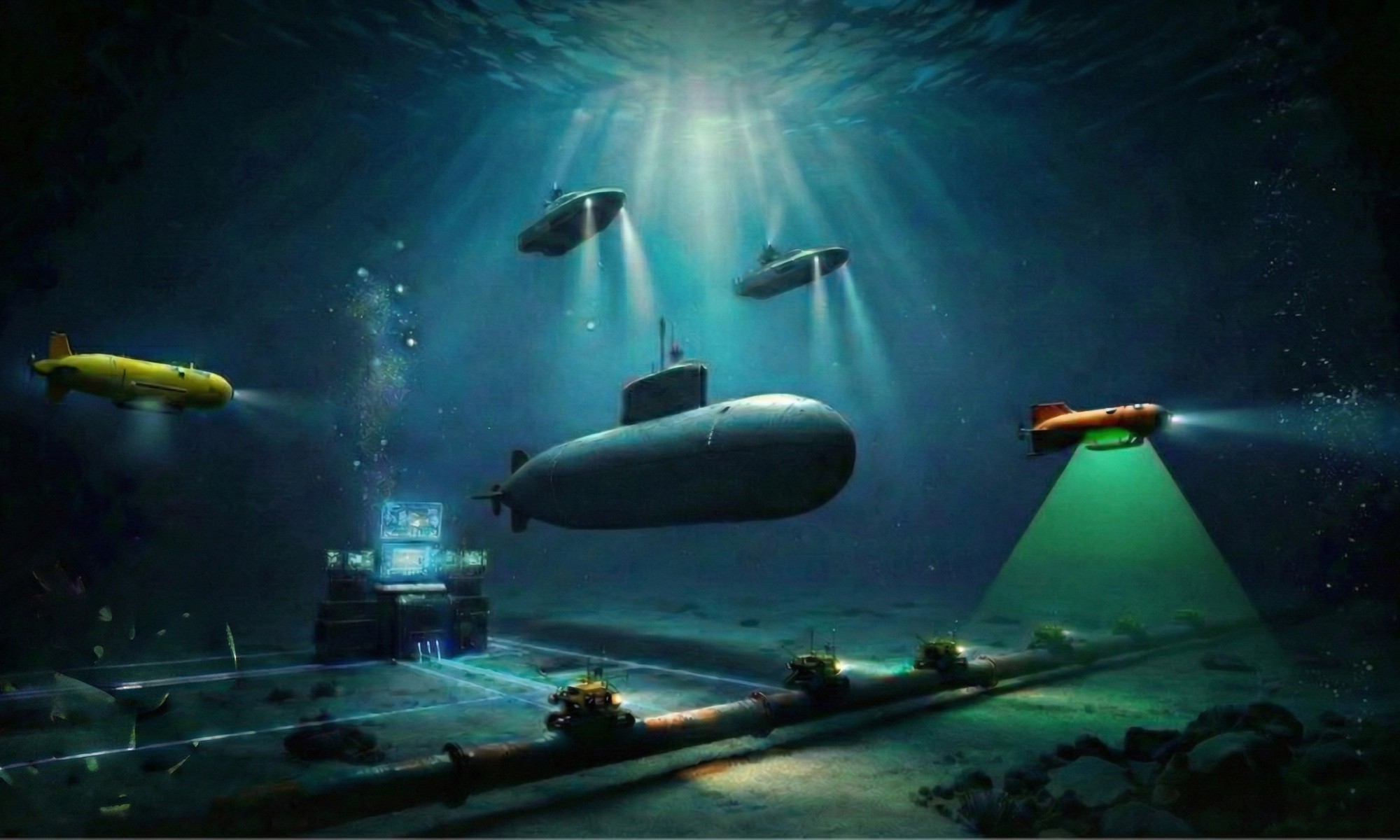
Atlantic Bastion represents an ambitious shift in how the Royal Navy intends to protect the North Atlantic: connecting autonomous systems, underwater sensors, ships, and aircraft into a more persistent maritime defense network. Its promise is earlier warning, better understanding and a more effective response to underwater threats.
For me, this project is personal. I was involved while at Ocean Power Technologies. Watching it develop brings both enthusiasm and some familiar questions about what it takes to turn an ambitious concept into something that survives contact with salt water.
The comparison with the Cold War’s SOSUS listening network is compelling, although Atlantic Bastion should not be presented as its direct replacement or the first mobile anti-submarine warfare network. The opportunity lies in combining persistence, mobility, autonomy and shared information on a much broader scale.
And its success will depend heavily on a deceptively simple question: have we put the right payload on the right platform for the job?
The North Atlantic is a difficult customer
It does not read your strategy document. It has little interest in your investor presentation. And it certainly will not reduce the wave height because your demonstration is scheduled for Thursday.
That is part of what makes Atlantic Bastion so interesting.
There is real ambition here: a maritime surveillance architecture that can keep more sensors at sea, connect their observations, and help naval forces understand what is happening beneath the surface.
Having been involved from the bidding side, I feel a personal connection to that ambition. I want to see it succeed. I also want the discussion to reach beyond the attractive graphics of autonomous vessels connected by immaculate blue lines.

Those lines have an enormous amount of engineering hidden inside them.
The strategic purpose is serious. In September 2026, the First Sea Lord described Atlantic Bastion as a defensive network supporting protection of the UK’s continuous at-sea deterrent and critical infrastructure. That places it directly in the business of protecting the connections and capabilities on which national security depends.
For everyone ashore who considers maritime security a specialist interest, remember this: an impressive amount of modern life depends on things crossing an ocean or sitting on its bottom.
The seabed deserves more attention than it gets.
SOSUS
The historical echo takes us back to SOSUS: the Sound Surveillance System and the geography of the Greenland–Iceland–UK gap.
SOSUS used fixed underwater hydrophone arrays to exploit the ocean’s ability to carry sound over long distances. It became a much wider surveillance network than a single line across the North Atlantic. The principle was powerful: listen persistently, use the environment intelligently, and turn faint acoustic information into useful awareness.

It is tempting to call Atlantic Bastion “SOSUS with autonomy.”
As a conversation starter, that works. As a technical description, it needs another cup of coffee (or would that be tea…?)
Mobile surveillance already has a substantial history. The US Navy developed SURTASS, the Surveillance Towed Array Sensor System, using ships to tow long acoustic arrays. DARPA’s own history describes work that helped advance that capability decades ago.
Atlantic Bastion therefore enters a long-running story. What excites me is the ambition to make a varied collection of autonomous and crewed systems function as a persistent, adaptable network.

Think of a listening architecture with more moving parts, more opportunities to reposition sensing and a much greater need for everything to understand one another.
That last requirement could become the most expensive sentence in the program.
Concept
So, what does the concept actually do?
In April 2026, the Royal Navy described demonstrations covering seabed acoustic detection, uncrewed surface vessels with acoustic and towed arrays, remote operations centers, AI integration, drones carrying sonobuoys, subsea vehicles, gliders and acoustic floats. These were demonstrations of technologies that could contribute to the capability; they were not proof that every component had already become one fully operational network.
The functional logic is straightforward enough.
Different sensors contribute different observations. Those observations need to be assessed, combined, and placed in context. People then need information clear enough to decide whether something deserves further investigation or a response.
A detection is the beginning of that process.
It still leaves questions: what produced it, how confident are we, does another observation support it, and what should happen next?
My concern is that we could become very good at collecting information without becoming equally good at understanding it. A crowded display can look reassuringly sophisticated while leaving its operator thoroughly unconvinced.
More sensors should buy us better decisions. We should insist on evidence that they do
One recent development illustrates why the less glamorous parts matter.
In September 2026, the Royal Navy reported that five Slocum G3 gliders had completed a 64-day mission gathering environmental data around the British Isles. The service explicitly linked this work to Atlantic Bastion. Their contribution was oceanographic understanding; the announcement did not say these gliders had spent two months autonomously hunting submarines.
That distinction deserves attention.
Temperature, salinity and pressure affect sound speed in seawater. Understanding those conditions helps explain how acoustic observations should be interpreted.
A sensor operates inside an environment, and that environment gets a vote.
You can put artificial intelligence on the processing chain, but you cannot persuade the ocean to adopt your preferred acoustic conditions.
The environmental glider may never win the beauty contest against an autonomous submarine. Its measurements can still be essential to making the rest of the system useful.
There is another interesting change below the surface of the procurement language.
The Ministry of Defence’s May 2025 Atlantic Net pipeline notice proposed delivering “ASW as a service” through a Contractor Owned, Contractor Operated, Naval Oversight model. It described industry-provided systems supplying acoustic data, triaged by AI and machine learning, to a secure remote operations center for Royal Navy analysis.
That approach could create room for faster deployment and technology refresh.
It also makes the service definition critically important. What counts as useful availability? What happens when equipment needs recovery? How is data quality demonstrated? Who carries responsibility when several suppliers’ systems disagree?
Calling something a service does not make the maintenance disappear. Somewhere, someone still has to deal with a connector that has developed an intimate relationship with seawater.
From a bid manager’s perspective, these are exactly the questions that make an ambitious proposition concrete.
From a sonar consultant’s perspective, they bring us back to the payload.
The most expensive sonar you can buy is the wrong sonar.
An excellent sensor can become a poor investment when it is mismatched to the mission, platform or operating environment. The vehicle’s motion, its own noise, available power, payload space and practical support arrangements all need attention.
Then there is endurance.
The platform, sensor, processor, and communications equipment all arrive at the same electrical dinner table. Their combined appetite deserves examination before anyone promises how long the system will remain useful offshore.
We should also distinguish time at sea from time delivering dependable information.
A vehicle can remain afloat while its contribution deteriorates. Maintenance, calibration, data quality, and recovery arrangements deserve a place beside autonomy in the sales presentation.
I would like to hear more conversations begin with the decision the customer needs to make, followed by the information needed to support it. That gives us a sensible route toward selecting the sensor and its platform.
Starting with a favorite vehicle and searching for a mission afterward is an expensive way to go boating.
This is why I see Atlantic Bastion as such an important undertaking. It creates an opportunity to rethink how persistent maritime awareness is delivered while exposing every difficult seam between platforms, payloads, processing, people, and support.
My test of success would be practical: does it deliver useful coverage, trustworthy information, and a dependable service under real operating conditions?
Those are less photogenic measures than a new autonomous hull. They are also the measures that will matter when the weather deteriorates and the contact becomes ambiguous.
Summary
Atlantic Bastion carries forward the enduring logic of undersea surveillance into a more connected, autonomous era. Its promise is substantial, and its delivery will demand disciplined integration, environmental understanding, and reliable support. My personal involvement makes this a project I will follow with particular interest. The ocean will provide the most honest progress report.
At Strategic Sonar Solutions Inc., I help customers select the right payload for their autonomous or crewed platforms, starting with the mission, the operating environment, and the decisions the system must support.
If you are developing a platform, evaluating sonar options, or reconsidering an existing payload, message me here on LinkedIn. Let’s discuss what your platform needs to detect, understand, and deliver before you commit to the equipment.
The North Atlantic will test the result. Let’s give it something worth listening to.
Originally published in the Strategic Pings ))) newsletter on LinkedIn on 2026-09-30. Subscribe there to get new editions first.