
Executive Summary
The Belgian-Dutch replacement Mine Countermeasures program is much more than a procurement of twelve new ships. It represents a fundamental change in how navies detect, classify, identify and neutralize mines.
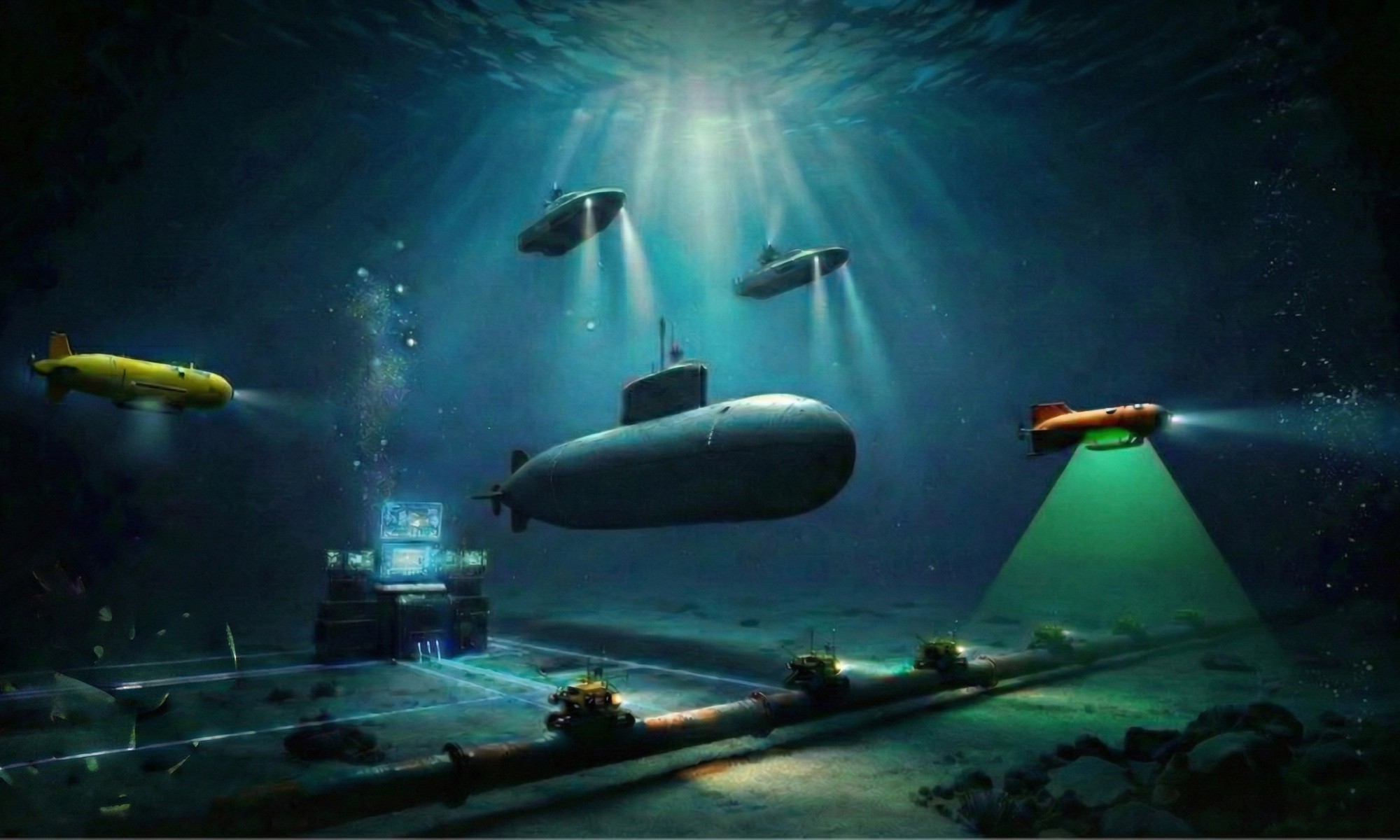
The traditional minehunter sails into the suspected minefield with a hull-mounted sonar. The new concept keeps the mothership outside the danger area and sends an integrated team of uncrewed surface vessels, autonomous underwater vehicles, towed sonars and mine-disposal systems forward.
I followed this competition from the uncomfortable side of the table.
As bid manager for Teledyne Marine, I spent considerable time in Ghent working with Elbit and a REMUS-based AUV concept. We wanted to win. We believed we had strong sensors, capable vehicles and a credible technical solution.
We lost.
What won was not necessarily the best individual sonar, AUV or USV. ECA Group and Naval Group presented the most convincing complete operational system. That distinction remains one of the most important lessons in autonomous maritime procurement.
Replacing the Traditional Minehunter
Belgium and the Netherlands had operated closely related Tripartite and Alkmaar-class minehunters for decades. These ships represented the classic MCM model: place a specialized vessel near the mine threat, search with hull-mounted sonar, investigate contacts and deploy a disposal vehicle.
The replacement program was far more ambitious.
The two navies wanted twelve new MCM vessels, six for each country, supported by roughly one hundred uncrewed systems. The ships would become command platforms, workshops, data-processing centers, and launch-and-recovery motherships rather than traditional minehunters.
That sounds logical today. In 2019, it was a bold procurement decision.
During the bid phase, Ghent became one of my temporary offices. Meetings focused on payload capacity, sonar performance, navigation accuracy, launch and recovery, data processing, endurance and system integration. Every supplier had impressive slides. Every team could produce attractive detection ranges.
But a minefield does not care about PowerPoint.
A successful MCM operation requires a complete chain. The vehicle must navigate accurately. The sonar must produce usable imagery. The software must manage contacts. The operator must distinguish a mine-like object from another tire, cable, rock or discarded refrigerator. A second system must relocate the target. A third must neutralize it.
One weak link can make the entire architecture operationally irrelevant.
Who Won?
In 2019, the contract was awarded to Belgium Naval & Robotics, the consortium formed by Naval Group and ECA Group. Naval Group led the vessel and combat-system element. ECA Group supplied the integrated robotic MCM toolbox.
ECA Group later combined with iXblue under the Exail name. In July 2026, Thales announced a binding agreement to acquire the Gorgé family’s controlling stake in Exail and launch a tender offer for the whole company. The transaction is not yet complete, so Exail is on course to become part of Thales rather than already being fully absorbed.
It has been quite a journey.
ECA was once viewed as a specialist robotics company competing against much larger defense groups. Its success in Belgium and the Netherlands helped prove that maritime robotics had moved from equipment demonstrations into fleet-level naval architecture.
Why ECA Won
The detailed tender scoring has not been publicly released, so claims about one decisive technical score would be speculation.
The winning logic, however, is visible in the architecture.
ECA did not merely offer an AUV. It offered a coordinated toolbox built around the Inspector 125 USV, A18-M AUV, T18-M towed sonar, Seascan identification vehicle, K-Ster C disposal system, influence-sweeping equipment and UMISOFT mission-management software.

The Inspector 125 became the forward-deployed carrier. It could transport sensors and disposal vehicles into the mine-threat area while the larger crewed vessel remained farther away.
That created genuine stand-off MCM.
More importantly, ECA understood that integration included launch and recovery, navigation, communications, mission planning, contact management and neutralization. The customer was not being asked to buy a collection of excellent boxes and then spend years persuading them to communicate.
That was the impressive part of the win. (and they had Daniel S. as bid manager…)
The Sonar Architecture
The A18-M AUV uses the UMISAS 120 interferometric synthetic aperture sonar for autonomous mine detection and classification. The vehicle can survey an area independently, collecting consistent, high-resolution acoustic imagery without requiring a physical communications link to the surface platform.
The T18-M towed system performs a related mission using the UMISAS 240 sonar. Because it remains connected to the Inspector 125, its sonar data can be transmitted in real time through the USV to the command ship.

This combination matters.
The AUV provides autonomous coverage and freedom of movement. The towed sonar provides continuous communications, immediate quality control and faster operator intervention. They are not competing solutions. They address different parts of the same mission.
After detection comes identification. Seascan relocates and inspects the contact using cameras and forward-looking sonar. K-Ster C then performs the neutralization task while sailors remain outside the immediate danger zone.
The sonar is therefore not a payload hanging under a vehicle. It is part of a sensor-to-decision chain.
That is where many autonomous programs still get it wrong.
Current Status
The first vessel, Belgium’s M940 Oostendevehicles,, was officially transferred to the Belgian Defense organization on November 7, 2025.

The second vessel, HNLMS Vlissingen, was delivered to the Royal Netherlands Navy in Den Helder on February 27, 2026.
The first operational MCM toolbox has also been delivered in Zeebrugge. It includes Inspector 125 USVs, A18-M AUVs, Seascan and K-Ster vehicles, with the T18-M towed sonar element scheduled as part of the continuing delivery sequence. Further vessels are under construction, with deliveries planned to continue through 2030.
The program has moved beyond drawings, prototypes and promotional videos. Hardware is entering naval service.
The harder phase now begins: qualification, doctrine development, crew training, maintenance, data management and proving that the complete kill chain works under real operational conditions.
Summary: The Lesson From Ghent
I would naturally have preferred a different result when I was sitting in Ghent working on the Teledyne, Elbit and REMUS-based proposal.
But losing a major competition can teach you more than winning an easy one.
The Belgian-Dutch program demonstrated that customers do not ultimately buy sonar specifications, vehicle endurance or attractive autonomy demonstrations. They buy confidence that the complete mission will work.
ECA understood that early. Naval Group gave the robotic architecture a credible mothership and naval integration framework. Together, they changed the definition of a minehunter.
The new minehunter is no longer a ship.
It is a distributed system of sensors, vehicles, communications, software, operators and weapons. The sonar starts the conversation, but integration determines whether the mine is actually removed.
Because buying an excellent sonar is relatively easy.
Building an operational capability around it is where the real work begins.
Call To Action
Selecting a sonar is easy. Selecting the right sensor for the right payload, the right autonomous platform, and the right mission is much harder.
Strategic Sonar Solutions Inc. helps navies, shipyards, defense companies, investors, and autonomous-system developers make those decisions with less risk and fewer expensive integration mistakes.
If you are evaluating sonar, AUV, USV, ROV, MCM, ASW, hydrographic, or seabed-warfare capabilities, contact me. Let’s make sure the system works as a complete mission solution, not just as an impressive collection of specifications.
Originally published in the Strategic Pings ))) newsletter on LinkedIn on 2026-09-16. Subscribe there to get new editions first.