
Executive summary
Sweden has signed a roughly SEK 47 billion contract with Naval Group for four FDI-based Luleå-class frigates, scheduled for delivery between 2030 and 2034.
The headline is French frigates. The more important story is Swedish pragmatism and underwater warfare.
A proven platform reduces construction risk, but it does not guarantee ASW superiority. In the Baltic’s shallow, noisy and highly stratified waters, success will depend on how well Sweden integrates sonar, environmental intelligence, helicopters and autonomous systems.
A mature frigate can shorten the route to sea. It cannot repeal the laws of underwater acoustics.
The calendar is also a weapon
Sweden’s order covers HMS Luleå, HMS Norrköping, HMS Trelleborg and HMS Halmstad. The contract value includes training systems, spares and associated equipment, so simply dividing SEK 47 billion by four does not produce a meaningful unit price.
More strategically, Sweden is joining an established FDI production line and an operator community that already includes France and Greece.
That matters. Sweden is choosing operational relevance within a critical timeframe over the prestige and risk of another clean-sheet national design. I see this from a personal perspective.

I was part of the YS2000 design team at FMV that developed the YS2000/Visby class. The original YSS/Luleå concept was intended to become its larger sibling. Selecting the FDI therefore represents more than a platform decision. It marks a significant departure from the design lineage Sweden originally envisioned.

Industrial sovereignty sounds magnificent in a strategy document. It sounds less magnificent when the fleet is still waiting at the pier.
The Baltic is an acoustic nightmare
The Baltic covers approximately 420,000 square kilometers, yet more than one-third is shallower than 30 meters. Salinity ranges from roughly 15–18 PSU near the entrance to the Sound, to 7–8 PSU in the Baltic Proper and as little as 0–2 PSU farther north and east.
Those differences, together with temperature variations, create layers that can bend sound away from a sonar (refraction). The Baltic is famous for what is called “micro-sound channels”.

Now add dense shipping, machinery noise, bottom reverberation, complicated coastlines and quiet conventional submarines. The result is an environment where catalog performance and operational performance may be very different things.
Thales advertises detection ranges of up to 60 kilometers and beyond for the CAPTAS sonar family. That demonstrates potential, not certainty. In ASW, the words “up to” can carry more displacement than the ship.
What the FDI brings below the waterline
The established FDI ASW architecture offers a sound foundation. The Greek configuration combines the Kingklip Mk2 hull-mounted sonar with the CAPTAS-4 Compact variable-depth sonar.
Sweden has publicly identified ASW as a core Luleå-class capability, but it has not yet named the final sonar suite. Kingklip and CAPTAS should therefore be treated as the reference architecture, not automatically as the confirmed Swedish fit.

A hull-mounted sonar provides immediate coverage, but it remains fixed at hull depth and must contend with the ship’s own noise. A variable-depth sonar can be lowered through the water column, allowing operators to place it on the useful side of a temperature or salinity layer.
That flexibility comes at a price. The ship must accommodate the towed body, cable, winch, power, cooling, maintenance and launch-and-recovery loads. Sea state, maneuvering and crew workload also matter.
The sonar may fit beautifully in a brochure. The handling system still has to fit in the ship.
The network is the real ASW weapon
The Luleå class should not be judged only by the performance of its onboard sonar. Its greater value may be its ability to coordinate a distributed underwater sensor network.
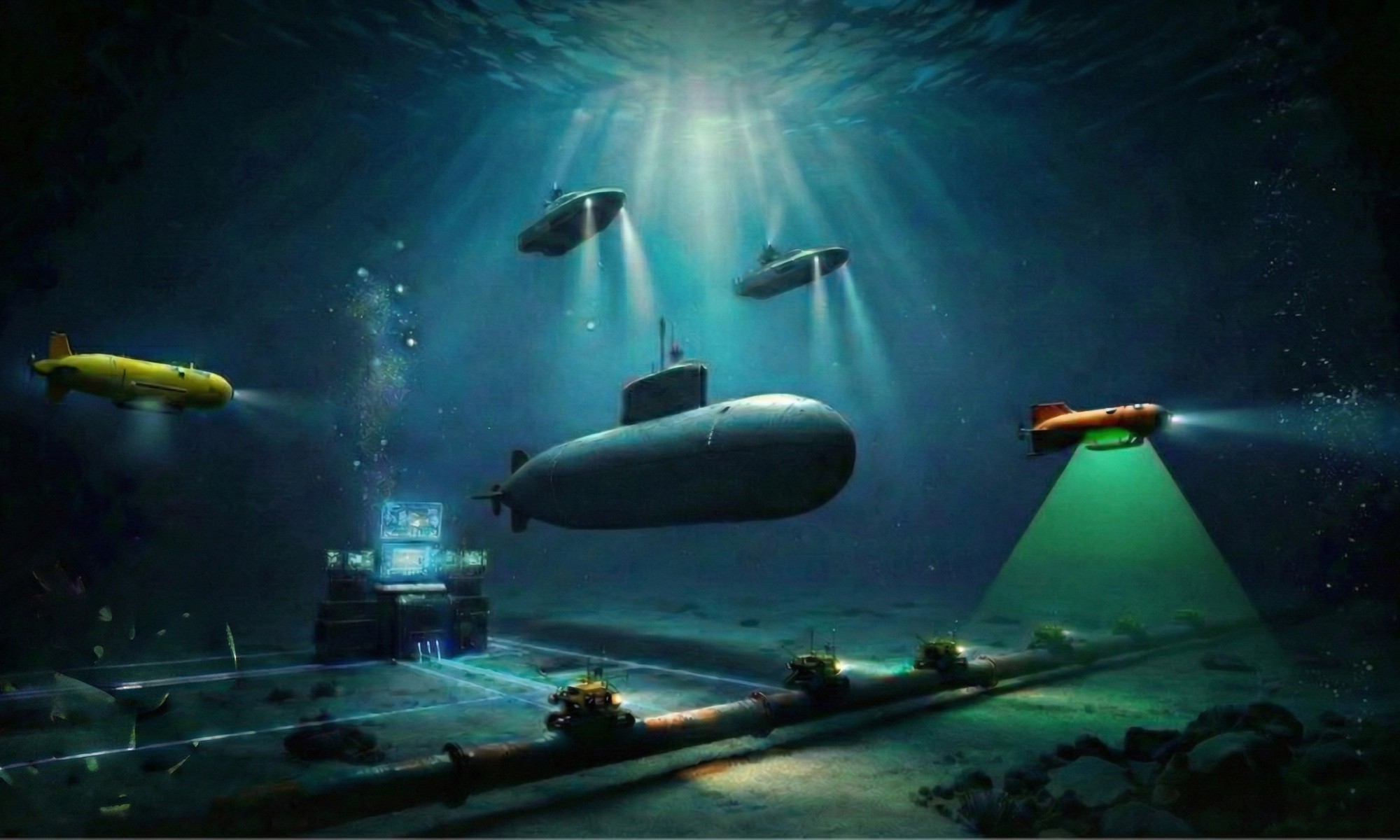
Ship sonar, helicopter dipping sonar, sonobuoys, maritime patrol aircraft, uncrewed surface vessels and autonomous underwater vehicles such as AUV 62R, can create multiple sensing positions. One platform can transmit while another listens. Autonomous systems can extend coverage or enter areas where exposing a crewed frigate would be unwise.
This is where sensor fusion becomes decisive. More sensors do not automatically create more understanding. Without robust communications, compatible data formats, accurate environmental models and manageable operator workloads, they may simply create more ambiguity at greater expense.
A SEK 47 billion ship can still lose the acoustic fight if payload integration is treated as an accessory.
The strategic wager
Sweden is betting that a mature foreign hull, selective national integration and a wider operator community will deliver combat power sooner than a sovereign clean-sheet program.
That is a sensible wager.
But the ASW test will not be passed when the ship leaves the yard. It will be passed when the frigate can enter a difficult acoustic environment, coordinate manned and autonomous sensors, maintain contact on a quiet submarine and convert uncertain detections into a reliable tactical picture.
Short summary
The hull gets the Navy to sea. The sensor architecture determines what it can hear when it arrives.
Sweden has reduced platform risk. Its next challenge is ensuring that sonar, payloads, data fusion, and operating concepts work as one ASW system in the difficult Baltic environment.
Selecting a maritime sensor payload?
I help clients select and integrate sonar, surveillance and mission payloads for autonomous and manned platforms, matching the technology to the mission, platform and operating environment.
If your program needs an independent view before committing to a payload architecture, connect with me on LinkedIn or send me a message.
The costliest sensor mistake is often not buying bad technology. It is buying good technology for the wrong mission.
Originally published in the Strategic Pings ))) newsletter on LinkedIn on 2026-09-08. Subscribe there to get new editions first.