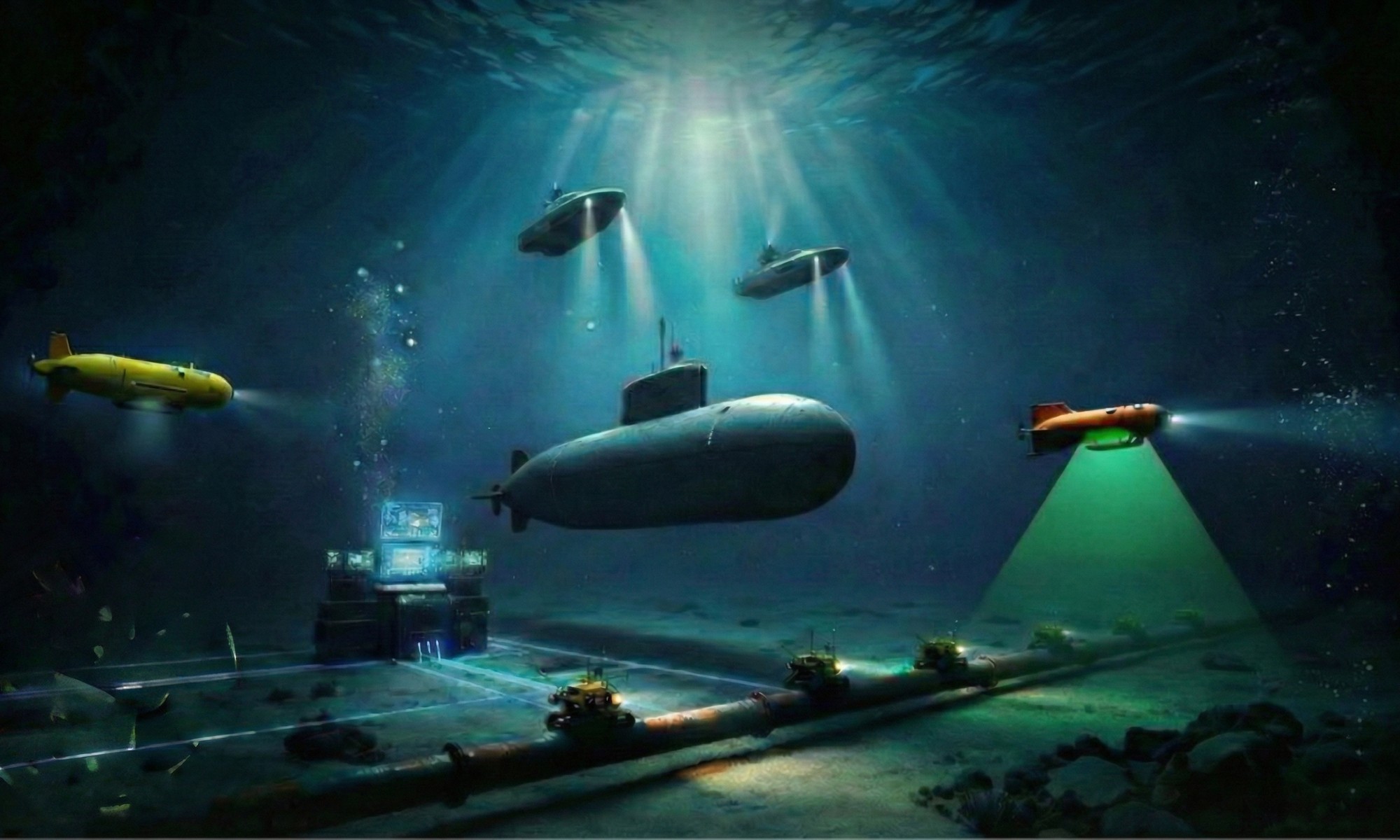
Finding something underwater has never been easier. Understanding
what it is, why it is there, and what to do about it has never been
harder.
Modern sonar systems are extremely good at detection. Almost too
good. Multibeam. SAS. Forward-looking sonar. Passive arrays. Magnetic
sensors. Environmental feeds. AI classifiers. All running at once. All
producing contacts.
Lots of contacts.
This is the uncomfortable truth. Detection is no longer the
bottleneck. Meaning is.
The Comfortable Assumption
The industry likes to believe that better sensors automatically lead
to better decisions. Add more resolution. Add more beams. Add more
bandwidth. Add more AI. The picture will magically become clear.
It usually does not.
What actually happens is this. More sensors generate more data. More
data creates more ambiguity. Operators drown in contacts. AI systems
flag everything as interesting. And someone, usually a tired human,
still has to decide what matters.
Detection is cheap. Understanding is expensive.
The Uncomfortable Truth
Most undersea systems today are optimized for sensing, not for
sense-making.
They are very good at answering the question, “Is something there?”
They struggle with the question, “So what?”
A rock looks suspicious at the wrong grazing angle. A fish school
becomes a potential intruder. A benign ROV suddenly has a very
threatening acoustic signature. AI does its best. AI also lies
convincingly.
False positives scale faster than confidence.
What the Physics Say
Sonar does not see objects. It measures sound interacting with the
environment.
That environment is dynamic. Temperature layers shift. Salinity
changes. Bottom types vary. Noise comes and goes. Self-noise matters
more than anyone likes to admit.
Physics does not care about marketing slides.
If you increase sensitivity, you increase clutter. If you increase
resolution, you increase processing load. If you increase coverage, you
increase uncertainty at the edges.
This is not a software problem. It is a reality problem.
What Operators See
Operators do not complain about missing targets anymore. They
complain about having too many.
In exercises and real operations, the pattern repeats. The system
detects something. Then something else. Then ten more. The tactical
picture fills up. Confidence goes down.
At some point, the operator asks the most dangerous question in
maritime operations. “Is this real?”
That hesitation is where advantage is lost. Not because the sensor
failed. But because the system did not help the human trust the
output.
From Sensors to Systems
This is why the real shift is not about better sonar. It is about
better systems.
Data fusion is no longer a nice-to-have feature. It is the core
capability.
Good fusion does three things well.
It reduces clutter, not just displays it.
It provides context, not just classification.
It communicates uncertainty, not false confidence.
The undersea domain is moving from platforms to networks. From
individual sensors to collaborative sensing. From single detections to
persistent understanding.
Some call this a kill web. That sounds dramatic. It is actually very
practical.
A network that cannot explain itself is not a weapon. It is a
liability.
Strategic Consequences
Navies and operators that invest only in sensors will continue to be
surprised. Those that invest in fusion, validation, and trust will move
faster and act earlier.
This also changes procurement logic. The most important performance
metric is no longer range or resolution. It is decision latency.
How fast can the system move from detection to confidence? How fast
can a human say, “Yes, this matters”?
In asymmetric warfare, that time difference is everything.
Shallow water is where submarines go to be clever… and where sonar
engineers go to lose sleep.
Acoustics may be complicated in the open blue ocean, but at least the
physics behaves predictably. In the littorals, Baltic-style basins,
archipelagos, straits, coastal shelves, sound bounces off everything
like a pinball machine with commitment issues: surface, bottom, rocks,
wrecks, thermoclines that appear and disappear, and enough reverberation
to make a choir sound like static.
Add dense traffic, biologics doing an interpretive dance on your
spectrogram, and a seabed that changes from mud to cobble to granite in
one coffee break… and you get the reality of littoral ASW.
I was fortunate to receive training from Professor Urick, who
compared the Baltic with a portion of the South China Sea with respect
to the hydroacoustic environment. Very complicated, he made one comment,
“Avoid it if possible…”
Multi-static USV ASW Concept
Which is exactly why the strategic stakes are rising. Coastal waters
aren’t just “nearby.” They’re gateways: ports, sea lines, chokepoints,
and the corridors where critical infrastructure lives. If an adversary
submarine can operate in your backyard, it’s not only hunting ships.
It’s mapping patterns of life, sniffing undersea cables, and quietly
rewriting your risk calculus. ASW in littoral and shallow coastal water
relates to seabed warfare.
Here’s the uncomfortable truth: in littoral ASW, you have two valid
ways to win.
You find the submarine.
You create deterrence, A2/AD, so submarines don’t dare to loiter in
your operating box in the first place.
Those are not competing ideas. They’re a matched pair.
The
Deterrence Frame: ASW as A2/AD, not just “search and maybe
prosecute.”
A2/AD—Anti-Access / Area Denial, is the maritime equivalent of
putting a “Keep Out” sign on the sea and then wiring the fence to the
national grid.
Keep Out of my waters — content credentials
Anti-Access (A2) is about stopping an opponent from getting into the
fight. In ASW terms, that means controlling the gateways: straits,
archipelagos, shelf breaks, and the transit routes submarines and their
supporting forces depend on. If you can threaten the aircraft, ships,
bases, and logistics that enable sustained ASW, you can keep the hunter
outside the operating box—no presence, no search pattern, no
persistence.
Area Denial (AD) assumes the opponent makes it in anyway and focuses
on making operations slow, risky, and inefficient. This is where ASW
becomes a layered trap: seabed sensors, USVs towing passive arrays, UUV
patrols, mines, decoys, jamming, spoofing, and enough ambiguity in the
acoustic environment to keep commanders awake. The goal is not always a
dramatic kill. Often it is simpler: deny tempo, deny confidence, deny
freedom of maneuver.
A2 keeps the door closed. AD turns the room into a maze of
tripwires.
Now—where does multi-static USV ASW fit? Right in the sweet spot: it
supports both. It can actively find submarines, and it can also help
create the perception (and reality) that your shallow-water approaches
are simply not comfortable to operate in.
That discomfort is deterrence.
The
submarine’s favorite shallow-water playing card: Zero Doppler
Submarines don’t need to be truly invisible. They need to be hard to
classify and hard to hold. In shallow water, the ocean gives them plenty
of cover: boundary reverberation, multipath, shipping noise, biologics,
and bottom clutter.
One of the most useful tactical tricks is Zero Doppler geometry.
If the submarine can maneuver so that its radial velocity relative to
your active sonar geometry is near zero, Doppler cues get weak. Your
discrimination suffers. Your tracker gets less confident. Your contact
starts looking like “maybe something,” which is operationally deadly
because “maybe” burns time—and in the littorals, time is what the
submarine is stealing.
If Zero Doppler provides a strategic edge, the key question is: how
can we remove that advantage?
The
Multi-static answer: Geometry that the submarine can’t game
Monostatic active sonar (source and receiver on the same platform) is
vulnerable to geometry games. A multi-static network is not.
In multi-static operations, you separate the source from multiple
receivers distributed in space. A submarine can try to be zero Doppler
to one receiver, but it cannot maintain zero Doppler to several
receivers spread across different bearings and ranges at the same time.
If it’s “boring” to one node, it will be moving relative to another.
That means Doppler diversity returns to your side of the chessboard.
This isn’t a small technical upgrade. It’s a strategic shift: you
deny the submarine control of the engagement geometry.
And that denial is exactly what AD is supposed to feel like.
The
Multi-Static USV Swarm: One illuminator, many ears (and no single point
of failure)
The clean basic CONOPS is a “1+4” USV formation:
1) Source USV (the illuminator)
One USV carries a high-power coherent source, typically 2–4 kHz for
wide-area search in shallow basins. Coherent matters because the
littorals punish lazy waveforms. You want control: multiple pings,
variable durations, better processing gain, and the ability to adapt to
a reverberation floor that changes by the hour.
Think controlled flashlight, not fireworks.
3–4 Receiver USVs (the
listeners)
Three to four USVs tow passive towed arrays—digital, high dynamic
range systems designed to capture high-fidelity snippets for fusion.
These nodes stay acoustically passive, which helps survivability and
reduces self-noise issues, while providing the geometry diversity that
makes multi-static worth doing.
This architecture is also inherently resilient. Lose one node? The
web degrades gracefully rather than going blind. That matters in
contested littorals where attrition is not a hypothetical—it’s a
planning assumption.
Shallow-water
reality check: timing, navigation, and “ghost discipline”
Multi-static processing is unforgiving. If your timing is sloppy or
your positions drift, you don’t get “slightly worse tracks.” You get
false tracks. Ghosts. Expensive arguments.
High-quality navigation fusion (INS + DVL + pressure, plus sanity
checks), and
Geometry control so your bi-static ellipses actually mean
something.
Your system must keep behaving even when you have issues, because the
submarine will not politely pause while you reboot your confidence.
Search Patterns: Don’t
“swarm,” orchestrate
A swarm is a marketing word. Formation is an engineering word.
Receiver USVs should execute structured search patterns designed to
maintain baseline spacing, angle diversity, and revisit rates that
support tracking. A practical approach is coordinated “lawnmower” sweeps
with controlled offsets, where:
The source illuminates on a schedule,
Receivers maintain geometry to maximize bistatic angle
diversity,
Network adapts spacing based on propagation and bathymetry.
The goal isn’t just detection. It’s hold. Hold is what enables
deterrence, because a submarine that expects to be held behaves
differently than a submarine that expects to slip away.
How this feeds
A2/AD: Deterrence by Transparency
Here’s the strategic payoff:
A distributed multi-static USV field doesn’t just hunt submarines. It
creates a perception—backed by physics—that your littoral approaches are
becoming transparent.
That supports A2 by controlling gateways. Place these fields
intelligently near straits, archipelagos, and shelf breaks, and you
complicate transit planning. You force route deviations, slower speeds,
and higher risk. You also threaten the supporting ecosystem, tenders,
ISR assets, surface escorts, that submarines rely on for sustained
operations.
And it supports AD by turning the operating area into a maze of
tripwires. Even if the submarine enters, it cannot rely on its best
stealth geometry. It cannot assume it can “go zero Doppler and disappear
into clutter.” The web denies tempo and denies confidence—and a
commander who lacks confidence becomes conservative.
That is deterrence in practice: not always a kill chain, often a
decision chain.
Summary:
Two ways to win, one architecture that supports both
Littoral ASW is not a single game. It’s two:
Find the submarine when it enters your operating box.
Prevent submarines from operating there comfortably through A2/AD
deterrence.
A multi-static USV architecture, one coherent source USV and 3–4
receiver USVs towing passive arrays, supports both missions. It handles
the shallow-water physics with spatial diversity, resilient geometry,
and edge processing. And it delivers the strategic punch: it removes the
submarine’s zero-Doppler playing card by forcing it to face multiple
receivers at once.
A2 keeps the door closed. AD turns the room into a maze of tripwires.
Multi-static USV ASW does something even better: it makes the submarine
wonder if the room was ever safe to enter at all.
GNSS jamming, spoofing, and the hard lessons from NATO exercises
During a NATO Task Force exercise in 2025, I watched a USV quietly
lose its mind.
On the screen, our unmanned surface vehicle was suddenly “turn
starboard 90 degrees and doing 50 knots” sideways. The track jumped
inland. Position fixes wandered like a drunk reindeer in the
archipelago. The hardware was fine. The environment was not.
We were sitting inside a live GNSS jamming and spoofing bubble.
For a manned ship, this is annoying but manageable. A human on the
bridge says “this is garbage”, switches to radar, visual bearings and
paper charts, and carries on. For an unmanned system, there is no salty
navigator to shout at the GPS.
If your USV believes bad PNT, it does bad things.
That is the real problem.
The fragile keel: USVs
built on weak PNT
Modern USVs are deeply GNSS-centric. Position, timing, comms
pointing, collision avoidance, and route following. Much of it assumes
that satellite navigation is “good enough, most of the time”.
In a real-world contested environment, that assumption quickly dies.
Luckily, there was a skilled engineer (whose last name I cannot mention,
as it is bad luck) who had the solution.
Jamming makes you blind
Spoofing makes you confidently wrong
For critical missions around naval exercises, offshore energy, or
subsea infrastructure, that is not a nuisance. It is an operational
risk.
And unlike a crewed vessel, the USV will happily:
Track to a spoofed waypoint
Violate a safety box
Misalign a towed sensor
Lose alignment with its AUV swarm
Simply because the math checked out on a compromised GNSS stream.
Navigating in
the dark: sensor fusion or nothing
The path out of this trap is not a magical “GPS replacement”. It is
ruthless redundancy.
For USVs, that means building a resilient PNT stack, not just “adding
an INS”.
At minimum:
Good IMU + INS for dead reckoning
DVL or water-track speed, where the draft allows it
Radar and EO/IR for shoreline, buoys, and traffic
Multi-constellation + authenticated GNSS where available
With decent inertial quality and a DVL locked on the seabed, drift
over tens of minutes becomes manageable. Sensor fusion algorithms can
then do what they do best. They compare “what GNSS says” with “what the
rest of physics says”.
If your Kalman filter sees a perfect satellite position disagreeing
with inertial, DVL, and radar ranges, it does not need a PhD in
electronic warfare. It just needs to vote GNSS off the island.
Redundancy with USV with INS and DVL solution
The key is architectural: Treat GNSS as one sensor among many, not
the truth.
Design for
failure: behavior when PNT goes bad
Resilient PNT is not only about sensors. It is also about what the
USV does when things get weird.
For unmanned systems, I like to see three explicit modes:
PNT Healthy — Normal operation. GNSS + fusion. All constraints
green.
PNT Degraded — GNSS flagged as suspect or lost. USV shifts to INS /
DVL primary. Speed limits come down. Safety corridors widen. Autonomy
level drops.
PNT Lost / Corrupted — Pre-defined “lost nav” behavior. Slow to safe
speed, hold last safe box using non-GNSS sensors, or return along a
radar-matched corridor. No heroic improvisation.
These modes must be tested in anger. In a jammer. In a harbor full of
multipath. In a fjord with poor DVL lock. If your USV only behaves well
under perfect GNSS, it is not autonomous. It is domesticated.
From convenience to
survivability
GNSS gave us a very comfortable decade. Cheap antennas. Easy
integration. Pretty tracks. For manned shipping it will remain an
amazing convenience.
For USVs operating near conflict zones, hybrid warfare, or critical
underwater infrastructure, GNSS is no longer a convenience issue. It is
a survivability issue.
The takeaway from this exercise was simple:
The threat is real.
The tech to handle it exists.
The gap is in system design and in testing.
If your unmanned platform strategy does not include:
A serious, fused PNT architecture
Defined degraded-mode behaviors
Regular exposure to jamming and spoofing environments
Then your shiny USV is only autonomous as long as nobody touches the
satellites.
Strategic Ping: Do not ask “what GNSS do we have on the USV?” Ask
“what happens when it lies?”
Call-To-Action
Please comment, repost, and discuss this important issue. I’m not a
specialist in this, but I learned from colleagues who are experts.
We need to learn from each other and create best practices.
The waterline is no longer the boundary of maritime security. That
line has sunk below the surface, into a domain that is opaque,
cluttered, and unforgiving of delay.
Ports, naval bases, offshore energy assets, pipelines, and subsea
infrastructure are now threatened primarily from below. Dive Detection
Systems (DDS) have therefore become foundational elements of maritime
protection architectures.
It is all about reaction time
Yet despite significant advances in sonar performance, classification
algorithms, and autonomy, most underwater security failures still stem
from the same root cause:
Reaction time.
Detection alone does not stop an intrusion. Detection without timely
action merely records it.
2. The
Threat Has Changed Faster Than the Response Model
Historically, the underwater threat was human and constrained.
Open-circuit divers produced bubble trails. Endurance was limited.
Approaches were slow and predictable.
That era is over.
Today’s threat landscape includes:
Closed-circuit rebreather divers with no visible bubble
signature
Widely available high-end commercial dive equipment
Unmanned Underwater Vehicles (UUVs) with long endurance and zero
risk to the operator
Complicating matters further, ambiguity is now routine. A sonar
contact may be a saboteur, a recreational diver, or a survey drone. The
sensor does not know. The command chain must decide.
And every second spent deciding compresses the remaining response
window.
3. Detection Is
a Solved Problem. Reaction Is Not.
Modern DDS sensors can detect small, slow targets in noisy, cluttered
environments. The technical challenge of “seeing” underwater has largely
been addressed, even if there are still issues with “false alarms”.
The operational challenge has not.
A credible dive detection architecture must support the full
chain:
Early detection
Rapid classification
Low-latency alerting
Immediate, actionable response
If any part of that chain relies on slow human mobilization, the
system fails operationally — even if it performs perfectly on paper.
4. Key
Detection Systems and Their Strategic Roles
Forcys Sentinel
Forcys Sentinel is designed for long-range early warning. Its
strength lies in coverage and standoff distance, detecting divers at
significant ranges and UUVs even farther. There is also an interesting
passive mode.
Strategically, Forcys Sentinel buys time. That time is critical for
cueing mobile assets and initiating autonomous response actions before
the intruder reaches the asset of interest. Sentinel performs best as
the outer layer in a layered defense architecture.
DSIT AquaShield
AquaShield focuses on autonomy and discrimination. Advanced signal
processing and adaptive thresholding reduce false alarms in busy
harbors, which is operationally vital.
False alarms consume attention, degrade trust, and slow reaction. By
delivering higher-confidence alerts, AquaShield accelerates
decision-making and supports rapid escalation when required. Its
hardened design also reflects an assumption that sensors themselves may
be targeted.
SDIT also has the PointShield, a smaller portable sonar system.
Norbit GuardPoint
GuardPoint systems are optimized for persistent, fixed monitoring of
critical infrastructure. Their value lies in continuous availability and
reliability in known geometries such as ports and terminals.
As with all fixed systems, GuardPoint’s effectiveness depends on how
quickly a response asset can be cued and dispatched. Integrated
properly, it becomes a reliable sentry rather than a passive
observer.
Norbit has several different sonar systems for intruder detection,
all of which are named GuardPoint.
Artist illustration of different sonar systems
5. Why Human-Centric Response
Fails
The moment an intruder is detected, the clock starts.
Traditional response concepts assume:
An operator raises an alarm
Personnel are notified and mobilized
A patrol boat is crewed, started, and deployed
The boat transits to the contact location
This sequence may take 20 to 60 minutes — sometimes longer.
For underwater intrusions, that is an eternity.
By the time a crewed vessel reaches the scene, the diver has exited,
the UUV has completed its task, and the opportunity to act is gone.
This is why humans cannot be the first responders.
6. Automating the Response
Loop
The only viable response model is a machine-speed reaction layer,
centered on unmanned surface vehicles (USVs).
In this architecture, humans remain in command — but not in the
pursuit loop.
The Operational Flow
Detection — A fixed or mobile DDS detects and tracks a subsurface
contact.
Immediate Autonomous Dispatch — A pre-positioned USV is activated
instantly. No crew. No delay.
Re-Detection and Close Classification — The USV intercepts the target
and re-detects it using high-resolution, motion-stabilized sonar,
maintaining continuous track despite sea state and maneuvering.
Evidence, Not Assumptions — The USV transmits sonar imagery, tracks,
and behavioral data to the Commanding Officer via secure data link.
Command Decision at the Right Level — The CO receives verified
classification, not raw alarms, and authorizes action while the intruder
is still present.
This model preserves command authority while eliminating fatal
latency.
7. Neutralization
Options: Speed with Control
Once classification is confirmed, response options must already be
integrated with the USV.
Typical actions include:
Physical Capture — Net systems launched from the USV to entangle
divers or disable UUV propulsion. Clean, non-lethal, and legally
straightforward.
Acoustic Disruption — Directional acoustic devices, including
airgun-based systems, that create localized shock, vibration, or
disorientation to deny mission completion.
Critically, these actions are executed from the unmanned platform,
not after human arrival. The CO authorizes. The system acts.
8. The Strategic Takeaway
Dive detection is no longer a sonar problem. It is a time management
problem.
The systems that matter are not those with the longest range or
smallest detectable target, but those that compress the timeline from
first acoustic return to decisive action.
If your response depends on waking people up, starting engines, and
driving to the scene, you are already too late.
Underwater security is won by closing the loop, autonomously,
quickly, and with command authority applied at the right moment.
In the subsea domain, reaction time is the weapon. Everything else is
instrumentation.
Call-To-Action
Please provide comments and challenge me. We all need to discuss to
learn more from each other.