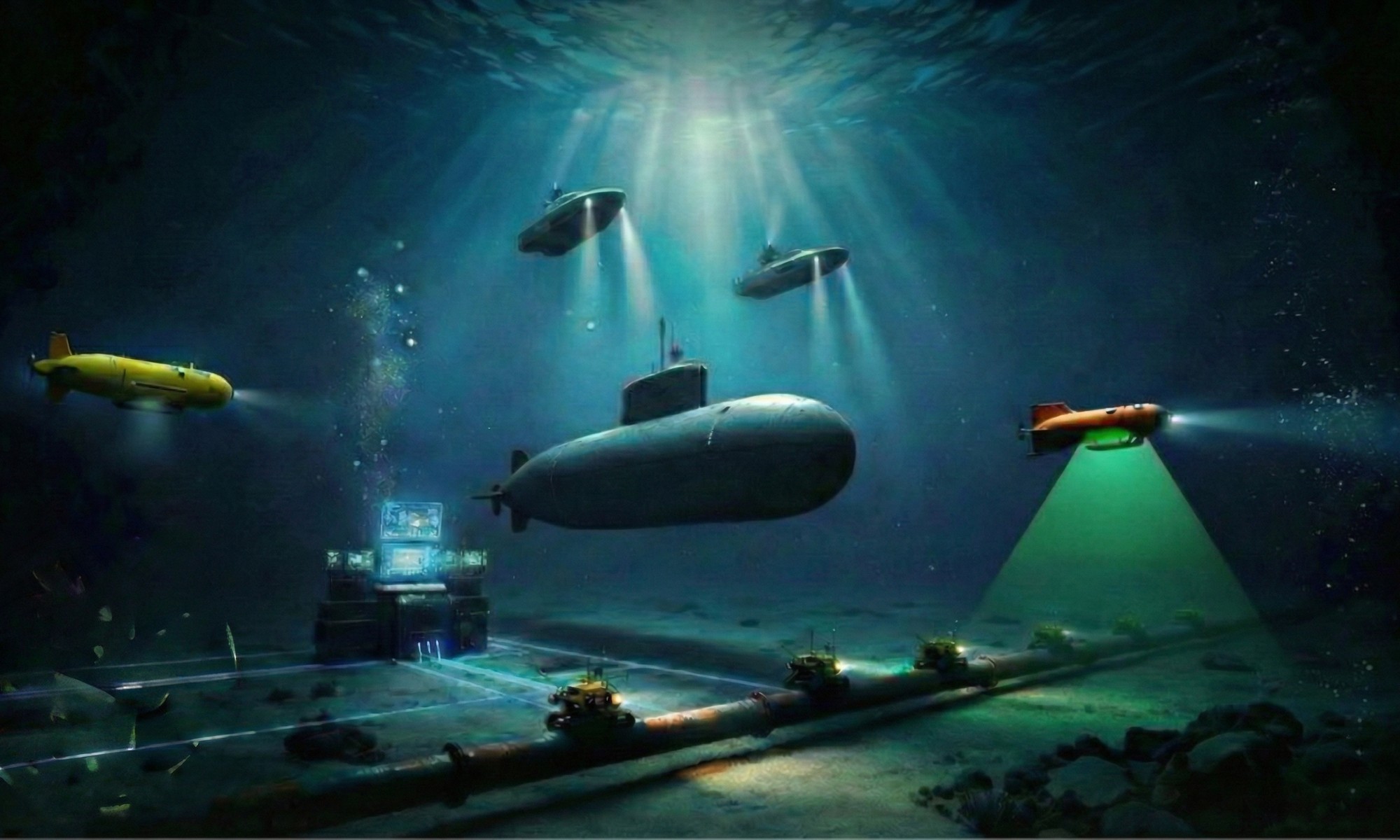

Finding something underwater has never been easier. Understanding
what it is, why it is there, and what to do about it has never been
harder.
Modern sonar systems are extremely good at detection. Almost too
good. Multibeam. SAS. Forward-looking sonar. Passive arrays. Magnetic
sensors. Environmental feeds. AI classifiers. All running at once. All
producing contacts.
Lots of contacts.
This is the uncomfortable truth. Detection is no longer the
bottleneck. Meaning is.
The Comfortable Assumption
The industry likes to believe that better sensors automatically lead
to better decisions. Add more resolution. Add more beams. Add more
bandwidth. Add more AI. The picture will magically become clear.
It usually does not.
What actually happens is this. More sensors generate more data. More
data creates more ambiguity. Operators drown in contacts. AI systems
flag everything as interesting. And someone, usually a tired human,
still has to decide what matters.
Detection is cheap. Understanding is expensive.
The Uncomfortable Truth
Most undersea systems today are optimized for sensing, not for
sense-making.
They are very good at answering the question, “Is something there?”
They struggle with the question, “So what?”
A rock looks suspicious at the wrong grazing angle. A fish school
becomes a potential intruder. A benign ROV suddenly has a very
threatening acoustic signature. AI does its best. AI also lies
convincingly.
False positives scale faster than confidence.
What the Physics Say
Sonar does not see objects. It measures sound interacting with the
environment.
That environment is dynamic. Temperature layers shift. Salinity
changes. Bottom types vary. Noise comes and goes. Self-noise matters
more than anyone likes to admit.
Physics does not care about marketing slides.
If you increase sensitivity, you increase clutter. If you increase
resolution, you increase processing load. If you increase coverage, you
increase uncertainty at the edges.
This is not a software problem. It is a reality problem.
What Operators See
Operators do not complain about missing targets anymore. They
complain about having too many.
In exercises and real operations, the pattern repeats. The system
detects something. Then something else. Then ten more. The tactical
picture fills up. Confidence goes down.
At some point, the operator asks the most dangerous question in
maritime operations. “Is this real?”
That hesitation is where advantage is lost. Not because the sensor
failed. But because the system did not help the human trust the
output.
From Sensors to Systems
This is why the real shift is not about better sonar. It is about
better systems.
Data fusion is no longer a nice-to-have feature. It is the core
capability.
Good fusion does three things well.
It reduces clutter, not just displays it.
It provides context, not just classification.
It communicates uncertainty, not false confidence.
The undersea domain is moving from platforms to networks. From
individual sensors to collaborative sensing. From single detections to
persistent understanding.
Some call this a kill web. That sounds dramatic. It is actually very
practical.
A network that cannot explain itself is not a weapon. It is a
liability.
Strategic Consequences
Navies and operators that invest only in sensors will continue to be
surprised. Those that invest in fusion, validation, and trust will move
faster and act earlier.
This also changes procurement logic. The most important performance
metric is no longer range or resolution. It is decision latency.
How fast can the system move from detection to confidence? How fast
can a human say, “Yes, this matters”?
In asymmetric warfare, that time difference is everything.
Strategic Ping
Detection finds contacts. Understanding wins battles.
And understanding is the part that costs real money.
Call To Action
Please comment on this and start a dialogue, so we all can learn from
each other.
Originally published in the Strategic Pings ))) newsletter on LinkedIn on 2026-02-24. Subscribe there to get new editions first.