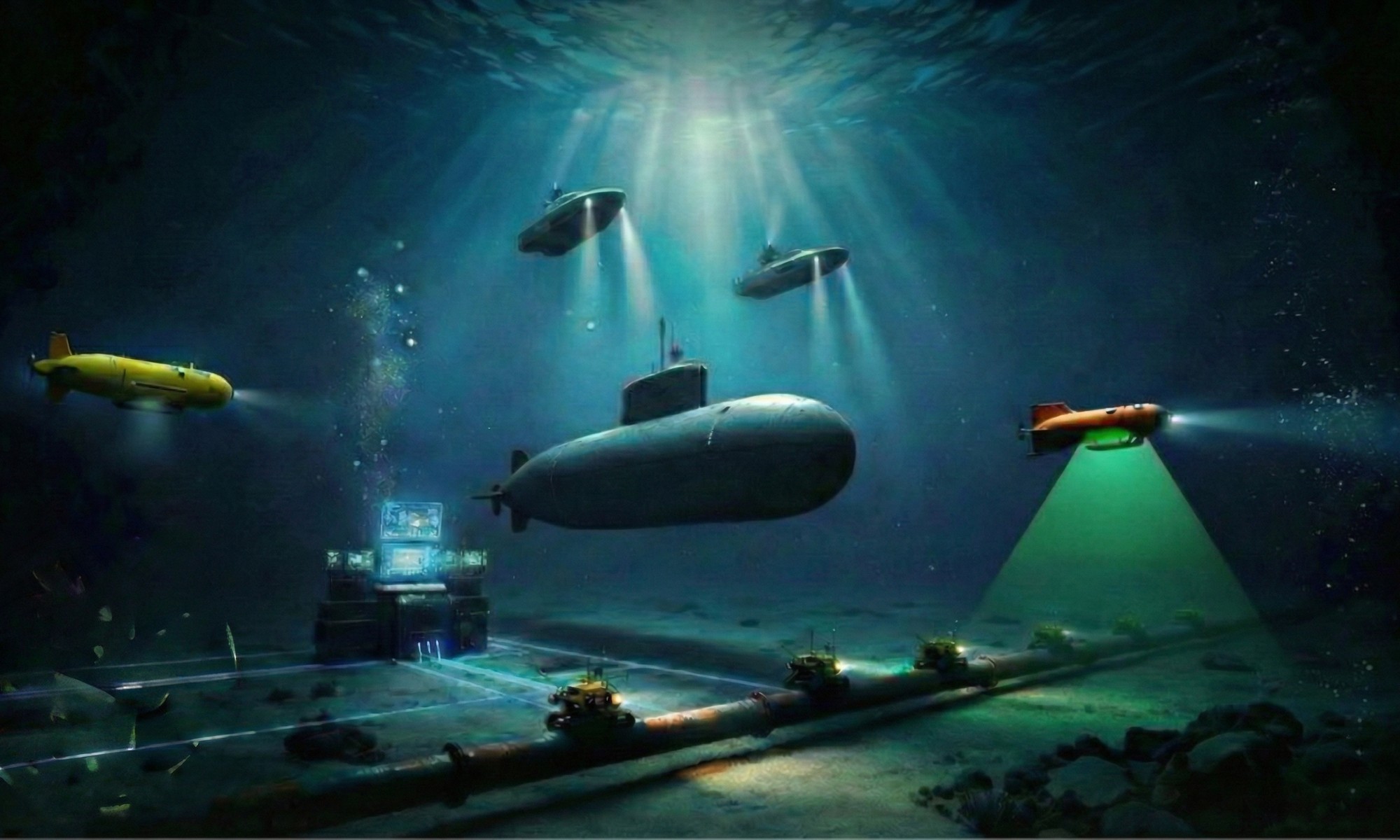

Everybody loves talking about the “shiny” parts of undersea warfare. The submarines. The sonars. The torpedoes. The AI. The autonomy.
But the most underappreciated technology in the whole kill chain is the humble decoy.
Because decoys are not accessories. They are the moment the fight becomes unfair. They turn “detection” into “doubt”. And in ASW, doubt is oxygen.
First, a reality check
A sonar contact is not a submarine. It is a hypothesis.
A torpedo warning is not a kill. It is a countdown.
Decoys exist to break the enemy’s confidence, timeline, and geometry. Not in theory. In the one place that matters: the operator’s screen and the weapon’s seeker head.
And here is the controversial bit.
If your ASW plan has no serious decoy and countermeasure story, you do not have an ASW plan. You have a hope-based concept of operations.
World War II: bubbles, ghosts, and operator psychology
The decoy story starts where so many undersea stories start: WWII.
German U-boats deployed Bold decoys, basically bubble generators. A canister produced hydrogen bubbles that created a false target for Allied ASDIC sonar. The intent was simple: make the escort chase the wrong echo long enough for the real boat to slip away.
They also used Sieglinde, a more “active” deception concept. Instead of just bubbles, this decoy could move and vary depth to imitate submarine-like behavior and sonar returns. In modern language, it was an early attempt at a programmable acoustic lie.
German U-boats used sensitive acoustic detection (passive sonar with beamforming) to track convoy ships by propeller noise. British engineers sought help from Scottish whaler Angus McCloud, who suggested using whale bones as underwater acoustic decoys. He claimed certain bones produced resonant harmonics when struck, a trick whalers used to imitate boats. The Royal Navy built metal frames holding whale bones with mechanical strikers. In blind tests, trained sonar operators reportedly mistook the sound for real propellers and cavitation. Produced from spring 1943, the decoys created phantom targets, drawing attacks away and reducing convoy losses.

The key lesson from WWII is not the chemistry or the mechanics. It is the human factor.
A decoy does not need to be perfect. It needs to be believable under stress.
ASW has always been a race between classification and doubt. The decoy’s job is to inject doubt faster than the hunter can classify.
Cold War: decoys become “platforms”
Fast forward to the Cold War, when sonar performance, processing, and torpedo seekers improved. Bubble tricks alone were not enough.
Enter systems like the Mobile Submarine Simulator (MOSS). This was not a noisemaker. It was closer to a small underwater vehicle designed to imitate the launching submarine’s signature, creating multiple credible “submarines” in the water. In other words: deception scaled up from a single false echo to a false tactical picture.
Read that again.
Decoys were quietly becoming unmanned underwater platforms decades before “UUV” became a PowerPoint word.
And the logic was ruthless:
- If the seeker is listening, give it something better to listen to.
- If the attacker is building a track, give them a more tempting track.
- If the kill chain needs confidence, poison the confidence.
Surface ship ASW and torpedo defense: the “Nixie era”
Decoys are not only for submarines.
Surface ships faced the same uncomfortable truth: torpedoes do not care about your flag, your pedigree, or your crew’s morale. They care about physics and signal processing.
That is where towed decoys like AN/SLQ-25 Nixie became iconic. A ship drags an acoustic source behind it to seduce incoming torpedoes away from the hull. It is simple in concept, brutally practical in execution, and widely fielded.

NOTE: I did a study about underwater decoys a long time ago. At the same time, we acquired a dog, a Weimaraner, who looked a bit like a small gray torpedo, so we called her Nixie.
This is the part people miss: towing a decoy is also about geometry. You are physically separating the “target” from the thing you cannot afford to lose.
And over time, towed decoys were no longer “just emitters”. They became part of integrated torpedo defense suites with detection, classification, tactics, and effectors.
Modern decoy technology: from gadgets to systems
Today’s threat torpedoes are faster, smarter, and harder to spoof. They can adapt, reacquire, and discriminate. The response has been to stop treating decoys as standalone items and start treating them as sensor-to-effector architectures.
Look at the UK’s Surface Ship Torpedo Defence (SSTD), known as Sea Sentor / Sonar 2170. It combines a towed sensor for torpedo detection with processing, tactical decision support, and both towed and expendable countermeasures. The point is not just to “throw noise”. The point is to recognize the threat and deploy the right lie at the right time.
And the development is accelerating. Ultra Maritime has recently discussed next-generation acoustic device countermeasures and ongoing modernization, which is a polite industry way of saying: “torpedoes got better, so our decoys must get nasty.”
On the submarine side, the same trend is visible. The U.S. Navy’s “next generation” countermeasure efforts with industry partners point to more capable acoustic devices intended to decoy torpedoes, not just distract them.
So what changed?
- Signal realism improved (frequency content, modulation, temporal behavior).
- Tactics became algorithmic (threat evaluation, recommended maneuvers, timing).
- Integration became the differentiator (the decoy is only as good as the detect-to-react loop).
The next step: decoys that are autonomous vehicles
Here is where it gets interesting for anyone working with autonomy.
The boundary between “decoy” and “USV/UUV” is dissolving.
A modern decoy already has:
- power
- processing
- an acoustic projector
- some level of programmability
Add propulsion, navigation, and a touch of onboard autonomy, and you have a disposable autonomous vehicle whose primary payload is deception.
Now imagine what that enables:
- A decoy that moves like the target, not just sounds like it.
- A decoy that adapts based on what it detects (active pings, weapon behavior, own-ship maneuvers).
- A decoy that creates multi-target confusion, not a single false contact.
- A decoy that cooperates with other assets, including other USVs and AUVs, as part of a distributed undersea defense screen.
This is not science fiction. It is simply applying autonomy to the oldest mission in undersea warfare: make the other guy wrong.
The uncomfortable conclusion
In undersea warfare, the side that sees first is dangerous. The side that makes the other side see wrong is lethal.
Decoys are not a bolt-on. They are a strategy. They buy time. They break tracks. They bend probability.
And as autonomy spreads across USVs, AUVs, and seabed infrastructure protection, the decoy stops being a “thing you deploy” and becomes a platform you operate.
The future decoy is not a noisemaker. It is an unmanned underwater actor in your tactical formation.
If you are designing an autonomous maritime system and decoys are not part of the architecture, you are building a race car without seatbelts.
Fast. Impressive. And one bad day away from becoming a very expensive reef.
Call-To-Action
Please comment and repost so we all can learn from each other.
Originally published in the Strategic Pings ))) newsletter on LinkedIn on 2026-03-04. Subscribe there to get new editions first.