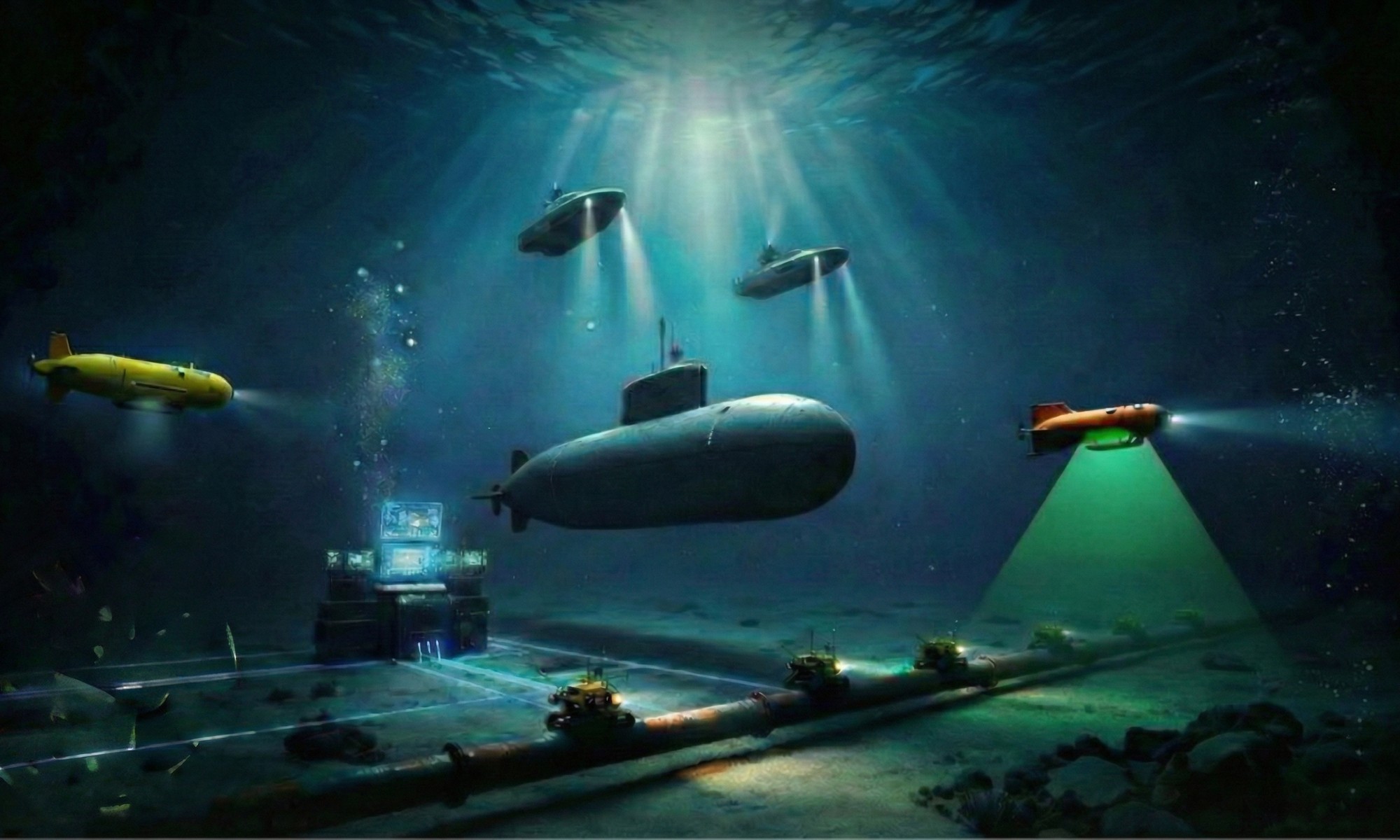

The underwater world is very good at making smart systems look stupid.
A sonar sees a clean contact. Crisp shadow. Nice shape. Looks important. Then the camera arrives and discovers a rock, a tire, or some innocent piece of seabed clutter with delusions of grandeur. Other times, video picks up something suspicious, but without sonar context, nobody knows where it sits, how far it extends, or how to find it again without wasting half the mission.
This highlights the core challenge.
In subsea operations, relying on a single sensor is insufficient—whether for mine countermeasures, critical infrastructure inspection, or autonomous systems operating with reduced supervision, bandwidth, and error tolerance.
Sonar and optical systems are complementary, not competing, technologies.
Sonar provides range and functions effectively in darkness, turbidity, sediment clouds, and poor visibility, where cameras offer limited value. Cameras deliver confirmation by revealing texture, edges, corrosion, color, and structural details that transform a “contact” into a decision.

Separately, each is useful.
Together, they become operationally decisive.
Many still overlook this: the underwater challenge is no longer detection—modern sonar excels at that. The true challenge is identifying the contact’s nature, significance, and appropriate response. Detection is inexpensive; understanding is costly.
Data fusion is how you lower that cost.
High-resolution sonar, especially SAS, gives autonomous platforms the ability to detect, classify, and map targets at stand-off range with remarkable consistency. Forward-looking sonar adds the immediate awareness needed for obstacle avoidance and close navigation when visibility collapses. Multibeam provides the wider terrain context, the seabed geometry, and the route structure. Then optical sensors move in and do what they do best: confirm, inspect, and remove doubt.
That handoff from acoustic detection to visual verification is where the mission becomes faster, safer, and far more credible.
In mine countermeasures, sonar quickly surveys wide areas and identifies candidate contacts. However, the main effort begins when operators determine which contacts warrant further inspection. Fusing sonar with video reduces false positives, enhances re-acquisition, and accelerates classification, narrowing suspicious shapes to actual issues.
That is not just efficiency. That is an operational advantage.
The same applies to offshore energy and subsea infrastructure. Sonar detects changes in burial, free spans, seabed scouring, and structural exposure across large areas. Video confirms asset condition up close, including corrosion, marine growth, coating damage, weld integrity, and mechanical defects. Proper fusion of these data streams produces defensible asset intelligence, not just inspection footage.
Of course, none of this works by magic.
Fusion delivers value only when geometry is correct. Calibration, timing, and spatial alignment are critical. Misaligned sonar data and video frames lead to confidently incorrect results, which underwater can be costly and embarrassing.
Done right, though, fusion changes the entire logic of autonomy.
Now the vehicle is not just reacting to isolated sensor feeds. It is building layered understanding. It can detect with sonar, verify with video, correlate with bathymetry, update a 3D model, and support much better decisions in real time. That means fewer wasted dives, less operator overload, more reliable maps, and far better mission confidence.
The industry often assumes intelligence starts with software.
It does not.
Intelligence begins with perception. Good perception begins with sensor fusion. And underwater, the smartest move is to stop forcing sonar and cameras to operate like separate tribes with separate truths.
Sonar finds. Video proves. Fusion wins.
That is not a nice-to-have feature.
That is the future of subsea autonomy.
— Thomas Meurling Strategic Pings Global USV Strategy, Sensors and Seabed Warfare
Originally published in the Strategic Pings ))) newsletter on LinkedIn on 2026-03-09. Subscribe there to get new editions first.