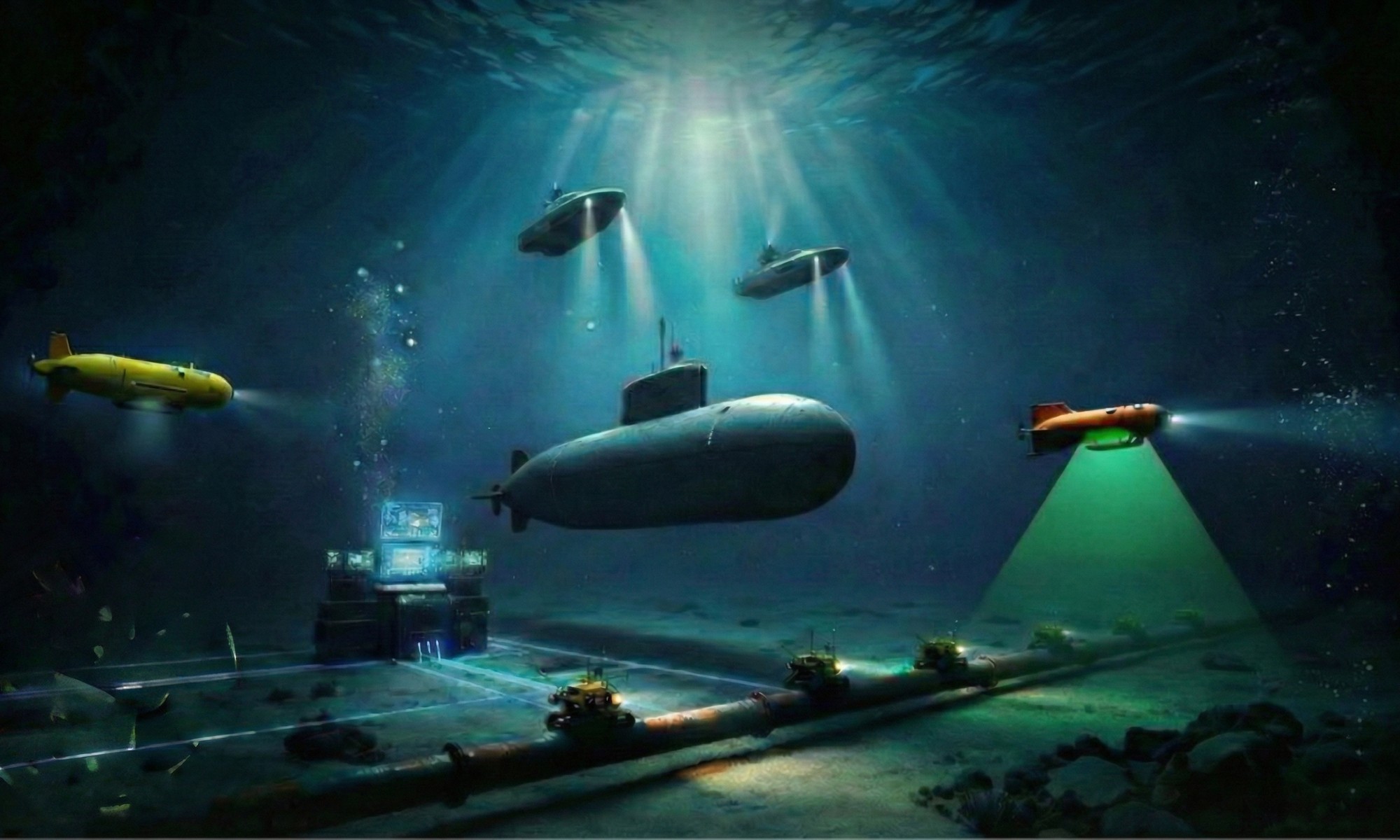

Oceanology International 2026 in London (10–12 March) saw a large wave of new sonar, autonomy, data, and sensor‑platform launches, rather than a single “master list,” but several key themes and headline products stand out.
Major new hardware and platforms
Teledyne Marine unveiled the SeaBat D100 (first of a new “D‑Series” deep‑water multibeam echosounder) plus SeaBat T51 Integrated Dual Head systems that combine two multibeam heads into one processor, increasing swath coverage and along‑track density while simplifying cabling and footprint.
GeoAcoustics launched a new low‑voltage boomer (GeoPulse LF 101) and a major expansion of its bathymetric sonar range, including a new sub‑bottom profiler and updated multibeam and side‑scan systems aimed at marine, offshore‑energy, and geotechnical survey workflows.
Cerulean Sonar introduced Omniscan 3D, a high‑resolution imaging sonar that adds full 3D point‑cloud rendering on a true spatial mesh, building on the existing Omniscan family.
RBR launched the Generation⁴ logger family (RBRsolo⁴, RBRduet⁴, RBRduraturo⁴) with multi‑rate sampling, fast downloads, and large memory, plus a new RBRcoda chl‑a sensor for real‑time chlorophyll‑a in deep ocean profiles.

AUVs, ROVs, and autonomy
Skarv Technologies launched the Corax 600 AUV system, marketed around simple operation and very fast on‑board processing to turn data into actionable insights in minutes.
EIVA introduced NaviSuite ROV Autonomy, a software package aimed at standardizing ROV inspection workflows and enabling higher‑level automation.
Teledyne also showcased a Gavia AUV with integrated SeaBat T20 multibeam and Compact Navigator, plus the Slocum Sentinel glider “Redwing” on its around‑the‑world mission.
New sensing and imaging products
OceanSight (formed by Xpv Water Partners) used Oi26 to present an expanded multi‑brand platform for subsea sensing and intelligence, including the recently acquired Sound Metrics high‑resolution imaging sonar assets; this is more of a strategic platform than a single product, but it bundles several underlying imaging capabilities.
SeaSignal introduced a next‑generation Digital Recording Hydrophone with ultra‑high‑fidelity audio, >24 hours battery life, scriptable operation, and Gigabit‑Ethernet offload so an 8‑hour 100 kHz / 32‑bit recording can be downloaded in 2–3 minutes.
Cloud, data, and connectivity
The Marine Technology Society (MTS) launched BlueConneX, an AI‑powered platform that maps and connects the ocean‑enterprise landscape, providing AI‑driven summaries, trends, and industry insights.
WSense debuted WCloud, a cloud‑based platform for wireless underwater monitoring and communications that can ingest and visualize dozens of sensors in real time, with analytics and generative‑AI‑driven KPIs.
Notable developments and themes
Best Stand goes to R3Vox, which had an amazing display

Multiple exhibitors pushed integrated dual‑head multibeam systems, AI‑enabled quality control, and automated workflows for survey and USV deployments, especially around GeoAcoustics, Teledyne, and Exail (which highlighted its Sams synthetic aperture & mapping sonars and related sub‑bottom profilers).
The “COAST” focus at Oi26 highlighted coastal resilience and real‑time monitoring platforms, with new products emphasizing real‑time data, predictive modelling, and integrated ocean‑data platforms for coastal protection and adaptive infrastructure.
Originally published in the Strategic Pings ))) newsletter on LinkedIn on 2026-03-18. Subscribe there to get new editions first.