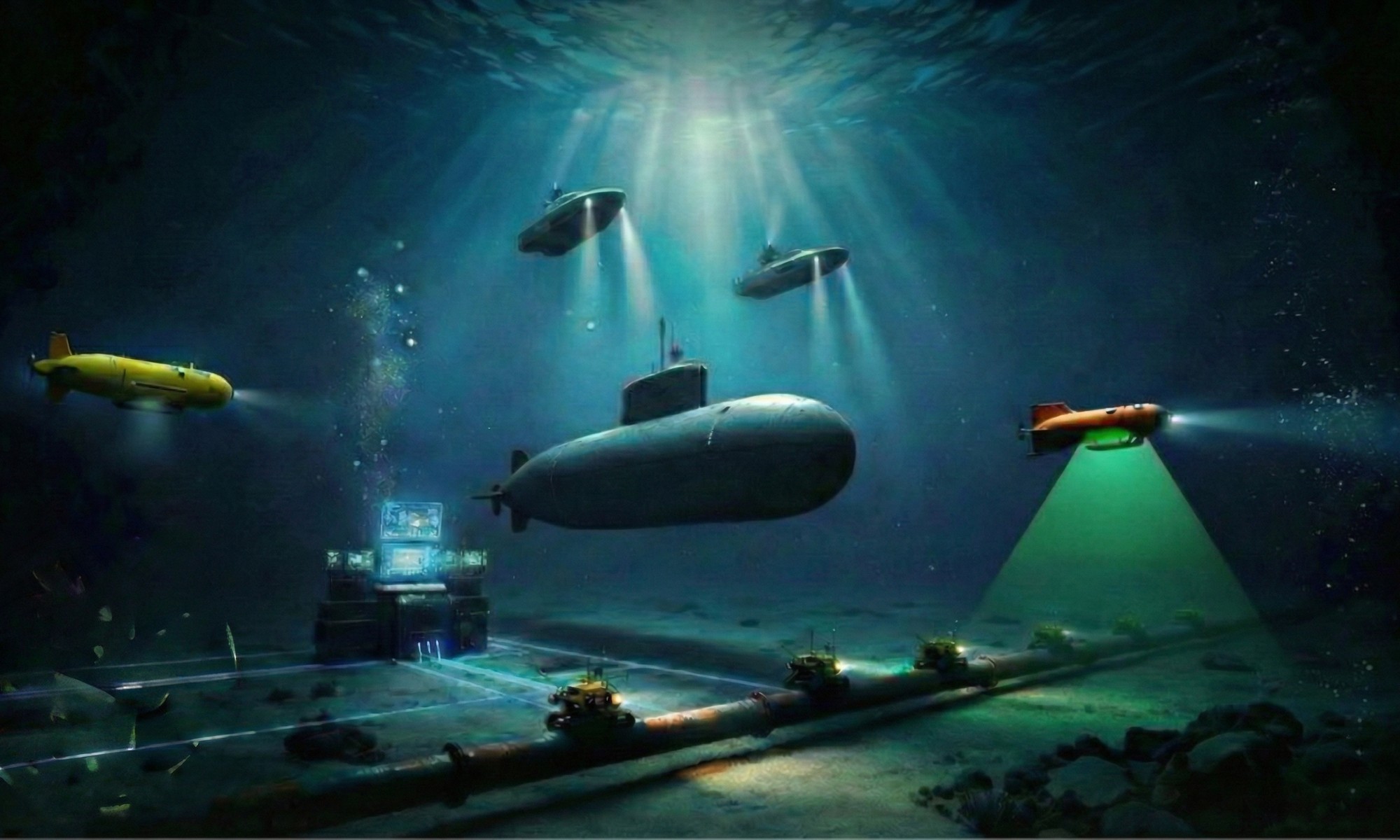

Naval mines present a uniquely disruptive threat.
Modern warships cost billions, and tankers carry valuable cargo. Global energy markets rely on predictable sea lanes. Yet a relatively cheap mine ($1500), deployed by a fishing boat or patrol craft, can disrupt strategy, spike insurance, halt traffic, and unsettle both military leaders and markets.
That is the genius of the mine. It does not need to sink a fleet. It only needs to create doubt.
And in a chokepoint like the Strait of Hormuz, doubt is operationally contagious.

This is where geography stops being background and becomes a weapon. On paper, the Strait looks wide enough. In reality, commercial traffic is funneled into narrow traffic lanes, which means a small number of mines can create disproportionate disruption. This is not just a naval problem. It is a global trade problem with a sonar solution attached to it.
The Threat Profile Is Built for Asymmetry
The mine threat in a chokepoint is not one thing. That is where many simplified conversations go wrong.
You are not dealing with a single neat category of weapon. You are dealing with a layered threat set. Classic contact mines remain dangerous because they are cheap, simple, and psychologically effective. Bottom influence mines are more sophisticated and far more selective, using magnetic, acoustic, and pressure signatures to wait for the right target. Then you have rising mines, which turn the seabed into an ambush position and compress reaction time to almost nothing.
This matters because each mine type creates a different tactical problem. One threatens the hull. Another threatens confidence. The third threatens timelines.
And the environment helps the defender. Variable bathymetry, cluttered seafloor, internal wave activity, coastal traffic, and shallow-to-moderate littoral conditions create exactly the kind of messy operating picture that mine warfare loves. Mines do not need perfect hiding places. They only need enough ambiguity to slow you down.
That is the real weapon here. Delay.

A minefield in a chokepoint functions not only as an obstacle but as a negotiation tool backed by explosives.
The Solution Is Not Heroics. It Is a System
Mine countermeasures once relied heavily on courageous personnel performing hazardous tasks in dangerous environments. This approach deserves respect but not nostalgia.
The modern answer is layered, robotic, persistent, and frankly far less sentimental.
First, you need domain awareness before the mines go in. Persistent surveillance matters because clandestine minelaying often hides inside normal maritime traffic. Pattern-of-life analysis, long-endurance unmanned systems, and AI-assisted anomaly detection are no longer nice extras. They are the front line of prevention. If you can identify the craft, route, timing, and behavior associated with mine deployment, you are not just clearing mines. You are shutting the faucet before the floor floods.
Second, once the threat is in the water, you need a detect-to-engage chain that keeps sailors outside the live minefield. This is where unmanned surface and airborne systems earn their keep. Airborne laser systems can search the water column quickly for moored threats. Unmanned sweep systems can trigger influence mines by pretending to be the kind of ship the mine wants to kill. Expendable neutralizers can then prosecute confirmed targets without asking a diver to become the last part of the kill chain.
That is the strategic shift. Not just finding mines, but industrializing the process of dealing with them.
Because in real mine warfare, speed matters, but confidence matters more. One missed mine can reopen the crisis.
The AQS-20C Sonar System Deserves Its Own Conversation
If you are serious about modern minehunting, you cannot talk only about platforms. You have to talk about payloads. And specifically, you have to talk about the AN/AQS-20C.
This is not just another towfish. It is one of the more serious answers to the mine problem because it combines multiple sensing modes into one operational package. Towed by the Common Unmanned Surface Vehicle, the AQS-20C brings side-looking synthetic aperture sonar, forward-looking sonar, a gap-filler capability for the nadir zone, and an electro-optical laser imaging function for shallow and near-surface identification.
That matters for a simple reason. Mines are opportunists, and blind spots are invitations.
Traditional minehunting involves tradeoffs: range versus detail, imagery versus speed, coverage versus gaps beneath sensors. The AQS-20C addresses these by combining multiple detection and classification functions in a single pass. In mine warfare, this enhances survival, tempo, and clearance probability.

Combined with the CUSV, this system provides critical standoff capability. The vehicle operates in shallow littoral waters, tows substantial payloads, and maintains endurance. This shifts risk by advancing sensors and platforms while keeping sailors at a safer distance.
That is how it should be.
Mine warfare is among the least glamorous naval operations. Clearing shipping lanes slowly and methodically lacks heroism but is strategically critical. Without reopening sea lanes, discussions of sea control become hollow.
Final Ping
The mine threat is not impressive because it is advanced. It is impressive because it is efficient.
That is why the answer cannot be a single ship, a single sonar, or a single brilliant operator. It has to be a layered architecture of surveillance, unmanned systems, advanced sensing, deception, and precise neutralization. The side that wins mine warfare is usually the side that understands two things first: chokepoints amplify fear, and fear travels faster than any fleet.
Sea mines are cheap. Strategic paralysis is not.
And that is exactly why systems like the CUSV and the AQS-20C matter so much. They do not just find mines. They help restore freedom of movement, which in maritime terms is another way of saying they help restore leverage.
Because in the end, the mission is not to admire the threat.
It is to make it irrelevant.
Call-To-Action
Please share your comments and insights so we can all learn from one another.
Originally published in the Strategic Pings ))) newsletter on LinkedIn on 2026-03-24. Subscribe there to get new editions first.