
Executive Summary
Thales’s proposed €3.9 billion acquisition of Exail is one of the most important undersea-defense transactions in years. It combines a major sonar, combat-systems, communications, and defense-integration company with a specialist in maritime robotics, synthetic-aperture sonar, inertial navigation, photonics, and autonomous mine countermeasures.
The operational logic is sound. The competitive risk is stronger than many navies may admit.
A vertically integrated supplier can reduce system friction, accelerate delivery, and provide an ITAR-free European route to stand-off MCM. It can also control the sensors, vehicles, navigation, mission software, interfaces, upgrades, and long-term support.
Convenience today can become dependency tomorrow.
The Deal Is Bigger Than MCM
First, a necessary correction: this is not yet a completed merger.
Thales has agreed to acquire the Gorgé family’s 35.51 percent stake and intends to launch a mandatory tender offer for the remaining shares at €134 per share. The offer represents a 44 percent premium to Exail’s unaffected June 25, 2026 share price and values the company at €3.9 billion. Closing remains subject to regulatory approvals.
The timing is no accident.
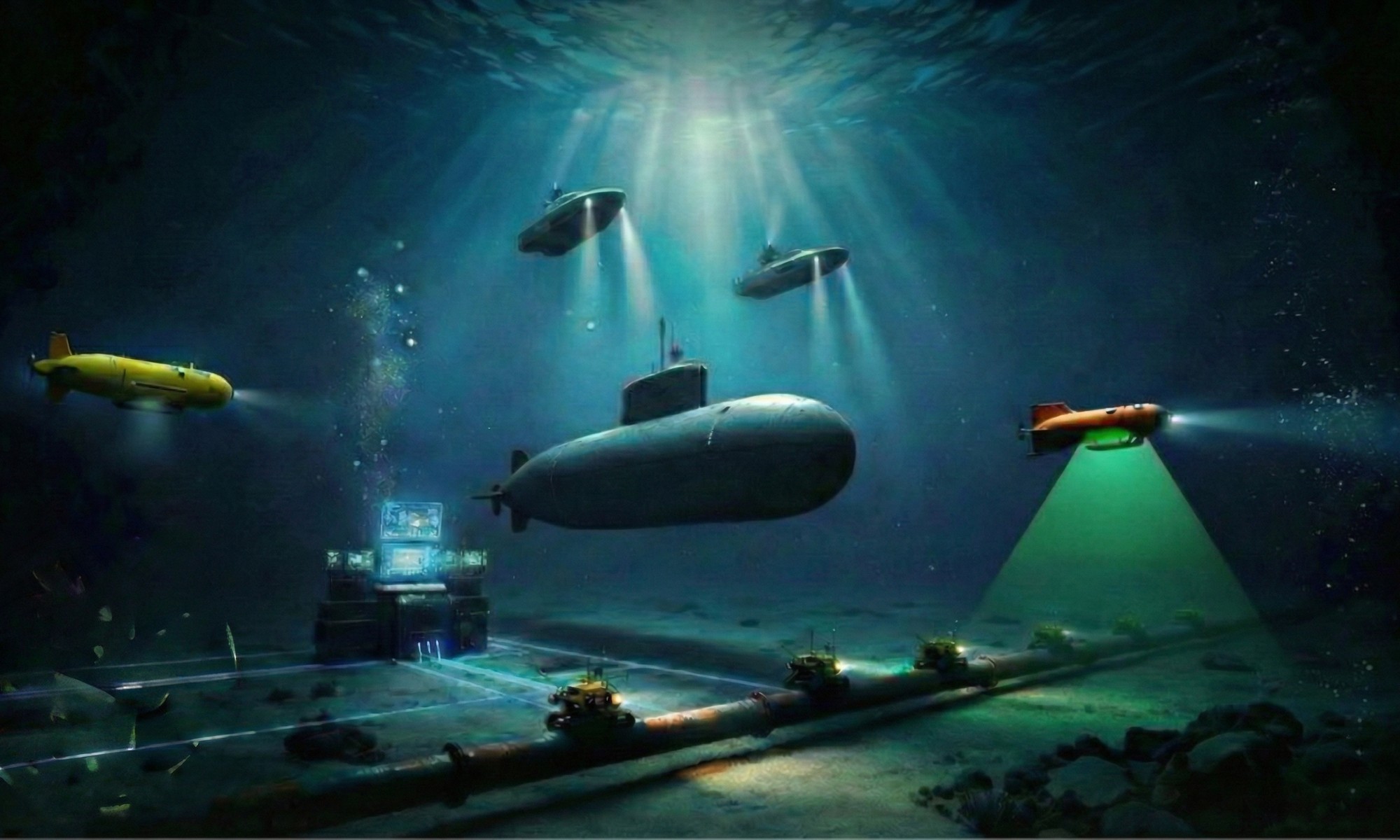
Navies are moving the sailor away from the minefield and sending robots forward. Exail already provides much of the robotic toolbox: Inspector USVs, A18-M AUVs, T18-M towed systems, UMISAS synthetic-aperture sonars, identification vehicles, disposal systems, inertial navigation, and mission-management software.
Thales brings scale, sonar expertise, combat systems, secure communications, systems engineering, global support, and serious R&D funding.

Put them together and you do not simply get another defense contractor. You get a company able to influence almost every layer between detecting a mine-like object and neutralizing it.
The Good News
For naval operators, the advantages are real.
Integration should become faster. Responsibility becomes clearer. The customer gains one industrial organization accountable for the complete mission chain. An ITAR-free portfolio also gives allied and non-aligned navies greater freedom to procure European systems without U.S. regulatory involvement.
Navigation may be equally important.
Exail’s fiber-optic gyroscope technology supports precise operations when GNSS is jammed, spoofed, unavailable, or tactically undesirable. In modern MCM, an AUV that cannot trust its position cannot trust its sonar mosaic either.
The Trap Below the Waterline
The danger is proprietary lock-in.
When one supplier owns the vehicle, sonar, navigation, autonomy, mission software, and support chain, open architecture can quickly become a brochure phrase.
A customer may technically be allowed to integrate a third-party payload while facing interface restrictions, certification costs, warranty concerns, and schedules that make the choice commercially impossible.
The Belgian-Dutch rMCM program deserves particular attention. Naval Group and Exail operate through the Belgium Naval & Robotics consortium. If Exail becomes part of Thales, Naval Group could find a critical robotics partner controlled by a major French competitor.

That does not automatically create a crisis. It creates legitimate questions around intellectual property, upgrade priorities, data access, and lifecycle support.
“One throat to choke” sounds attractive during procurement.
Twenty years later, it can become one supplier setting the price of every software update.
MCM Is Only the Beachhead
The next contest will likely be persistent uncrewed ASW.
Exail’s DriX family, Thales sonar systems, autonomous mission management, secure communications, and advanced navigation could support distributed networks searching large areas for submarines without keeping crewed ships permanently exposed.
Add machine-to-machine coordination, photonics, and future quantum navigation, and the strategic value extends far beyond clearing mines.
Call to Action
Navies should welcome industrial strength without surrendering architectural control.
Future MCM and ASW contracts should require published interfaces, government-owned data rights, third-party payload integration, modular certification, cyber-secure APIs, and a practical path for replacing sensors, vehicles, and mission software.
Do not buy a black box because the demonstration looked smooth.
Buy the mission capability. Keep the keys to the architecture.
Originally published in the Strategic Pings ))) newsletter on LinkedIn on 2026-07-17. Subscribe there to get new editions first.