
Executive Summary
The race for critical minerals has quietly moved offshore. Deep-Sea Mining (DSM) is no longer a distant concept—it is becoming a strategic maritime capability that could reshape energy security, industrial resilience, and geopolitical influence. Yet the greatest challenge is not simply recovering polymetallic nodules. It is operating safely, sustainably, and transparently in one of the most hostile environments on Earth.
The future of DSM will belong to organizations that combine advanced sonar, autonomous underwater vehicles (AUVs), remotely operated vehicles (ROVs), and intelligent environmental monitoring into one integrated operational ecosystem. In the deep ocean, the company that sees best will ultimately operate best.

The Ocean Floor Has Become Strategic Infrastructure
For decades, maritime professionals viewed the abyss as a scientific frontier. Today it is rapidly becoming an industrial one.
Driven by accelerating demand for copper, nickel, cobalt, and manganese, governments and industry are reassessing how strategic minerals are sourced. Terrestrial mining faces declining ore grades, permitting challenges, environmental scrutiny, and geopolitical concentration. Consequently, the international seabed has become part of the broader discussion on supply-chain resilience.
But DSM introduces a unique paradox.
Unlike conventional mining, operations occur within a shared global environment where one poorly executed project could undermine public confidence in the entire sector. Technical excellence is therefore no longer sufficient. Operational legitimacy has become equally important.
Why Advanced Sonar and Underwater Robotics Matter
Operating at depths beyond 4,000 metres removes almost every human advantage.
There is no natural light, immense hydrostatic pressure, limited communications, and virtually no opportunity for direct intervention. Every operational decision depends upon underwater sensing and autonomous systems.
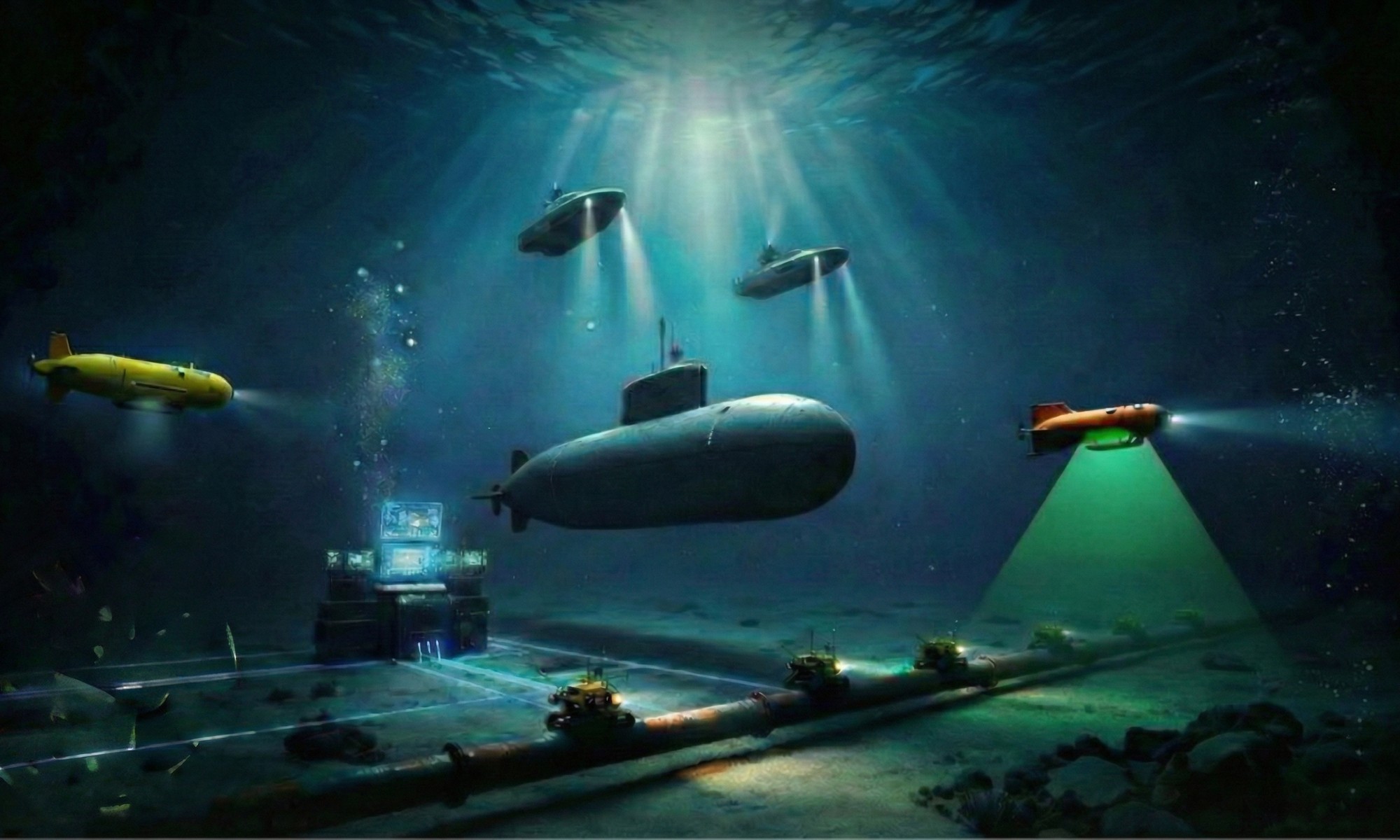
Advanced multibeam sonar, synthetic aperture sonar, forward-looking imaging sonar, AUVs and ROVs have therefore become the “eyes, ears and hands” of modern deep-sea operations.

Together they create a continuously updated digital picture of both the seabed and the surrounding water column, allowing operators to collect minerals while simultaneously monitoring environmental performance.
In other words, robotics without sonar is blind.
Sonar without robotics is passive.
Together, they become strategic.
Three Critical Problems Every DSM Operator Must Solve
1. Visibility in an Invisible Environment
Sediment plumes are far more than an environmental concern.
They are an operational risk.
As suspended particles increase, reverberation rises and sonar performance deteriorates. Acoustic shadows emerge, targets disappear, and autonomous navigation becomes increasingly uncertain.
Modern AUVs equipped with adaptive sonar, environmental sensors and real-time acoustic modelling can continually adjust mission profiles, preserving situational awareness even as seabed conditions evolve.
The lesson is straightforward:
If you cannot see through your own plume, you cannot safely mine.

2. Precision Extraction Without Environmental Escalation
Future mining systems cannot simply maximise production.
They must minimise disturbance.
Collector vehicles using Coanda-inspired flow management, combined with precision ROV intervention, enable selective nodule recovery while reducing sediment entrainment. Integrated sonar mapping continuously verifies seabed conditions before, during and after extraction.
This transforms environmental compliance from periodic reporting into continuous operational intelligence.
The companies that measure their footprint in real time will earn greater credibility than those measuring it months later.
3. Autonomous Decision-Making Requires Trusted Data
Automation is only as reliable as the information feeding it.
Modern AUVs now perform simultaneous seabed mapping, obstacle avoidance, infrastructure inspection, pipeline monitoring and plume assessment during a single deployment.
Coupled with advanced acoustic propagation models, these vehicles create an adaptive feedback loop that continuously improves navigation, mission planning and environmental performance.
This represents a shift from reactive operations toward predictive maritime autonomy.
The future mine will not simply collect minerals.
It will continuously learn.
Strategic Perspective
Perhaps the biggest misconception surrounding DSM is that the industry is fundamentally about mining.
It is not.
It is about information superiority beneath the surface.
The organizations that successfully integrate sonar physics, robotics, environmental science and operational data into one coherent decision-making framework will establish the benchmark for responsible offshore resource development.
The real competitive advantage will not be larger collector vehicles.
It will be better underwater intelligence.
Because in the deep ocean, uncertainty is the greatest operational cost.
Final Thought
History shows that every major maritime revolution has been driven by better navigation—from celestial navigation to radar, GPS and electronic charts.
Deep-sea mining represents the next chapter.
This time, however, navigation is no longer about crossing oceans.
It is about understanding them.
The future belongs to those who can see clearly in the darkest waters.
What role do you believe advanced sonar, AUVs, and ROVs will play in making deep-sea mining both commercially viable and environmentally responsible? Share your perspective in the comments—I look forward to the discussion.
Originally published in the Strategic Pings ))) newsletter on LinkedIn on 2026-07-07. Subscribe there to get new editions first.