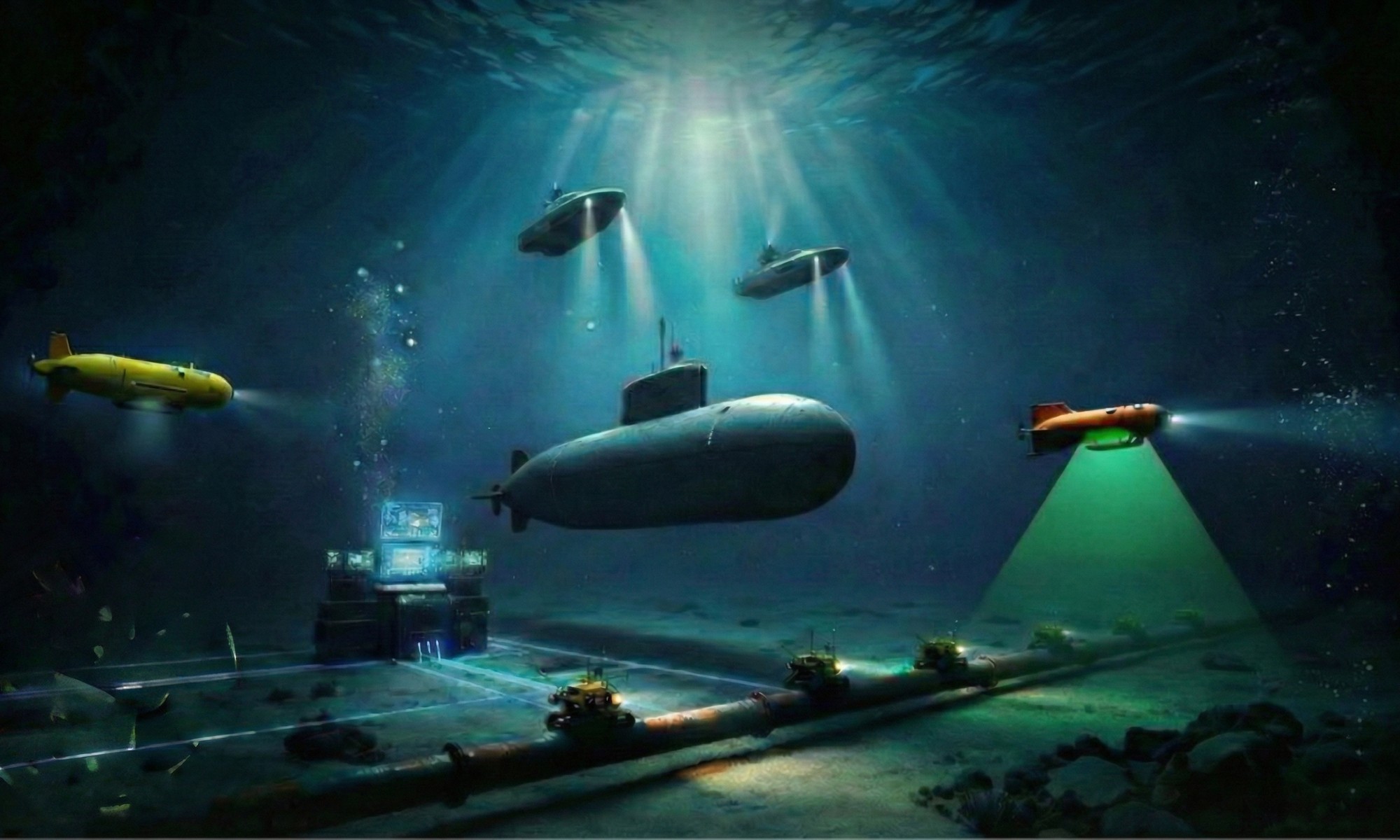

In mine warfare, technology rarely evolves in neat increments. It tends to leap, driven by necessity, shaped by adversary innovation, and validated only at sea. Today, Mine Countermeasures (MCM) finds itself in the middle of such a leap. The proliferation of stealthy, low-target-strength sea mines has fundamentally shifted the operational center of gravity, from detection to classification.
Finding objects on the seabed is no longer the hard part. Modern sonars are exquisitely sensitive. The real challenge is determining, with speed and confidence, whether a contact is a mine or just another piece of seabed clutter. In congested littoral waters, this distinction is the difference between operational momentum and paralysis.
Classification Is the New Battlespace
Modern sonar systems are designed to detect faint acoustic returns. Inevitably, this sensitivity produces a flood of detections. Natural rocks, discarded debris, and seabed features all generate returns that initially appear suspicious. At first pass, these are flagged as Mine-Like Echoes (MILECs). Only after detailed analysis can they be refined into Mine-Like Contacts (MILCOs) worthy of further action.

As detection performance improves, the number of MILECs grows exponentially. The burden shifts downstream, onto classification. This is where the “ambiguity factor” becomes decisive—the proportion of benign objects that look statistically similar to real mines. A high ambiguity factor translates directly into wasted sorties, delayed clearance, and increased risk. Reducing it is now the primary operational objective in MCM.
The most effective way to do so is straightforward in concept, if complex in execution: deliver higher-resolution imagery, from multiple perspectives, at operationally relevant ranges. This is precisely where Synthetic Aperture Sonar (SAS) has become indispensable.
Why Synthetic Aperture Sonar Changes the Game
Traditional Side Scan Sonar remains limited by physics. Along-track resolution degrades with range, forcing an uncomfortable trade-off between coverage and clarity. Wide-area surveys produce imagery that is often insufficient for confident classification of modern, low-observable mines. If you look at Klein 5000 and 5900, they are still performing well, but not as well as SAS sonars.
SAS breaks this constraint. By coherently combining successive acoustic pings along a precisely tracked trajectory, SAS synthesizes a long virtual array. The result is range-independent, centimeter-scale resolution across the entire swath. For MCM commanders, this means wide-area coverage without sacrificing image fidelity—an essential capability when time and certainty are equally critical.

This leap has catalyzed a new generation of highly specialized systems, each optimized for different points in the MCM kill chain.
Four Philosophies, One Objective
The four different companies and SAS sonar described below share some similarities but differ in their design philosophies.

Thales – SAMDIS The SAMDIS system is engineered around classification confidence. Its defining feature is multi-aspect imaging, capturing three distinct views of each contact in a single pass and generating six high-resolution SAS images. This approach directly addresses shadow ambiguity, one of the most persistent sources of false alarms. Integrated into the Franco-British MMCM program, SAMDIS emphasizes probability over pace, delivering classification confidence exceeding 95% in cluttered environments.
Exail – UMISAS UMISAS reflects a systems-integration philosophy. By combining ultra-high-resolution SAS imagery with co-registered interferometric bathymetry, it produces a precise geometric model of the seabed. Its autonomous, self-powered T18-M towed body minimizes drag and enables high-speed operations from both crewed vessels and Unmanned Surface Vessels. The result is a tightly integrated sensor-platform ecosystem optimized for robotic MCM operations.
Northrop Grumman – AN/AQS-24 Speed defines the AQS-24. Designed to clear lanes and map threat environments rapidly, it couples high-speed SAS with an integrated Laser Line Scanner. This hybrid architecture enables detection, classification, and optical identification in a single sortie. By collapsing the traditional “detect–classify–identify” sequence, the system delivers a powerful operational advantage when time is the dominant constraint.
Kraken Robotics – KatFish KatFish approaches the problem from a platform-stability perspective. Its actively stabilized towfish uses articulated control surfaces to physically counteract motion, ensuring the coherent data quality SAS demands. Combined with a nadir gap-filler (Norbit MBES) and wide swath, this enables exceptional area coverage rates without sacrificing resolution. The emphasis here is efficiency—maximizing high-quality data collected per hour at sea.
Comparison

Choosing Where to Win
There is no universally “best” SAS system. Each excels at a different point in the MCM kill chain. High-speed detection favors systems like the AQS-24. Dense, cluttered seabeds reward multi-aspect classification approaches such as SAMDIS. Persistent, wide-area mapping benefits from stabilized, high-coverage solutions like KatFish. Integrated robotic fleets align naturally with UMISAS.

What matters is the alignment between strategy and sensor philosophy.
My personal view:
- THALES multi-view is the next generation SAS and, in my mind, superior, especially for classification. However, it is costly.
- If you need to go very high-speed, you need the Northrup-Grumman AQS-24.
- The EXAIL is more focused on AUV than towed systems.
- The Kraken KatFish is the most budget-friendly, with excellent performance.
A Data-Driven Future Beneath the Keel
Mine countermeasures are moving inexorably toward autonomous, data-centric operations. Synthetic Aperture Sonar is the enabling sensor at the heart of this transformation, providing the resolution, consistency, and confidence modern mine warfare demands. As competition accelerates and systems mature, the real advantage will belong to navies that understand not just what these sensors can do, but where, when, and why to deploy them.
In modern MCM, clarity is currency. SAS is how it is earned
Call to Action
Please subscribe to my newsletter, share, and comment. That is the best way to create a dialogue so that we can all learn from each other.
Originally published in the Strategic Pings ))) newsletter on LinkedIn on 2026-01-06. Subscribe there to get new editions first.