
After being in the sonar design business for over 30 years, there are not many things that get me excited. But this Nano76 is an exception, I got really excited when I was reading about this development. I couldn’t find much, so I decided to collect all available information and present it in one of my Newsletters. This is based on open public information, so it may not be 100% correct.
Big shifts in naval warfare rarely arrive with fanfare. They arrive quietly. Smaller. Lighter. Smarter.
And then, a few years later, everyone wonders how they ever operated without them.
Thales’ recent unveiling of the Sonar 76Nano belongs squarely in that category.
At first glance, it looks like a classic case of miniaturization. In reality, it is something far more disruptive.
It is a strategic payload designed for a world where seabed warfare, autonomous systems, and persistent underwater surveillance are no longer optional.
They are the baseline.
From Flagships to Tiles
The Sonar 76Nano is not an incremental upgrade. It is a philosophical shift.
Thales has taken the DNA of its flagship Sonar 2076, the system that sits at the heart of the Royal Navy’s most capable submarines, and compressed it into modular tiles measuring roughly 75 by 75 centimeters.

This development is significant.
When high-end sonar is no longer limited to nuclear submarines and large frigates, the balance of power beneath the sea shifts fundamentally.
Advanced acoustic sensing is no longer limited to:
- Billion-dollar platforms
- Limited fleet numbers
- Crewed assets with political risk attached
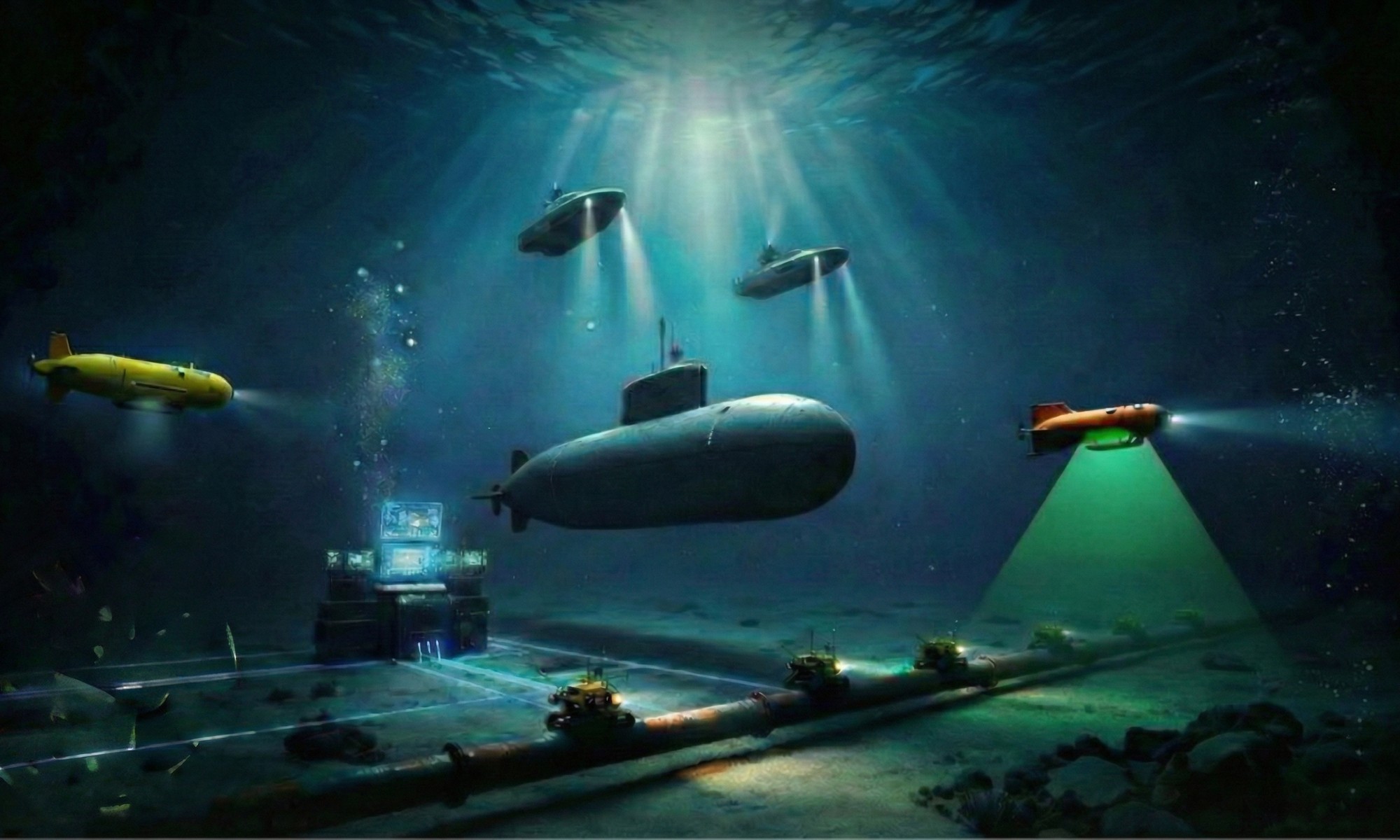
Instead, it can be deployed on UUVs, seabed nodes, and autonomous systems designed for quiet, long-term operation.
That is the real breakthrough.
Why This Happened So Fast
This prototype did not take a decade. It took ten months.
Thales invested over £2 million of its own funding to make it happen. That alone tells you something important.
This was not a technology-push project. It was a strategic response.
The subsurface domain is heating up. Fast.
Russian submarine activity around the UK has increased sharply. Chinese survey vessels are mapping seabeds across the Indian Ocean. Undersea cables and pipelines are no longer abstract infrastructure. They are targets.
At the same time, Western navies are operating fewer hulls. Fewer submarines. Fewer frigates.
But the ocean did not get any smaller.
That gap between demand and force structure is exactly where autonomous systems move from “interesting” to “essential”.
Autonomy Needs Real Sensors
There is an uncomfortable truth about autonomous platforms.
Autonomy without sensing is just expensive drift.

What makes the Sonar 76Nano important is not that it is autonomous-friendly. It is that it brings real acoustic capability to platforms that previously carried compromise sensors.
Active and passive modes matter here.
In passive mode, a UUV becomes a quiet listener. Persistent. Patient. Hard to detect.
In active mode, with low-probability-of-intercept signaling, it becomes something more interesting.
A node.
Not just a sensor, but part of a submerged network.
This is how underwater mesh networks start to look operational rather than academic. Vehicles that detect, classify, share, and cue without surfacing or calling home every five minutes.
That is a very different game.
Seabed Warfare Is No Longer Theoretical
For years, seabed warfare lived mostly in conference slides. That phase is over.
Cables have been cut. Pipelines have been sabotaged. Survey vessels are no longer assumed to be benign.
The Sonar 76Nano is clearly designed with this reality in mind.
Its integrated synthetic aperture sonar provides long-range, high-resolution seabed imaging that does not degrade with distance. That is exactly what you want when inspecting cables, pipelines, or suspicious seabed activity at speed.
More importantly, it enables persistence.
A UUV does not need a crew rotation. A seabed node does not need coffee.
It just listens. And watches.
The Real Power Is the Network
No modern sonar operates alone. And the 76Nano is very much a digital-native system.
Designed from the outset to plug into UK and NATO architectures, it feeds into a larger picture rather than creating yet another stovepipe.
That matters operationally.
Data from autonomous platforms only becomes strategic when it fuses with:
- Towed arrays
- Dipping sonars
- Fixed seabed sensors
- Intelligence feeds
This is how navies move from individual detections to what commanders actually want. A recognized persisitant underwater picture.
Or, put more bluntly. Who is down there. Where. And what they are doing.
Three Strategic Takeaways
If you zoom out, the Sonar 76Nano points to three very clear shifts.

First: High-end ASW is no longer exclusive Miniaturized, high-performance sonar breaks the monopoly of large, crewed platforms. That changes deterrence math. For everyone.
Second: The hybrid fleet is now unavoidable Crewed platforms orchestrating autonomous sensors is no longer a concept. It is becoming doctrine.
Third: Seabed security moves from reactive to persistent You cannot protect what you only inspect after something breaks. Persistent sensing changes the timeline. And the outcome.
Final Ping
The Sonar 76Nano is not just a smaller sonar.
It is a strategic enabler for how navies will think about underwater presence, risk, and control over the next decade.
Less about platforms. More about payloads. Less about episodic patrols. More about continuous awareness.
In seabed warfare, size still matters.
Just not in the way it used to…
Call To Actions
Please follow me to get my newsletters, every week. Comment and create discussions so we can all learn from each other. If you have any requests for newsletters, let me know and I see what I can do.
Future newsletters will include ASW with Unmanned Systems, Intruder Detection Systems and much more.
Originally published in the Strategic Pings ))) newsletter on LinkedIn on 2026-01-13. Subscribe there to get new editions first.