
Unmanned Surface Vehicles (USVs) are well established in hydrography and mine countermeasures. However, their most significant impact is now emerging in Intelligence, Surveillance, Reconnaissance (ISR) and Anti-Submarine Warfare (ASW).
I’m a strong believer in integrated ISR with Passive ASW, and as a former submariner (bubblehead), I believe they complement each other.
These missions involve challenging detection, strict timelines, and strategic consequences for errors. In this context, one principle remains:
A USV is not the capability. A USV enables the capability.
The true value lies in the payload, sensor integration, and the ability to convert raw data into actionable intelligence.
ISR Is No Longer About Sensors. It’s About Understanding.
Modern ISR-configured USVs serve as autonomous watchstanders. They operate continuously and do not miss radar sweeps.
The sensor suites are familiar: maritime surveillance radar, long-range EO/IR, AIS, electromagnetic sensors, and increasingly, passive acoustics. None of these are revolutionary on their own.
The transformation comes from how these sensors are integrated.
Radar establishes presence at range. EO/IR confirms identity. AIS either validates intent or exposes deception. EM sensors reveal electronic behavior invisible to the eye. Autonomy engines analyze patterns, correlate domains, and predict behavior.
Operators no longer monitor disconnected feeds; instead, they receive a coherent maritime picture.

This distinction is important. In gray-zone environments, where ambiguity is used as a tactic, early recognition of intent is often more decisive than firepower.
The modern EW and SIGINT landscape is being shaped by the strategic convergence of several interdependent technological trends. The integration of Artificial Intelligence (AI) and machine learning onto unmanned platforms—across air, sea, and land domains—is enabling autonomous sensor grids to operate at the tactical edge without constant human oversight.
These distributed networks of assets extend the reconnaissance horizon and reduce risk to personnel by removing the human operator from the immediate tactical environment. Concurrently, an industry-wide shift toward modular, open-architecture systems is the critical enabler for this evolution. This “future-friendly” design philosophy allows for the rapid integration of new AI algorithms and diverse sensor payloads onto unmanned platforms, ensuring that forces can adapt faster than their adversaries. Together, these trends are creating a more distributed, resilient, and lethal force, capable of processing vast amounts of intelligence data at machine speed to accelerate decision-making and stay ahead of emerging threats.
Prominent manufacturers are Northrup-Grumman, HENSOLDT, Rafael, L3Harris, and Teledyne.
ASW: Where USVs Deliver Disproportionate Advantage
While ISR is complex, ASW is even more demanding. It remains the most challenging mission in maritime warfare and is increasingly costly to sustain with only manned platforms.
Traditional ASW relies on frigates, maritime patrol aircraft, and helicopters. While these platforms are highly capable, they are limited by cost, crew requirements, and endurance.
USVs change this dynamic.
A well-designed USV can tow a passive array at four to six knots for extended periods, operating quietly and persistently without risking personnel. With modern onboard acoustic processing, including broadband, LOFAR, DEMON, and environmental modelling, even medium-sized USVs can detect, classify, and track targets.
This capability is operational, not experimental, and provides significant leverage.
Ultra-low radiated noise makes USVs effective passive sensors. Their long endurance allows for continuous patrols. Low-probability-of-intercept communications maintain stealth, while autonomous behaviors ensure contact geometry and track continuity.
When deployed in numbers, USVs form mobile acoustic pickets, extending ASW coverage well beyond the limits of manned forces.
Passive Towed Arrays, utilized by both submarines and surface combatants, are substantial in length, up to 150-2000 meters aperture, which require larger winch systems, not feasible on medium-sized USVs.
For USVs, the typical aperture length will be 25–150 meters, due to the size and weight of winch equipment.
Prominent manufacturers are L3Harris, THALES, ATLAS, SEA, Sensor Technologies, Raytheon, and Kongsberg
Integration Is the Capability
As with hydrography and mine warfare, the hull itself is secondary. In ISR and ASW, integration is everything.
Precision navigation and motion reference underpin acoustic performance.
Secure, resilient communications, LOS, SATCOM, mesh, move intelligence where it matters.
Edge computing enables real-time processing, reducing latency and bandwidth demand.
Autonomy manages execution: patrol adaptation, contact following, dynamic re-tasking. Humans remain firmly in the loop, supervising intent and authorizing decisions—but they are no longer burdened by mechanical control.
This is why leading USVs should not be viewed as “remote boats.” They are autonomous intelligence nodes, designed to operate as part of a wider maritime sensing architecture.
How These Systems Are Being Used Today
Globally, ISR USVs conduct persistent patrols along EEZ boundaries, monitor smuggling routes, and identify dark shipping by fusing AIS, radar, and EO/IR data.
Ports and coastal authorities use USVs to track small craft, monitor choke points, and correlate surface activity with acoustic and electromagnetic signatures.
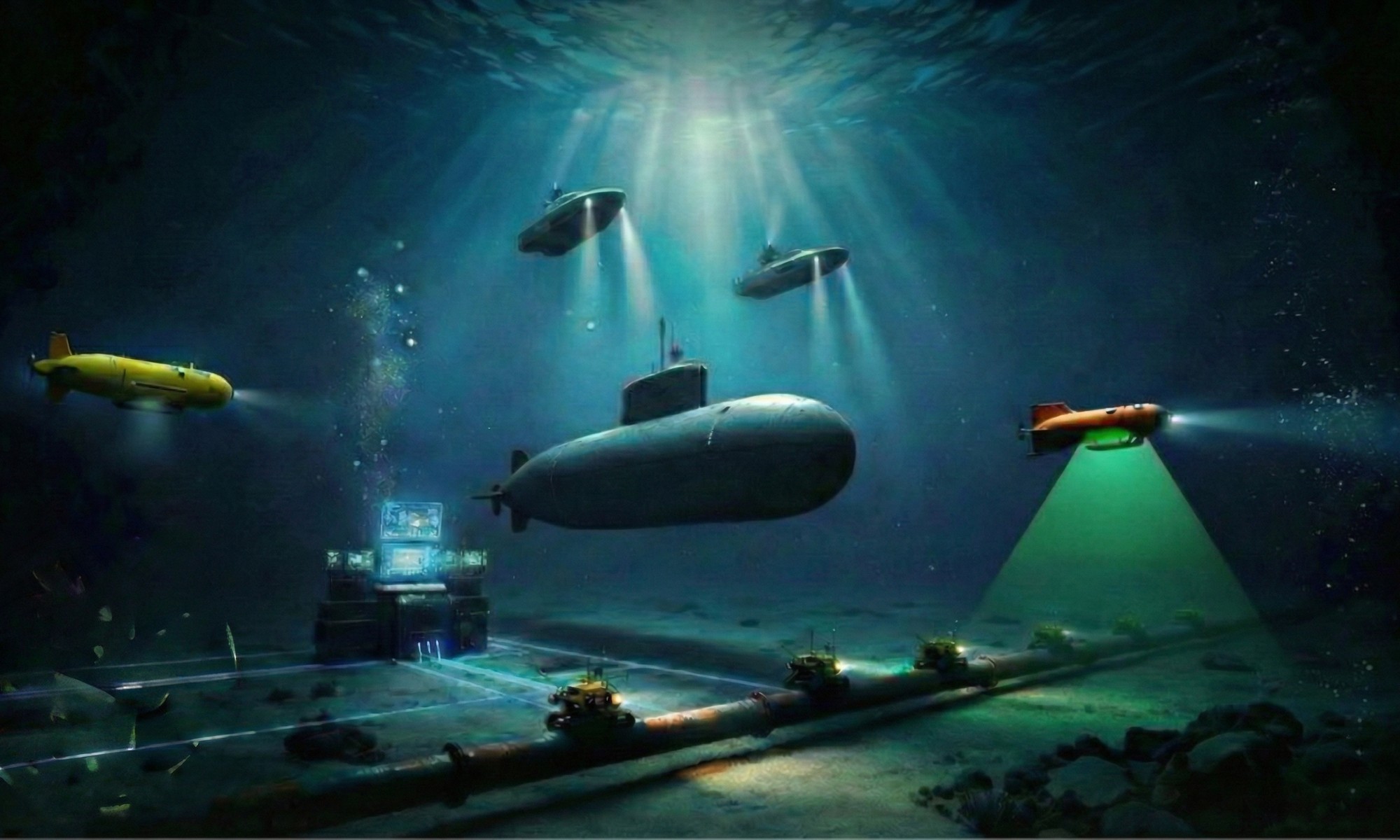
In ASW, multiple USVs with towed arrays are deployed as acoustic barriers, coordinated with AUVs and sonobuoys in multi-static configurations. Contacts are continuously maintained and transferred to manned assets as needed.
For covert ISR, low-signature USVs conduct discreet patrols, collect imagery, and passively monitor RF and EM activity without revealing their presence.
No crewed vessel can match this combination of persistence, discretion, and cost efficiency.
The Strategic Shift: From Missions to Presence
ISR and ASW are shifting from platform-centric activities to distributed, networked sensing challenges.
USVs are well suited to this model. They offer persistent presence, stealthy acoustic profiles, real-time data fusion, and, importantly, scalability.
They enable navies to transition from episodic deployments to continuous operations.
This is the true strategic advantage.
Final Thought
USVs are not replacing frigates, maritime patrol aircraft, or submarines. Instead, they enhance these platforms by extending sensor reach, persistence, and situational awareness across the battlespace.
A USV without integrated sensors is simply a boat. A USV equipped with radar, EO/IR, AIS, electromagnetic sensors, and a passive towed array becomes a valuable ISR and ASW asset.

The direction is clear.
The future of maritime security will be unmanned, integrated, networked, and persistent, with USVs at the center of this transformation.
Call-To-Action
Please comment and provide your ideas, so we can learn from each other.
Originally published in the Strategic Pings ))) newsletter on LinkedIn on 2026-01-20. Subscribe there to get new editions first.