
Why the Smallest Submarines May Be the Biggest Problem in Coastal Warfare
For decades, naval prestige has favored scale. Bigger submarines. Bigger combat systems. Bigger sensor suites. Bigger budgets.
But coastal warfare has never cared much about prestige.
In the shallow, noisy, cluttered waters where chokepoints, ports, shipping lanes, and critical infrastructure converge, the modern midget submarine is making a very uncomfortable comeback. Not because it is elegant. Not because it is glamorous. But because it is useful.
That is often how real threats work.
Small Hull. Big Strategic Effect.
A midget submarine does not need global reach. It does not need months of endurance. It does not need a brochure full of exquisite blue-water capability.
It only needs to survive long enough, in the right place, to create operational or strategic effect.
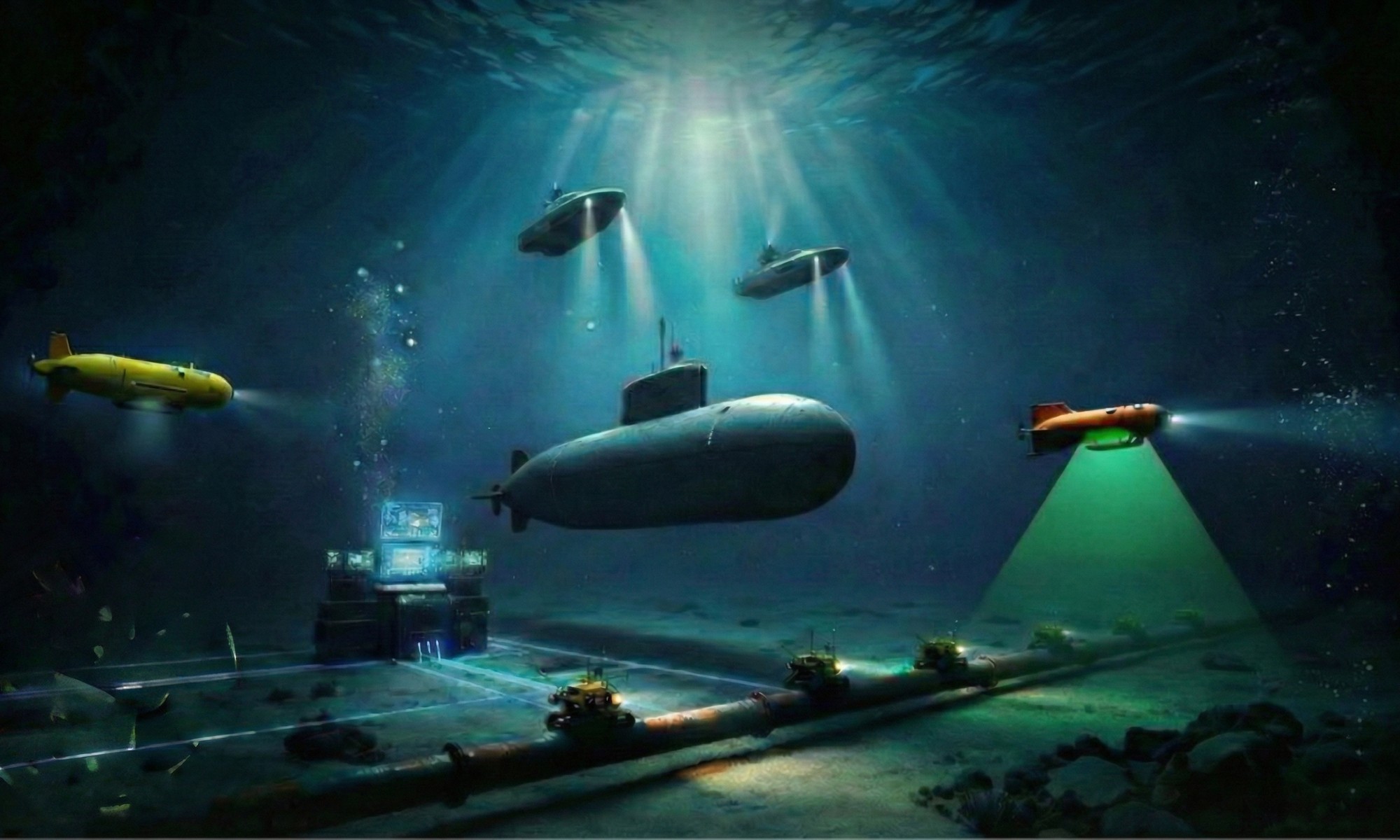
That is what makes these platforms dangerous. Their small size, low acoustic profile, and ability to operate in seabed clutter allow them to exploit what I would call the littoral shadow: the messy acoustic space of shallow water, coastal traffic, thermal variability, biological noise, and bottom reverberation where traditional anti-submarine warfare becomes far less elegant.
In blue water, detection theory looks clean. In the littorals, it often looks like a bad compromise.
And that is where these mini/midget submarines thrive, laying undetected on the sea floor.
An Old Concept That Never Really Went Away
The idea is not new. The Japanese Type A, British X-Class, German coastal mini-subs, and the Italian human torpedo program all proved during the Second World War that a very small undersea platform could achieve an effect wildly disproportionate to its size.
Harbor penetration. Mining. Ambush. Sabotage. Covert insertion. Strikes against capital ships in protected waters.
The details have changed. The logic has not.
What has changed is the modern operating environment. Today’s maritime battlespace is dense with coastal infrastructure, narrow straits, offshore installations, surveillance gaps, and political gray-zone activity. In that environment, small submarines are not relics. They are highly rational tools.
The Proliferation Chain Matters
This is not just a story of submarine design. It is also a story of proliferation.
Post-war Italian designs, particularly those associated with Cosmos, provided a technical foundation for compact littoral submarines. North Korea adapted elements of that small-submarine logic into classes such as the Yugo and later the Yono. Iran then followed with the Ghadir-class, which shares a very similar tactical philosophy and reportedly similar design lineage, while also expanding its undersea portfolio with the Nahang and Fateh classes (Ghadir is basically a stretched North Korean mini-sub). North That progression matters because it shows how a niche capability became a practical regional warfare tool.
North Korea helped demonstrate what a compact submarine could do in real conflict. Iran has taken that lesson and applied it to one of the most strategically sensitive maritime environments on earth: the Persian Gulf and the Strait of Hormuz.

That is not a minor detail. That is the whole point.
The Ghadir-Class: Compact, Constrained, and Dangerous
The Iranian Ghadir-class is a good reminder that limited size does not mean limited lethality.
Because of space and weight constraints, the boat reportedly relies on a single hull-mounted passive sonar array operating in the medium-frequency range of around 1 to 10 kHz. That gives it a basic but operationally relevant ability for contact detection, target classification, and beamforming. No large towed arrays. No sophisticated sonar payloads.
But this is where people make the wrong comparison.

The Ghadir should not be measured against a blue-water attack submarine. It should be measured against its intended operating environment: shallow, congested, tactically compressed waters where engagements are short, clutter is high, and reaction time is limited. As it is shallow water, there is a cut-off frequency, making long passive towed arrays useless.
Iran has also compensated for sonar limitations by fielding a modernized optical and electronic sensor suite. The submarine is reported to carry an advanced periscope fitted with thermal imaging, day and night television cameras, and a laser rangefinder, all feeding digital displays in the control room. It also features a mast-mounted short-range air search radar, giving it improved awareness of helicopters and aircraft while minimizing exposure above the surface.
That matters. In shallow-water operations, situational awareness is often more important than elegance.
The Weapons Fit Is Where It Gets Serious
The Ghadir-class is built around two 533 mm torpedo tubes, and that alone makes it a credible ambush platform in restricted waters.
It can reportedly deploy conventional heavyweight torpedoes such as the Valfajr, but the more provocative weapon is the Hoot supercavitating torpedo, intended to reach extremely high speeds and compress reaction timelines. Whether every published performance figure is fully reliable is almost beside the point. The tactical signal is clear. This platform is designed to create chaos at short notice.
More important still is the reported ability to launch submerged anti-ship cruise missiles, including the Jask-2, which gives the submarine a covert standoff strike option. Add the ability to lay naval mines, and the Ghadir becomes far more than a coastal nuisance.
It becomes a compact A2/AD tool.
Not a fleet submarine. A denial submarine.
And in the Persian Gulf, that distinction matters a great deal.
Why Sonar Specialists Should Pay Attention
From a sonar perspective, this is a very annoying target set.
Shallow water is unforgiving. Reverberation is high. Bottom interaction is messy. Shipping clutter is everywhere. Biological noise is rarely helpful. And a small submarine operating slowly, with low cavitation and limited need to expose itself, becomes difficult not only to detect but to confidently classify. If it sits on the sea floor, almost impossible to detect with standard ASW sonars.
That is the key issue.
Detection is cheap. Understanding is expensive.
A midget submarine sitting quietly in the seabed environment is not just hard to find. It is hard to confirm, track, and act against without wasting time, platforms, and decision bandwidth. That is exactly what a smart regional denial strategy wants.
This is why large-navies-with-large-sensors should not feel too comfortable. The littorals are where elegant ASW concepts go to have a very bad day.
The Real Counter: Persistence Beats Prestige
The answer is not simply more frigates, more helicopters, or more expensive crewed platforms rotating through the same waters.
The answer is persistence, 24/7 persistence.
Persistent monitoring with uncrewed surface vessels. Persistent subsea surveillance. Smarter seabed sensors. Better acoustic libraries. Better classification workflows. Better fusion between autonomous and crewed assets.
You do not beat the littoral shadow with occasional brilliance.
You beat it with systems that stay on station longer, listen better, classify faster, and make the water less forgiving for a boat trying to disappear.
That is where the future fight is heading.
Closing Statement
The smallest submarines are not dangerous because they outperform blue-water boats across the board. They are dangerous because they are optimized for the exact waters where many navies are least comfortable fighting.
Small hull. Short profile. Strategic consequences.
That is not yesterday’s threat. It is already here.
Please comment, so we all can learn from each other.
Originally published in the Strategic Pings ))) newsletter on LinkedIn on 2026-04-19. Subscribe there to get new editions first.