
The Fleet Is No Longer Waiting for the Future
Sea-Air-Space 2026 did not feel like a normal defense exhibition. It felt like the maritime industry being told, politely but firmly, that PowerPoint season is over.
The show brought together more than 16,000 attendees, 57 countries, and around 430 exhibitors. That scale matters. It shows that the maritime domain is no longer a specialist corner of defense thinking. It is central to deterrence, logistics, energy security, undersea infrastructure, and great-power competition. The sea is back on the strategic menu, and not as a side dish.
[Video: Video Overview of SAS 2026]
From Experimentation to Fielded Capability
The strongest message from the exhibition was simple: the era of experimental autonomy is ending. The era of fielded capability is beginning.
For years, naval autonomy has been filled with elegant renderings, controlled demonstrations, and carefully polished future roadmaps. At Sea-Air-Space 2026, the conversation shifted. The question was no longer, “Can it work?” The question became, “Can it be produced, integrated, updated, deployed, and sustained at scale before the next crisis removes the luxury of choice?”
That is a very different question.
The big strategic theme was the move toward what some are calling the “Golden Fleet”: a high-low maritime architecture built around large, survivable command-and-strike platforms, distributed autonomous systems, information warfare, and a more resilient industrial base. In plain English: big ships for power, unmanned systems for reach, software for speed, and distributed shipbuilding for volume.
The Return of Mass
The most provocative symbol of this transition was the proposed BBG(X), the so-called Trump-class battleship concept. Whether one loves or hates the idea of bringing back the capital ship, the logic behind it is worth understanding.
Modern naval combat is becoming a brutal equation of range, magazine depth, electrical power, survivability, and the ability to command distributed assets. Smaller platforms may simply not have enough margin for hypersonic weapons, directed energy, railguns, aviation capacity, and command-and-control all at once. At some point, physics becomes very impolite.
The BBG(X) concept is therefore less about nostalgia and more about volume. More displacement. More power. More weapons. More margin. The idea is to stop merely “swatting arrows” and start “killing the archer.” That phrase may be provocative, but it captures the strategic shift from defensive interception toward offensive sea-control dominance.
Autonomy Moves to the Production Line
But the show was not only about large combatants. In many ways, the more important story was autonomy moving from the marina to the production line.
HII’s ROMULUS USV program stood out because it represents exactly this shift. Four AI-enabled ROMULUS 151 vessels entering production is not just another unmanned surface vessel announcement. It is a signal that USVs are becoming fleet components, not science projects. The integration of Warship OS with Applied Intuition points toward coordinated autonomy, common control, and faster mission updates across multiple platforms.

Saildrone’s Spectre also attracted attention. At 52 meters, it pushes the USV category into a different conversation. This is not a small harbor demonstrator. It is a persistent, open-ocean platform with payload capacity, endurance, and strategic relevance. The direction is clear: uncrewed surface vessels are growing up.

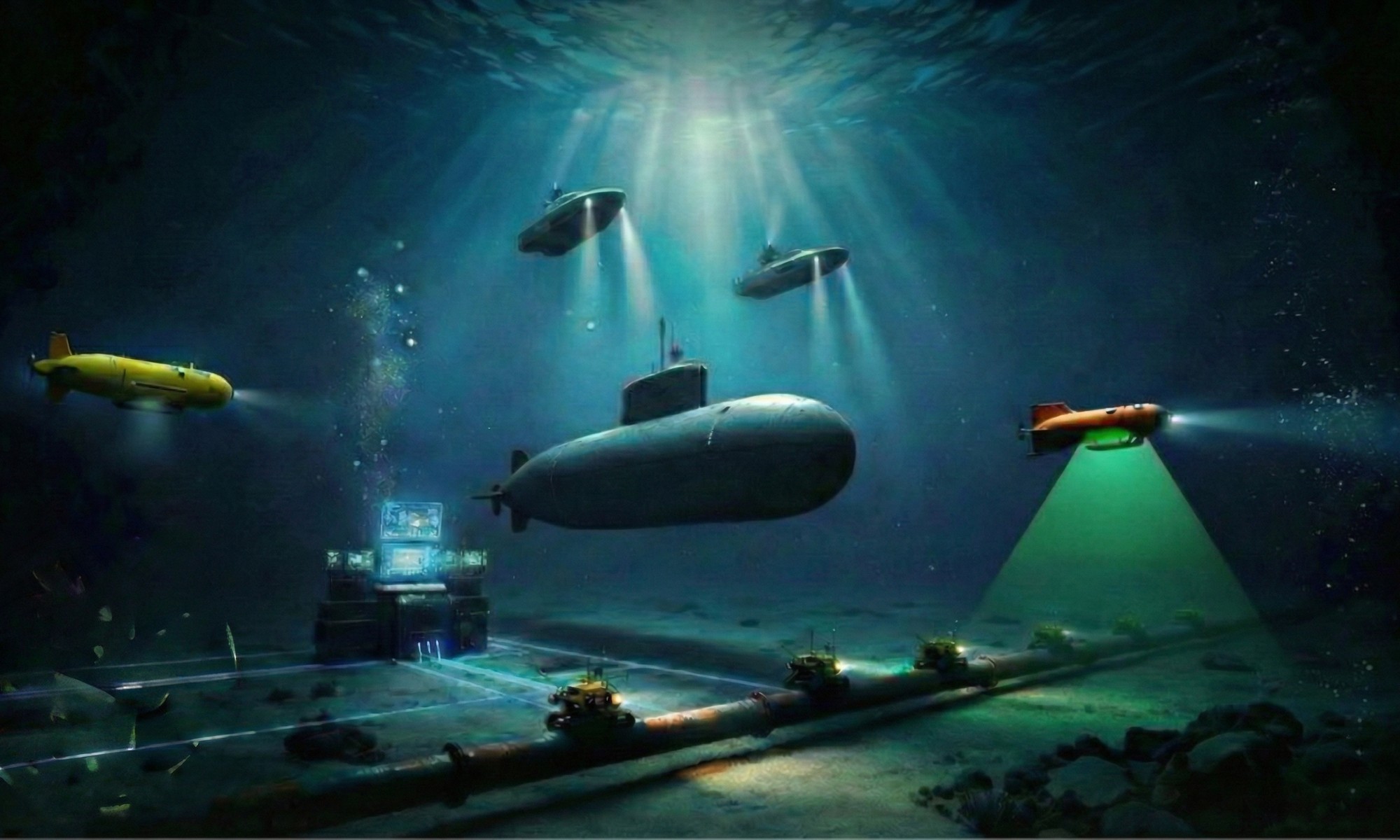
Below the surface, the exhibition also confirmed strong momentum in UUVs and hybrid autonomous vehicles. General Atomics displayed its electromagnetic UUV. Ocean Aero showed its Triton autonomous underwater and surface vehicle. Anduril presented elements of the Dive-LD and Dive-XL family. HII reinforced its long position in the unmanned undersea market, including the continued relevance of REMUS after 25 years.
Sensors Are Becoming Systems
Interestingly, there was no major new sonar release at the event. For a sonar person, that is always a little disappointing. We like new shiny arrays. Preferably wet, expensive, and difficult to explain at cocktail parties.
But the absence of a dramatic new sonar launch does not mean the sensor story was weak. The sensor story was integration. Ultra Maritime highlighted layered torpedo defense. SBG and Honeywell showed navigation and inertial sensing products for autonomous platforms and high-vibration environments. Exail and Leonardo DRS focused on ISR, autonomy, and naval combat systems.
That is the real lesson. Sensors are no longer isolated boxes bolted onto platforms. They are part of a combat system, a data architecture, and increasingly an autonomy stack. A sonar without integration is just an expensive underwater microphone with good manners.
The Uncomfortable Truth
The information warfare discussion reinforced the same point. The IWRON construct moves intelligence, cyber, oceanography, and electronic warfare closer to the center of fleet operations. That is not bureaucracy. That is recognition that the next naval fight may be won or lost in the data layer before the first missile leaves the rail.
Sea-Air-Space 2026 showed a naval force in transition from elegance to mass, from experimentation to deployment, and from platform obsession to system integration.
The maritime future is not autonomous, manned, surface, undersea, or airborne.
It is integrated.
And anyone still selling “a platform” without the payload, software, data link, concept of operations, and production strategy is not selling the future.
They are selling a very expensive floating apology.
Originally published in the Strategic Pings ))) newsletter on LinkedIn on 2026-04-27. Subscribe there to get new editions first.