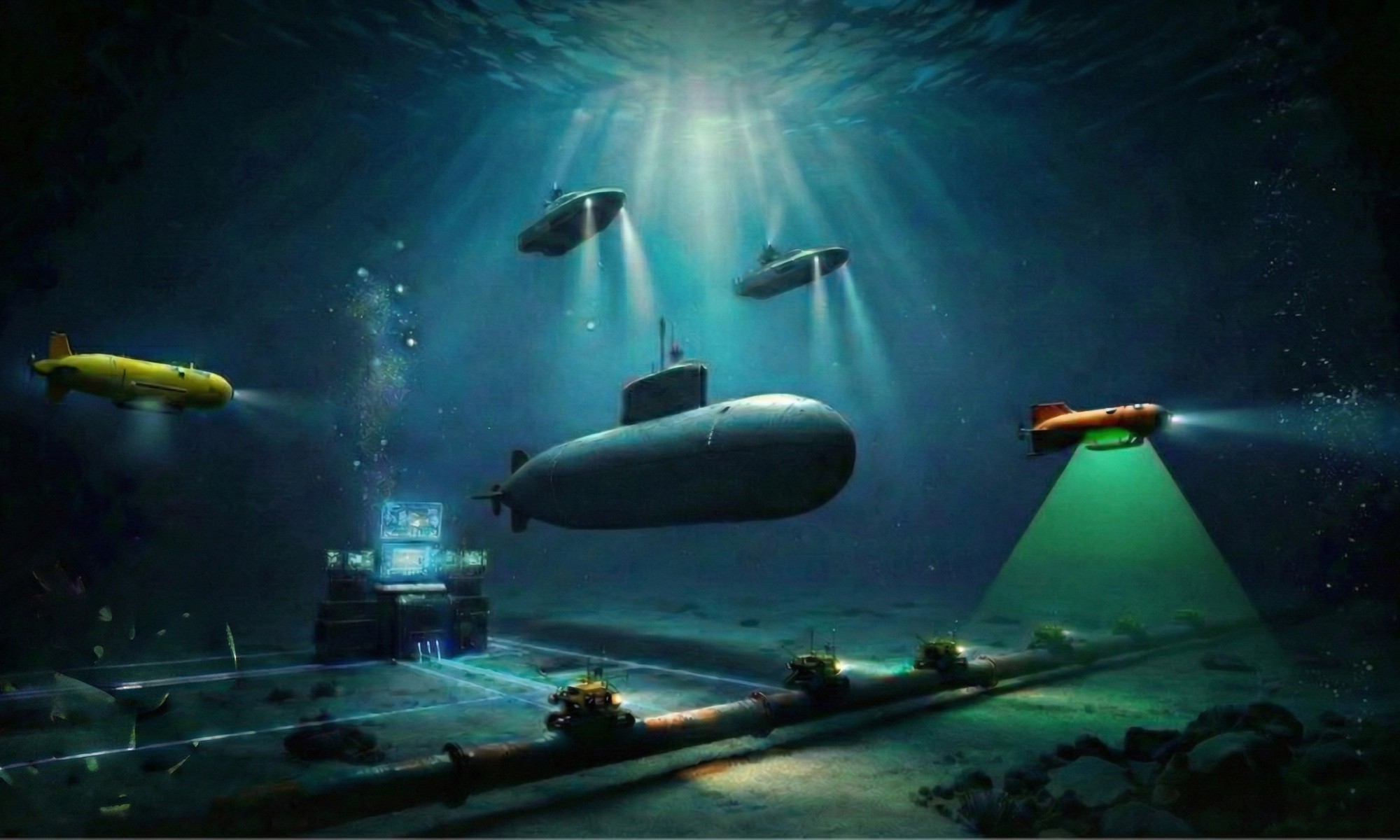

eBOSS vs. Kraken Acoustic Corer vs. Fraunhofer Manta Ray
Executive Summary
We have spent decades mapping the seabed. The next contest is underneath it.
That distinction becomes expensive very quickly when a monopile hits a buried boulder, a cable route intersects old infrastructure, or a suspicious acoustic return turns out to be UXO. Traditional sub-bottom profilers still have an important role, but major offshore projects increasingly want more than a vertical slice through sediment. They want a three-dimensional answer.
Three technologies illustrate where the market is going: EdgeTech eBOSS, Kraken Robotics’ Acoustic Corer, and Fraunhofer IWES’ Manta Ray diffraction-imaging approach.
They are often grouped together as advanced sub-bottom systems. I think that oversimplifies the comparison.

Each attacks a different problem:
· eBOSS focuses on relatively shallow buried-object detection and classification.
· Kraken performs highly detailed volumetric interrogation of specific foundation locations.
· Fraunhofer goes after deeper geological hazards, especially buried boulders, using ultra-high-resolution seismic diffraction imaging.
The most expensive sonar is still the wrong sonar.
EdgeTech eBOSS: Hunting What the Seabed Is Hiding
EdgeTech’s eBOSS, or Buried Object Sonar System, grew from work aimed at one of the harder acoustic problems in the marine environment: detecting and classifying objects that are not sitting neatly on the seabed.
The commercial eBOSS uses dual broadband projectors operating in the 5 to 25 kHz range together with 3D sub-bottom SAS processing and beamforming. It is designed to create detailed imagery of buried objects while the system is moving.
Its heritage is particularly interesting for UXO work.

A traditional acoustic system can struggle when a cylindrical or elongated target is viewed from an unfavorable aspect. The return changes. Acoustic shadows change. Classification confidence drops.
Research associated with the eBOSS development program looked at solving this by illuminating targets from multiple acoustic perspectives. That work points toward a future where acoustic data alone may provide enough information to classify buried UXO without always requiring another sensor pass.
That is potentially a major operational advantage.
Pros: Mobile, good coverage rate, high-resolution buried-object imaging, strong fit for UXO, cable and pipeline work.
Cons: Penetration is relatively shallow compared with Kraken and Fraunhofer. It is not the system I would select for deep geological characterization.
Best use: UXO investigation, buried cables, pipelines, route surveys and shallow critical underwater infrastructure.
Kraken Acoustic Corer: Stop Moving and Look Harder
Kraken approaches the problem very differently.
Instead of surveying continuously along a route, the Acoustic Corer is deployed at a specific location and performs an intensive volumetric interrogation of the seabed.
The system combines high-frequency chirp, low-frequency chirp and parametric synthetic aperture techniques to generate a three-dimensional acoustic volume around the deployment point. Published material describes an acoustic core roughly 14 meters in diameter with penetration that can exceed 50 meters in favorable geology.
This makes the system particularly interesting around monopile foundations, jackets, offshore substations and other locations where a single buried obstruction can become extremely expensive.

The strength of Acoustic Corer is detail.
Kraken has demonstrated its ability to identify buried boulders, linear objects and geological structures that could affect construction. This is where the technology starts to close the traditional gap between geophysics and geotechnics.
Instead of asking, “What might be underneath this proposed pile location?” the objective becomes, “Show me the three-dimensional volume underneath this exact location.”
That is a very different level of confidence.
The trade-off is operational complexity.
This is not a small sensor that you casually bolt onto a USV. Acoustic Corer requires significant vessel support, lifting capability and specialist personnel.
Pros: Excellent 3D visualization, deep penetration, strong foundation de-risking capability.
Cons: Heavy operational footprint, slower area coverage, specialized deployment.
Best use: Offshore foundations, construction risk reduction, detailed geohazard investigations and high-value sites where uncertainty is unacceptable.
Fraunhofer Manta Ray: A Technology I Know From the Other Side
Fraunhofer IWES takes yet another route.
Its Manta Ray development focuses on ultra-high-resolution seismic diffraction imaging. Instead of concentrating primarily on conventional seismic reflections, the processing exploits the diffraction energy created around small buried geological objects.
This is particularly powerful for detecting boulders.
Fraunhofer has reported the localization of buried boulders at substantial depths, in some cases approaching 100 meters below the seabed. That makes the technology especially relevant to offshore wind development, where deeply buried glacial material can create serious problems during foundation installation.
This part of the comparison is also personal for me.
During my time as Chief Business Development Officer at MIND Technology, I was involved in supporting the streamer technology supplied to Fraunhofer’s work. My role was on the commercial and technology side rather than in the scientific development of the imaging algorithms, but it gave me a close view of what Fraunhofer was trying to achieve.
What interested me then, and still does, was the combination of a relatively conventional seismic acquisition concept with very unconventional synthetic aperture processing.

The value is not simply producing another seismic section. It is extracting information from diffraction energy that older workflows often treated as noise.
That is clever.
And for offshore construction, it can be extremely valuable.
Pros: Deep penetration, excellent boulder localization, efficient area coverage, strong fit for offshore wind site characterization.
Cons: Less suited to small UXO-style object classification. It is a geological and construction-risk tool first.
Best use: Offshore wind development, deep boulder risk, cable corridors and early-stage foundation planning.
The Strategic Pings Comparison

So Which One Wins?
None of them.
That is the point.
If I am clearing a cable corridor where UXO and buried infrastructure are the primary risks, eBOSS gets my attention.
If somebody is preparing to install a high-value offshore structure and needs maximum confidence underneath a specific foundation, Kraken Acoustic Corer belongs in the discussion.
If the primary concern is deep boulder risk across an offshore wind development, Fraunhofer’s diffraction-imaging approach is extremely compelling.
In fact, the most intelligent survey architecture may combine them.
Fraunhofer can characterize the broader geological risk. Kraken can investigate the critical foundation positions in far greater detail. eBOSS can attack shallow buried-object and UXO problems along cable routes and construction corridors.
That is where this gets interesting.
The future is probably not one sonar replacing another. It is choosing the right level of acoustic intelligence at the right stage of the project.
Summary
The sub-bottom market is moving away from simple profiling and toward increasingly sophisticated 3D interrogation.
EdgeTech eBOSS brings mobility and buried-object resolution. Kraken Acoustic Corer brings intense site-specific volumetric imaging. Fraunhofer Manta Ray brings deep seismic diffraction imaging across larger areas.
Three technologies. Three different missions.
Trying to declare one universally superior misses the operational reality.
The seabed is becoming crowded. The sub-seabed is becoming expensive.
And discovering that you selected the wrong sensor after construction starts is a particularly painful way to learn about acoustics.
Strategic Sonar Solutions Inc.
This is exactly where Strategic Sonar Solutions Inc. fits.
I help clients start with the mission rather than the sensor brochure.
What are you trying to detect? How deeply is it buried? What resolution do you actually need? What coverage rate is acceptable? Which platform will carry the payload? And most importantly, what decision must the data support?
Then we can select the right payload, for the right platform, for the right mission.
If you are evaluating sonar, sub-bottom imaging, SAS, seismic, AUV, ROV or USV payloads for an upcoming program, connect with me.
Because the most expensive sensor you can buy is still the one that solves the wrong problem.
Originally published in the Strategic Pings ))) newsletter on LinkedIn on 2026-08-18. Subscribe there to get new editions first.