
This is my “sonar blog,” which I call “pings.” I write about what’s happening in both Commercial and Military Applications in the Sonar World (and of course … submarines)
Northrop Grumman’s Incredible Integration Timeline for New Minehunting System
It happened just 45 days after signing a contract with the Navy.
Northrop Grumman successfully demonstrated the integration of its proven AN/AQS-24 minehunting system with a Mine Countermeasures Unmanned Surface Vehicle (MCM USV), addressing the U.S. Navy’s growing need for an uncrewed, towed MCM solution.
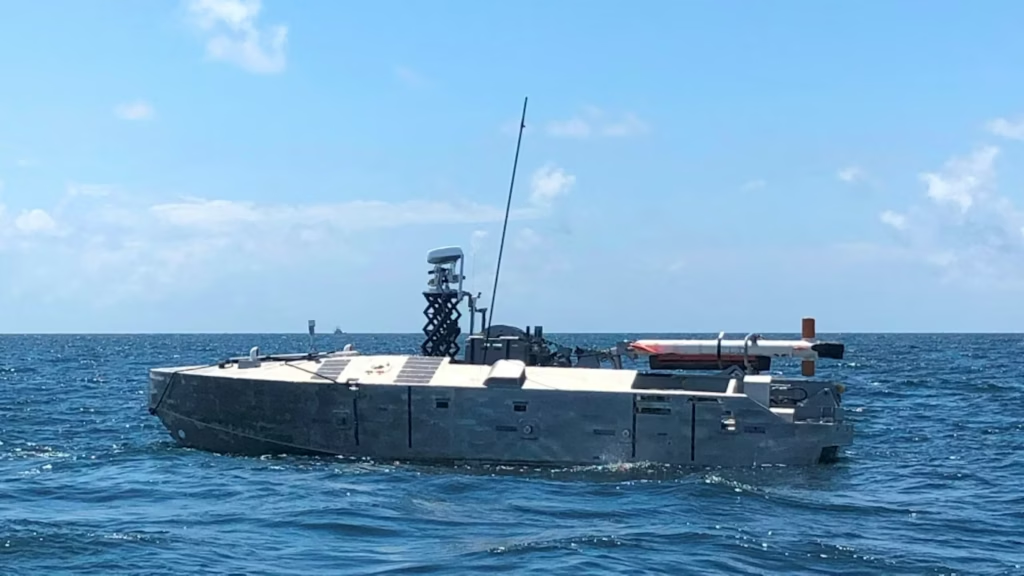
Key Features of the AN/AQS-24 System
Enhanced Operational Capability: This approach supports the Navy’s objective to strengthen maritime security while optimizing operational costs.
Proven Performance: The AN/AQS-24 has established itself as a reliable tool for mine detection due to its advanced sensor systems.
Uncrewed Compatibility: The system’s integration with MCM USV signifies a shift towards unmanned operations, aligning with modern naval strategies aimed at reducing risk to human personnel.
The integration of the AN/AQS-24 minehunting system with a MCM USV exemplifies an important advancement in naval warfare technology. As the defense landscape continues to shift, such advancements will play a crucial role in ensuring maritime security and operational efficacy.
Integration of AI Navigation in Hydrographic USVs: EGS Survey and Greenroom Robotics Partnership
From Demo Autonomy to Production Reality
EGS Survey Australia’s partnership with Perth based Greenroom Robotics is a clear signal that maritime autonomy is moving from trials to real operations. The collaboration integrates Greenroom’s Advanced Maritime Autonomy software, GAMA, into EGS Survey’s Fremantle class Uncrewed Surface Vehicles.

This is not a first experiment. GAMA has already been deployed on Fremantle 01 during hydrographic missions for the Australian Defence Force under the HydroScheme Industry Partnership Program. That program, running since 2020 with a budget of around AUD 150 million, is focused on delivering operational capability, not technology demos.
In May, the GAMA equipped Fremantle 01 completed a full survey mission successfully. The new agreement now expands this autonomy capability across the entire Fremantle class fleet. Fleet wide rollout matters. It shows confidence in software maturity and real world performance.
Fremantle 01 is a serious hydrographic platform. Twelve meters long. Nearly eight tonnes displacement. Up to ten days endurance. Fourteen knots top speed. It is designed for sustained operations, not short demonstrations.
The platform remains available for both defence and commercial work, reinforcing the dual use value of modern USVs.
The broader takeaway is simple. AI driven navigation is becoming a baseline requirement for professional hydrography. Quiet, reliable autonomy is now a production tool. Not a future promise.
UK Hands Over Uncrewed Submarine to Royal Navy
XV Excalibur is the Royal Navy’s first Extra-Large Uncrewed Underwater Vehicle (XLUUV), designed as a testbed for long-range, autonomous undersea operations.
Delivered under Project Cetus, the 12-metre, 19-tonne platform is being used to evaluate how large uncrewed submarines can support future naval missions through modular payloads, extended endurance, and remote operation.

Its primary function is to mature operational concepts for autonomous undersea systems. Early demonstrations have already validated key applications, including intercontinental remote control, coalition interoperability under AUKUS, and the integration of advanced navigation payloads. A notable trial involved a quantum optical atomic clock, aimed at improving underwater navigation accuracy without reliance on GPS, enabling longer submerged and covert operations.
Now entering a multi-year sea-trial phase, Excalibur will be used to assess how XLUUVs can operate alongside crewed submarines and contribute to missions such as persistent surveillance, seabed infrastructure protection, and future Atlantic Bastion operations.
Kraken Robotics, TKMS ATLAS UK Demonstrate KATFISH USV Launch and Recovery System
Kraken Robotics Inc. announced the successful demonstration of its KATFISH Unmanned Surface Vessel Launch and Recovery System (USV-LARS) from TKMS ATLAS UK’s (ATLAS UK) 11-meter ARCIMS USV. The systems offer a comprehensive autonomous survey package for maritime security missions including mine countermeasure operations and critical underwater infrastructure inspection.


The LARS footprint was designed to fit ATLAS UK’s ARCIMS common deck interface, enabling rapid re-role and seamless integration with the platform. Sea state three conditions were encountered during operations, demonstrating the system’s robustness and readiness for real-world naval environments.
This joint integration marks a major step forward in delivering agile, modular, and cost-effective mine countermeasure capabilities for modern naval operations. By combining ARCIMS’ proven USV with Kraken’s cutting-edge towed synthetic aperture sonar and recovery system, navies can deploy advanced technologies faster and more efficiently, strengthening maritime security in increasingly complex environments.
The system was demonstrated off the coast of Portland, UK, November 18-19, for NATO navies. Attendees witnessed the ARCIMS USV autonomously navigate and plan missions with the KATFISH towed system collecting high resolution SAS and bathymetric surveys in very shallow water. Data was live streamed via satellite communications to the command center on shore, enabling real-time classification of contacts by operators.
Canadian Victoria-class subs to get new U.S.-built bow array
Delphinus Engineering Inc., based in Newtown, Pennsylvania, has been awarded a $14.5 million contract to develop, fabricate, produce, integrate, and test a new sonar array and lift system for Canada’s Victoria-class submarines.

The Victoria-class submarines are Canada’s only operational submarine fleet and play a central role in the country’s maritime surveillance and defense. The contract specifically supports the bow array and lift system — core components of the submarines’ sonar suite used to detect, classify, and track underwater threats.
Key Sonar Components
Hull-Mounted Arrays: Includes the Type 2007 flank array, providing long-range passive detection along the submarine’s sides.
Bow Sonar: A medium-range active/passive sonar for detecting targets and mapping the seabed. This is the one getting upgraded.
Towed Array: A long cable with hydrophones (underwater microphones) pulled behind the sub, providing a very sensitive passive listening capability (e.g., Type 2046/SubTASS)
The Cayman Islands’ pioneering journey in ocean mapping
The Cayman Islands recently became the first nation to map its entire exclusive economic zone (EEZ) using autonomous systems, marking a significant moment for modern hydrography. Led by Saildrone in collaboration with the UK Hydrographic Office, the mission charted more than 90,000 square kilometres of seabed, from coastal shallows to depths of 7,000 metres. The results highlight new opportunities for the Cayman Islands’ blue economy while demonstrating how uncrewed surface vehicles can deliver large-scale, high-quality data safely and efficiently. In this interview, Brian Connon of Saildrone reflects on the project’s challenges, achievements and wider implications for the region and the industry as a whole.


The Cayman Islands mission used Saildrone’s new production Surveyor, a 20-metre uncrewed surface vehicle equipped with radar, cameras, AIS and machine-learning systems for situational awareness.
The Surveyor’s integrated multibeam suite—Kongsberg EM 304 MKII and EM 2040 MKII systems—proved capable of achieving high-quality data across a depth range from 20 m to 7,000 m, filling critical gaps in previously uncharted seabed.
Poland picks Sweden’s A26 submarines for its navy fleet, deal still pending
The Polish government has selected the Swedish government’s offer of Saab’s A26 submarines to replace the current Kilo-class submarines.
The Swedish offer comprises advanced A26 submarines from Saab, equipped with the latest innovations and technologies. The proposal includes cooperation with the Polish industry and knowledge transfer, securing a strategic partnership between Poland and Sweden.

Milestone for Hunter Class sonar suite
The Royal Australian Navy, Capability Acquisition and Sustainment Group, and Thales have celebrated a milestone for the Hunter Class frigate program with NUSHIP Hunter’s sonar suite formally passing factory acceptance testing.


The testing was conducted on the towed body handling system (TBHS) and towed array handling system (TAHS) for its Sonar 2087 suite which will provide NUSHIP Hunter with the capacity to detect, locate and classify submarines at ranges up to 60 kilometres.
The Sonar 2087, the British-developed variant of the Thales CAPTAS-4 system, combines active and passive sonar arrays, offering 360-degree situational awareness and real-time torpedo alerts, significantly enhancing Navy’s anti-submarine warfare capabilities.
Australian Consortium to Build Underwater ‘Network’ for Northern Naval Watch
Thales Australia, Austal, and C2 Robotics have teamed up to develop a sub-sea “surveillance network” designed to monitor and secure Australia’s northern maritime chokepoints.
The locally built platform will combine C2 Robotics’ proprietary Speartooth long-endurance unmanned underwater vehicles with Thales’ BlueSentry towed array and BlueSeeker passive sonar technology, enhancing coverage across vast ocean areas.

It will be offered to detect, classify, and transmit real-time intelligence on potential undersea and surface threats, according to Defence Connect.
The integrated suite will also be compatible for deployment from Austal’s proven Evolved Cape-class patrol boats, already operating with the Royal Australian Navy and Australian Border Force.
Unlike fixed seabed sensors or short-lived sonar buoys, the proposed layered network will use autonomous vehicles capable of staying underwater for extended periods.
The Speartooth craft can sit on the seabed to monitor activity, conserve energy, and surface to relay data on passing submarines or ships.
It has a length of 8 meters (26 feet), is built with composite hull material, and incorporates a customizable bay for sensing, munitions, and other mission-specific payloads.
France Gets First ‘Multi-View’ Sonar USV for High-Precision Mine Hunting
Thales USV is a new unmanned surface vehicle for the French Navy, combining TSAM towed sonar and SAMDIS multi-view sonar for high-precision mine detection.

The USV pairs the Towed Synthetic Aperture Sonar Module (TSAM) with an onboard Surface and Multi-Domain Integrated Sonar (SAMDIS), delivering a “first-of-its-kind” capability for precision mine-hunting at sea.
Key features include high-performance sensors, notably the unique multi-view SAMDIS antenna, and secure, cyber-resilient communications.
Advanced mission planning and sonar analysis software further optimize operator workload.
Submarine Khabarovsk has been launched at the Sevmash JSC shipyard in Severodvinsk.
When Russia embarked on the path of introducing a completely new category of nuclear weapon, the gigantic Poseidon drone torpedo, they had to create a whole new category of submarine to carry it. In a move that harks back to the Cold War, the Russian Navy is quietly building a fleet of these submarines. The first dedicated boat, Khabarovsk, was just launched.

Poseidon (GRAU: 2м39, NATO: KANYON) has been described by the U.S. government as an Intercontinental Nuclear-Powered Nuclear-Armed Autonomous Torpedo. There is no designation for the new type of submarine to carry it. They are not SSNs or SSGNs (attack sub or cruise missile sub). They are more like an SSBN (ballistic missile sub) but without the ‘B’, proposed naming would be SDNs (drone carrying submarines).
Italian shipbuilder Fincantieri has launched its first DEEP underwater drone system during a demonstration mission at the Naval Support and Experimentation Center of La Spezia.
The DEEP system is an integrated platform developed for the protection, maintenance, and monitoring of underwater infrastructure and port areas. It also supports environmental observation and protection.

The system was designed for dual use, addressing both civil and defense applications, and can operate in a range of environments for infrastructure management and environmental monitoring.
The platform includes a network of underwater sensors forming an early warning system, a Command and Control Center for real-time operations, and autonomous underwater vehicles (AUVs) capable of carrying out missions with varying levels of autonomy and coordination. Data collected through the system is processed and analyzed using artificial intelligence tools.
Patria completes deliveries of new acoustic minesweeping systems to Norwegian navy
Patria has completed the delivery of new acoustic minesweeping systems to the Royal Norwegian Navy, which has been using the company’s SONAC ACS minesweeping systems since the spring of 2024, Patria announced on 10 February 2025.
Patria’s SONAC ACS is a compact and lightweight acoustic sweep system that is easy to integrate, handle and operate in modern unmanned surface vessel (USV)-based minesweeping operations. The system is specially designed for sweeping influence mines with advanced acoustic triggering.

The SONAC ACS “outsmarts advanced mine algorithms with its superior acoustics, capable of generating high sound pressure across a broad frequency range (from the infra- to ultrasonic bands) with excellent sound quality. Patria SONAC ACS can effectively simulate any ship’s sound and is suitable for mine setting mode (MSM) and target simulation mode (TSM),” the company stated.
During a minesweeping mission the operator selects the desired acoustic signal from a signature library and initiates the acoustic sweeping with it. Alternatively, the operator can design a custom signal for acoustic sweeping when needed.
Exail Expands Presence in the Baltic Sea with First DriX H-8 Delivery to Orlen Petrobaltic
Exail, together with its partner Thesta, has delivered a DriX H-8 uncrewed surface vessel (USV) to Orlen Petrobaltic. This marks the very first commercial deployment of DriX in Poland, where the complex maritime environment of the Baltic Sea demands innovative and resilient solutions for offshore operations.

The Exail’s DriX H-8 USV is known for its robustness, endurance, and ability to deliver high-quality hydrographic and geophysical data. With its autonomous capabilities and ability to operate in challenging offshore conditions, the DriX H-8 offers a safer, more efficient, and environmentally friendly alternative to traditional crewed vessels.
Orlen Petrobaltic will deploy the DriX H-8 in the Baltic Sea to support offshore platform activities. For this project, the DriX H-8 will be equipped with a Norbit B51S multibeam echosounder (MBES), integrated on the platform for the very first time. This new configuration provides Orlen Petrobaltic with a next-generation hydrographic survey capability, enhancing data quality and efficiency while operating in the Baltic Sea’s demanding conditions.
Terradepth reaches IHO Special Order benchmark in seabed mapping precision
Using advanced autonomous underwater vehicle technology, seabed information company Terradepth has shown that the highest levels of hydrographic accuracy no longer require large, costly survey operations. The company successfully completed an IHO S-44 Special Order survey, meeting one of the most demanding international standards for seabed mapping precision.

The IHO S-44 Special Order standard relates to areas where underkeel clearance is critical. Therefore, 100% feature search and 100% bathymetric coverage are required, and the size of the features to be detected by this search is more demanding than lower IHO orders.
US, EU navies turning 750,000 miles of seafloor cables into submarine-hunting sonars
Undersea fiber-optic cables, which stretch over 1.2 million kilometers (750,000 miles) across the ocean floor, are being used in a new way for anti-submarine warfare. A developing technology called Distributed Acoustic Sensing (DAS) is making this possible.


DAS works by using standard fiber-optic cables as long chains of acoustic sensors. When a pulsed laser is sent through the cable, tiny backscattered signals vary based on vibrations or stress caused by nearby sound waves.
By analyzing these patterns, advanced algorithms can detect and localize undersea sounds such as submarine engines, ship propellers, or seismic activity.
The technology effectively converts existing telecommunications cables into a continuous, distributed, real-time monitoring system, capable of listening to the ocean over thousands of miles, at a fraction of the cost of traditional sonar systems or hydrophone networks.
Helsing buys AUV specialist
European defense technology company Helsing has announced it is in the process of acquiring Blue Ocean, an ocean technology company that designs, develops, and operates autonomous underwater vehicles (AUVs).

Helsing and Blue Ocean plan to accelerate the development and mass production of autonomous platforms for the protection of the underwater battlespace.
The acquisition will integrate Blue Ocean’s hardware and manufacturing capabilities with Helsing’s artificial intelligence (AI), with operations continuing in the UK and Australia.
Unproven Littoral Combat Ships are replacing retired MCM ships in Bahrain
The U.S. Navy retired its last Avenger-class mine countermeasures ships this week in Bahrain, ending a legacy of over three decades of service in the forward-deployed mine countermeasures mission as part of Task Force 55. The replacement ships, Independence-class littoral combat ships, have struggled to meet the requirements of operational mine countermeasures missions.


The unmanned portion of the MCM mission module are Common Unmanned Surface Vessels (CUSVs) developed by Textron Systems. They are also known as the Fleet-class of USVs. CUSVs embarked during mine countermeasures missions carry an option of two different systems. One is the AN/AQS-20C, a forward-look and side-scan sonar capable of locating sea mines. The other is the Unmanned Influence Sweep System (UISS) which adds acoustic and influence sweep capability to the CUSVs deployed by LCS motherships.
Thales Receives 100th Order for CAPTAS Sonar System
Thales has announced the receipt of the 100th order for its CAPTAS (Combined Active-Passive Towed Array Sonar) system. Following this latest contract, CAPTAS systems are now in service with 17 navies worldwide.
Thales celebrates today the order of its 100th CAPTAS (Combined Active-Passive Towed Array Sonar) sonar system, marking a symbolic step in the history of anti-submarine warfare (ASM), illustrating the renewed confidence of navies in Thales technologies around the world.

The CAPTAS sonar, developed by Thales, is a reference in towed variable immersion (VDS) solution, with unrivalled performance in underwater detection, even in the most demanding acoustic environments. This capability allows navies to detect threats with sufficient advance notice in order to maintain tactical advantage under the seas.
UK firms partner on unmanned sub-hunting vessel project
SEA and ACUA Ocean have signed a Memorandum of Understanding to explore deploying advanced sonar systems aboard long-endurance uncrewed surface vessels (USVs), aiming to enhance anti-submarine warfare (ASW) and intelligence, surveillance and reconnaissance (ISR) operations.

The partnership will evaluate how SEA’s KraitSense towed array sonar can be integrated with ACUA Ocean’s autonomous platforms, which are designed to operate in high sea states over extended periods. The companies say the work could unlock new operational concepts for persistent wide-area sensing and undersea situational awareness.
Thales and HII to Develop Advanced Autonomous Undersea Mine Countermeasure Capabilities
HII and Thales announced the successful integration and field exercise of the Thales SAMDIS 600 sonar with HII’s next-generation REMUS 620 medium unmanned underwater vehicle (UUV).


Denmark inks towed array sonar contract with TKMS Atlas Elektronik
The Danish Ministry of Defence Acquisition and Logistics Organisation (DALO) has signed a contract with German supplier TKMS Atlas Elektronik GmbH to deliver Towed Array Sonar (TAS) systems for the Royal Danish Navy.

These systems will strengthen the Royal Danish Navy’s ability to conduct long-range anti-submarine warfare operations and operate effectively in deep-water environments.
Kraken Robotics Announces $13m in Synthetic Aperture Sonar, Battery Sales
Kraken Robotics Inc. announced that it has received $13 million in orders for synthetic aperture sonar (SAS) and subsea batteries. The orders are from customers based in the United States, Norway, and Turkey and include an order for 10 SAS from one customer.

The Kraken SAS and SeaPower battery systems from this order will be integrated on four different types of uncrewed underwater vehicle (UUV) platforms, ranging in size from small-class to large-class.
Kraken SAS and SeaPower batteries are built to be platform agnostic, coming in several different configurations with modular components to easily integrate into existing or new platforms.
Hydrographic authority orders Exail’s new long-range USV
Exail has secured the first sale of its new long-range uncrewed surface vehicle (USV), the DriX H-9, to a major global hydrographic authority that has not yet been publicly disclosed. The deal marks a significant step in the company’s expansion in both commercial and defense markets and underscores the growing demand for autonomous maritime systems.
The DriX H-9 builds on the success of Exail’s earlier H-8 model, offering up to 20 days of autonomous endurance, greater payload capacity and enhanced flexibility to support a wide variety of missions. Designed for persistent, over-the-horizon surveys, the H-9 reduces offshore logistics requirements while extending operational reach – capabilities increasingly sought in offshore energy, subsea infrastructure and naval surveillance.

The vessel can accommodate multiple geophysical sensors simultaneously, including sidescan sonar, magnetometers, multibeam echosounders and sub-bottom profilers. Its aft launch and recovery system allows the deployment of towed sensors and remotely operated vehicles, while an adaptable mast supports optical systems and advanced communications for maritime domain awareness.
SPH Engineering launches UAV-compatible MBES for shallow-water surveys
SPH Engineering has unveiled a new multibeam echosounder (MBES) payload for UAVs, expanding the reach of drone-based hydrographic and bathymetric surveys. Built around the Cerulean Surveyor 240-16, the system is designed to deliver dense, high-resolution bathymetric data in shallow waters such as inland waterways, reservoirs, ports and environmental monitoring sites.

Operating at 240kHz with a measurement range of 0.5 to 50 metres, the Surveyor 240-16 marks a departure from single-beam payloads by producing a swath of up to 80° cross-track. Its 16-element receive array and angular resolution of 1° enable wide bottom coverage per flight line, boosting efficiency and data richness.
Field tests were carried out in August 2025 at Titutga Lake in Latvia, where the MBES demonstrated reliable performance at an average survey speed of 1.2 metres per second
Submarines to become deadlier with panoramic view of underwater threats using new tech
The latest tech is set to be supplied by Thales to the Royal Netherlands Navy for the Orka-class submarines.

The sonar suite features high-performance acoustic sensors, including bow, flank, and obstacle-avoidance sonars, an intercept array, a passive towed-array sonar, an underwater voice communication system, an echo-sounder, and signal processing racks.
Thales revealed that its advanced cohesive suite of equipment is claimed to provide an unprecedented panoramic view of the underwater environment, making it possible to detect, locate, and classify all types of threats at short, medium, and long ranges across a wide range of frequencies.
Operation Sunshine,
On August 3, 1958, the USS Nautilus (SSN-571), the first nuclear-powered submarine, became the first ship to transit beneath the North Pole. This historic event, part of “Operation Sunshine,” involved a 1,830-mile journey beneath the Arctic ice cap, demonstrating the capabilities of nuclear propulsion and bolstering U.S. prestige during the Cold War.

L.W. Paddle Wheeler Steam Ship
The Wisconsin Historical Society’s Maritime Preservation Program and the Wisconsin Underwater Archaeology Association were conducting a high-resolution sonar survey earlier this year of the Fox River to map “potential cultural sites” in a 2.5-mile stretch of the waterway, the historical society said on social media. Those sites included the wreck of a steamer that sank in 1870 and the identified wreck of a ship that had been surveyed in 2016.
The L.W. Crane was a wooden paddle wheel steamer ship built in Berlin, Wisconsin, in 1865, the historical society said. It was used to transport passengers and freight between Green Bay and Oconto. In 1880, the ship caught fire, burned to the waterline and sank in Oshkosh.


Littoral combat ship USS Canberra
Littoral combat ship (LCS) USS Canberra (LCS 30) arrived at Naval Support Activity Bahrain on 22 May – the first LCS to deploy with the mine-countermeasures (MCM) mission package (MP) as well as the first Independence variant of the LCS to be deployed to the region.
Canberra, on its maiden deployment, is the first of four of the class expected to be deployed in the region.

The MCM MP is an integrated suite of unmanned maritime systems and sensors. It is designed to locate, identify, and destroy mines while increasing the ship’s stand-off distance from the threat.
The MP includes an MCM unmanned surface vehicle (USV), an MH-60S multimission helicopter, and associated support equipment.
The MCM MP achieved initial operational capability (IOC) on 31 March 2023, following initial operational testing and evaluation (IOT&E) of the full MP, including the AN/AQS-20 system, during the fall of 2022 aboard USS Cincinnati (LCS 20).
The US Navy (USN) embarked the first MCM MP aboard Canberra on 18 April 2024.
The LCS is expected to replace the Avenger-class MCM ships, which have operated forward in the region for decades.
The USN’s 30-year shipbuilding plan – released earlier this year – called for dismantling four Avengers in fiscal year (FY) 2025 and another four in FY 2027, with each ship surpassing its 30-year service life.
China’s super-quiet submarine tech halves engine noise detection range: study
A research team in Shanghai has unveiled a vibration-damping technology that could significantly improve the stealth of submarines during covert operations, according to a peer-reviewed study published in the Chinese journal Noise and Vibration Control.
Zhang Zhiyi and his team of researchers, from Shanghai Jiao Tong University’s State Key Laboratory of Mechanical Systems and Vibration, said their innovation could theoretically cut the detection range of hostile sonar systems by more than half.

The technology is intended to replace traditional rigid engine mounts with a hybrid active-passive vibration isolation system that would reduce the engine noise transmitted through submarine hulls by up to 26 decibels (dB), according to the paper.
Do you have questions about the biggest topics and trends from around the world? Get the answers with SCMP Knowledge, our new platform of curated content with explainers, FAQs, analyses and infographics brought to you by our award-winning team.
It combined a steel-rubber-steel “sandwich” ring to dissipate vibrations, and an active layer with 12 piezoelectric actuators arranged radially around the engine to further reduce the noise, it said.
These electrically-powered actuators can neutralise the engine’s micron-level movements with strong control forces through precision lever mechanisms.
American submarine, lost for over a century, discovered ‘remarkably intact’ off the coast of San Diego
Researchers have located the wrecks of two long-lost military vehicles on the seafloor a few miles from San Diego: an American submarine that sank during a training accident in 1917, and a U.S. Navy training aircraft that crashed nearby in 1950.
The USS F-1 submarine sank in seconds after it was badly damaged in a collision with another U.S. Navy submarine. Nineteen of its crew drowned in the accident, and three were rescued by the other sub.Researchers have located the wrecks of two long-lost military vehicles on the seafloor a few miles from San Diego: an American submarine that sank during a training accident in 1917, and a U.S. Navy training aircraft that crashed nearby in 1950.
The USS F-1 submarine sank in seconds after it was badly damaged in a collision with another U.S. Navy submarine. Nineteen of its crew drowned in the accident, and three were rescued by the other sub.

UK Deploys SG-1 Fathom AI-Powered Underwater Drone to Counter Russian Submarine Threats
British Royal Navy’s SG-1 Fathom underwater gliders, equipped with the Lura system developed by Helsing, represent a major milestone in the UK’s maritime defense strategy against Russian submarine threats. Originally developed for whale tracking, these AI-driven drones are now repurposed to form an invisible shield beneath British waters. This innovation underscores the UK’s strategic intent to deter sub-surface intrusions near vital undersea infrastructure, particularly under increasing pressure from Russian naval movements since the Ukraine invasion. The deployment of this technology signals a growing trend within NATO to blend AI with autonomous systems to protect critical maritime domains.

The SG-1 Fathom underwater gliders are autonomous, propellerless vehicles capable of gliding silently beneath the sea at speeds of 1 to 2 knots for up to three months. Weighing approximately 60 kilograms, they are designed for discreet deployment and long-endurance missions. Originally developed by Blue Ocean for environmental monitoring, they have been adapted for military applications by Helsing through the integration of the Lura system. This AI-powered solution leverages decades of British Royal Navy acoustic intelligence to automatically detect, classify, and report the unique acoustic signatures of enemy vessels, including Russian submarines and shadow fleets.
Klein Marine Systems Signs Agreement With SAAB to Provide Synthetic Aperture Sonar (SAS) Technology
Klein Marine Systems, a leader in sonar technology, has received a contract to provide Synthetic Aperture Sonar (SAS) hardware technology to Saab Kockums AB (Linköping, Sweden).

The sonar hardware will be integrated onto the Saab AUV62-MR, an autonomous underwater vehicle (AUV) designed for mine-countermeasures (MCM) missions. Saab has signed a contract with the Swedish Defence Materiel Administration (FMV) for the AUVs. The vehicle has the ability to quickly map and produce high-resolution sonar images of the seabed over large areas and detect various types of objects. The system provides the navy with the ability for covert reconnaissance as well as solve multiple tasks simultaneously with fewer resources and less risk to personnel.
Klein is developing the SAS hardware in partnership with Saab Kockums. The protype sonar was first displayed during the REPMUS 2024, the Robotic Experimentation and Prototyping event is the world’s largest and most complex Maritime Unmanned Systems (MUS) exercise.
R3Sonic releases the new Voxometer MBES
R3Sonic claim that the Voxometer outperforms any other system on the market.
Why? Enhanced quad mode means that the ping rate no longer limits the overall data density that you can achieve.

With any other MBES, no matter how many soundings across-track the system can produce, you are still limited by the ping rate along-track for data density, particularly in deeper water. With the enhanced quad mode and multiple frequency capability of the Voxometer – even in Classic Mode operation – data density is not compromised, as can be seen in the survey example below…
India’s DRDO has been testing a prototype of its High Endurance Autonomous Underwater Vehicle (HEAUV) for over a year.
The maiden surface run of HEAUV was carried out in March 2024 at Cochin Shipyard Limited (CSL) which is also a developmental partner. Recently in March 2025, HEAUV was successfully tested in a lake. DRDO tweeted that “during the trials vehicle dynamics was proven in both surface and submerged condition through multiple runs with perfect performance of sonars and communication.”


DRDO’s Naval Science & Technological Laboratory (NSTL) laboratory is the developer of the six ton HEAUV. Almost 10 meters long and with a diameter of 1 meter, the AUV can dive to a depth of 300 meters. HEAUV is designed for an endurance of up to 15 days at a speed of 3 knots, with maximum speed being 8 knots. HEAUV is modular with swappable payloads for each mission.
Autonomous bathymetric survey in the UK Atlantic
Ensuring safe and efficient maritime navigation is a critical task for coastal nations, but can also be a lengthy and costly exercise. The UK Hydrographic Office (UKHO) is responsible for charting millions of square kilometres of seabed, including some of the busiest shipping lanes in the world. To help advance this objective, the UKHO chose XOCEAN to provide accurate, high-quality and reliable hydrographic survey data using uncrewed surface vessels (USVs). Notably, XOCEAN was contracted in late 2023 to carry out a comprehensive bathymetric survey under the UK SW Approaches Lot 1 of the Seabed Mapping Framework.


Five XOCEAN USVs, outfitted with sophisticated multibeam echosounder (MBES) technology, were used over two areas, covering a combined 2,218km2, south-west of the Isles of Scilly. The survey was methodically organized, from planning to mobilization out of St Marys on the Isles of Scilly. Operations ran across two phases, an initial acquisition phase and then infill and detailed wreck investigation surveys. Operated remotely via satellite, the use of USVs enhanced both safety and efficiency. XOCEAN’s highly flexible operational structure meant it could easily navigate the harsh environmental conditions posed by a winter season (November–March) deployment and the logistical complexities of deploying uncrewed vessels from a small island off the UK mainland, minimizing costs and schedule risk.
Bollinger delivers first three MCM USVs to Navy
Bollinger Shipyards has completed the successful delivery to the U.S. Navy of the first three mine countermeasures unmanned surface vehicles (MCM USVs). These vessels are the Navy’s first program of record, non-prototype, autonomous surface ships — a historic milestone in the transition to autonomous maritime operations.

The MCM USV is a multi-mission autonomous vessel capable of conducting minesweeping, mine hunting, and mine neutralization operations. These missions have traditionally been performed by manned MCM-1 class ships and MH-53E helicopters, both of which are being retired. The MCM USV significantly reduces risk to sailors by conducting dangerous operations in mine-threatened waters without a crew onboard.
The mine countermeasures unmanned surface vehicle vessel employs multiple payload delivery systems (PDSs), includingh the minesweeping PDS, minehunting PDS and PDSs for future payloads, including mine neutralization, all of which integrate to the base MCM USV craft.
Saildrone and Kongsberg collaborate to map the waters of Cayman Islands
Saildrone has deployed its Surveyor USV to map 100,530km2 of the Cayman Islands’ Exclusive Economic Zone (EEZ). Kongsberg Discovery is contributing by providing data and showcasing the capabilities of the EM304 and EM2040 multibeam echosounders

Russia Commissions First-of-its-kind Nuclear Submarine With Zircon Missiles
Russian President Vladimir Putin has officially commissioned the nuclear-powered submarine Perm, the first of its kind to be equipped with hypersonic Zircon missiles.
The submarine was built at the Sevmash Shipyard. Perm is the sixth Yasen-class submarine and the first to be specifically modified to carry Zircon missiles.


The Zircon, designated 3M22 Zircon (NATO: SS-N-33), is a hypersonic cruise missile capable of reaching speeds up to Mach 9 (over 6,800 mph) with a range of about 900 km (560 miles).
Yasen M submarines are known for their advanced sonar, communication and navigation systems as well as high precision weaponry and integrated robotic technologies.
Woolpert and Chance Maritime leverage autonomous vessel technology to enhance seafloor mapping, improving efficiency, data accuracy and coastal resilience
Woolpert and Chance Maritime have joined forces to enhance the efficiency of hydrographic survey data collection off the Florida coast. The partners support the Florida Seafloor Mapping Initiative (FSMI) and other critical coastal resilience projects by integrating autonomous vessel technology with geospatial expertise.
Chance Maritime Technologies, a specialist in uncrewed vessel operations, deployed its Mission Capable 29 (MC29) autonomous survey vessel. The collaboration allowed for 24/7 monitoring and data collection, optimising efficiency and improving the accuracy of bathymetric surveys.
SEA’s KraitArray meets uncrewed naval systems
KraitArray, a thin-lined towed array sonar system developed by the British naval supplier SEA, will go on to support uncrewed underwater vehicles (UUVs) as demand for the emerging autonomous platform grows.
In 2022, during the Nato exercise REPMUS, SEA’s sonar solution integrated with an extra large uncrewed underwater vehicle (XLUUV) – the S201 – built by MSubs, another British supplier that is currently developing the future CETUS XLUUV for the UK Royal Navy. During this trial, KraiteArray detected targets up to tens of kilometres away, Tucker confirmed.

Naval Technology learned from a naval architect working on the CETUS project that the S201 is “very much the spiritual predecessor” of CETUS, which was first developed in 2005 with an idea to progress autonomy in the subsea space.
Thales to Provide High-performance Sonar Suite for Future Orka-class Submarines in the Netherlands
Under an agreement signed by Thales and Naval Group, Thales will supply the sonar suite for the Orka-class submarines to be deployed by the Royal Netherlands Navy under the RNSC (Replacement Netherlands Submarine Capability) program.
The sonar suite will provide a comprehensive picture of the underwater acoustic environment to support the future submarines’ capacity to thwart increasingly silent threats.ice today.

Thales, a long-standing partner of both Naval Group and the Royal Netherlands Navy, will provide a comprehensive suite of high-performance sonar systems for the future class of submarines that will replace the Walrus-class vessels in service today. The contract will provide the submarines with a comprehensive picture of the underwater acoustic environment, helping the Netherlands to guarantee operational superiority.
The sonar suite features high-performance acoustic sensors, including bow, flank and obstacle-avoidance sonars, an intercept array, a passive towed-array sonar, an underwater voice communication system, an echo-sounder, and signal processing racks. This cohesive suite of equipment will provide an unprecedented panoramic view of the underwater environment, making it possible to detect, locate, and classify all types of threats at short, medium, and long range across a wide range of frequencies.
Exail partners with ADSB and TII on next-gen MCM capabilities in the UAE
Exail announced its collaboration with EDGE Group entity Abu Dhabi Ship Building (ADSB), and the Technology Innovation Institute (TII) to develop next-generation autonomous Mine Countermeasure (MCM) solutions in the UAE. This strategic partnership reinforces Exail’s commitment to delivering modular, interoperable and autonomous systems that enhance naval forces’ MCM capabilities in the UAE.

As part of this collaboration, ADSB has launched the 170M Detector, a 17-metre vessel designed for high-performance MCM operations. Equipped with advanced autonomous control systems and Exail’s MCM Mine identification and disposal systems, the vessel will play a key role in detecting, classifying, identifying, and neutralizing underwater mines with precision and efficiency. This collaboration brings together the expertise of ADSB, TII, and Exail to deliver innovative and interoperable naval defense solutions.


In the next phase of this collaboration, the three partners will jointly develop in the UAE a new generation Inspector 125 USV, Exail’s reconfigurable mine hunting USV. This new platform will feature TII’s marine autonomy system and Exail’s T-18 towed sonar system. The T-18 towed sonar shares key technological commonalities, including launch and recovery system, with Exail’s A-18 AUV and enables real-time mine detection and classification, significantly enhancing MCM operation efficiency.
Australia’s Hunter-class frigates to feature Ultra Maritime’s hull-mounted sonar
The 2150 Bow Sonar will be installed on the Hunter class frigates, improving their ability to detect and respond to underwater threats. In addition to supporting ASW operations, the system will contribute to mine and obstacle detection, essential for maintaining the safety of the ships during naval operations. The sonar system is designed to work in a variety of maritime environments, contributing to the overall operational effectiveness of the frigates.


As part of its ‘Sea Searcher’ hull-mounted sonar range, Ultra has developed two smaller and lighter-weight variants of the Type 2150 for naval vessels up to 1,000 tonnes and 2,000 tonnes, respectively.
General Atomics Aeronautical Systems tests new sub-hunting system on MQ-9B SeaGuardian
This is the “first-ever” demonstration of anti-submarine warfare (ASW) capability on an MQ-9B SeaGuardian, GA-ASI said, adding that its newly designed SDS pods deployed multiple sonobuoys to conduct onboard thermal-depth and acoustic data processing.

“Using Directional Frequency Analysis and Recording (DIFAR), Directional Command Activated Sonobuoy System (DICASS), and Bathythermograph sonobuoys, SeaGuardian effectively detected, tracked, and analyzed underwater targets while collecting critical acoustic intelligence,” the company noted.
First Antarctica expedition of Schmidt Ocean Institute successfully completed
Schmidt Ocean Institute’s research vessel Falkor (too) has marked a major milestone with the completion of its first Antarctic science expedition. After a year of meticulous preparations, both the ship and crew embarked on a three-week journey, navigating the region’s challenging conditions to conduct groundbreaking research. The mission, which concluded in early January, pushed the boundaries of scientific exploration while fine-tuning operational strategies for future voyages.

The scientific operations included eight dives to depths as great as 3,918 metres using the remotely operated vehicle (ROV) SuBastian to assess biodiversity and explore vents and seafloor mapping. Ice pilots and crew transported scientists via small boats to places like Joinville Island, off the northeastern tip of the Antarctic Peninsula, for marine mammal and sea bird research.
Denmark selects Atlas Elektronik for ASW towed array sonar for frigates
Denmark’s Defence Acquisition and Logistics Organisation (DALO) has selected Atlas Elektronik to supply Low Frequency Active Towed Array Sonar (TAS) systems for retrofit to the Royal Danish Navy’s two Absalon-class frigates.

The ACTAS ‘wet end’ combines a high source level active transmitter (operating at a frequency range of 1.4-2.4 kHz) with a passive line array (covering frequencies between 50 Hz and 10 kHz). A triplet array (employing three hydrophones on a circular section of the array) is used to instantaneously resolve left/right bearing ambiguity.
Atlas Elektronik has previously supplied the ASO 94 medium-frequency hull-mounted sonars fitted to the two Absalon-class ships and the three Iver Huitfeldt-class frigates. DALO said that as well as meeting all operational requirements, the fact that Atlas Elektronik was already a supplier of other sonar equipment systems on Danish frigates would allow “a streamlining of ongoing operation and maintenance processes on the ships”. The acquisition of Low Frequency Active TAS systems for the Absalon-class frigates forms part of a wider effort to rebuild the Royal Danish Navy’s ASW capabilities. The other major part of this package is equipping Royal Danish Air Force-operated MH-60R helicopters with a sonics suite (dipping sonar and sonobuoy processing) and lightweight torpedoes.
France joins Belgian-Dutch mine countermeasures vessel program
France has joined the Belgium-led replacement Mine Countermeasures (rMCM) program that was originally established to introduce a new class of mine countermeasures (MCM) vessels into service with the Belgian and Royal Netherlands Navies.
Representatives of the three countries’ governments recently signed the formal letter granting a sub-licence to France. This gives the three countries equal rights to the ship design of the platform developed by the Naval Group as part of the rMCM program.
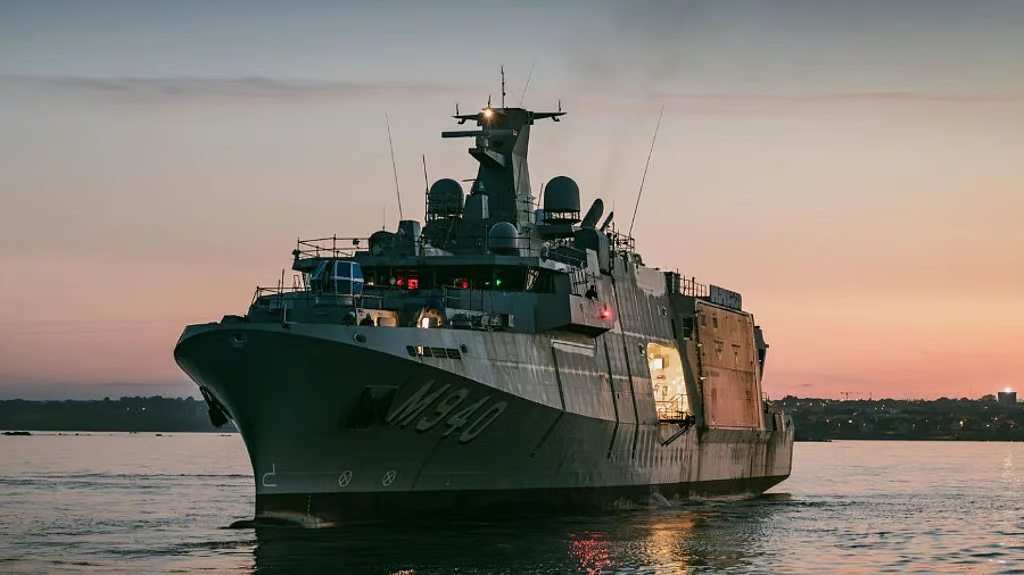
Belgium was the first country to take delivery of rMCM ships. For the Belgian Navy, the lead ship is Oostende (pictured), named after the Flemish coastal city, and all six ships for Belgium will be known as the City-class.
The French Kership joint venture between the Naval Group and Piriou is in charge of the production of the rMCM ships, which are assembled in Concarneau and Lanester. They will be then all armed afloat by Piriou in Concarneau.
The Naval Group, as overall architect and prime contractor, is responsible for the design of the ships, the overall integration, and the testing and commissioning of the mission system, which includes the combat system and the mine countermeasures system.
Northrop Grumman asked for upgrades of Side-scan sonar and digital signal processing for mine hunting
Undersea warfare experts at Northrop Grumman Corp. will upgrade and repair the U.S. Navy AN/AQS-24 airborne and surface mine hunting and detection sonar system under terms of a $15.2 million order.
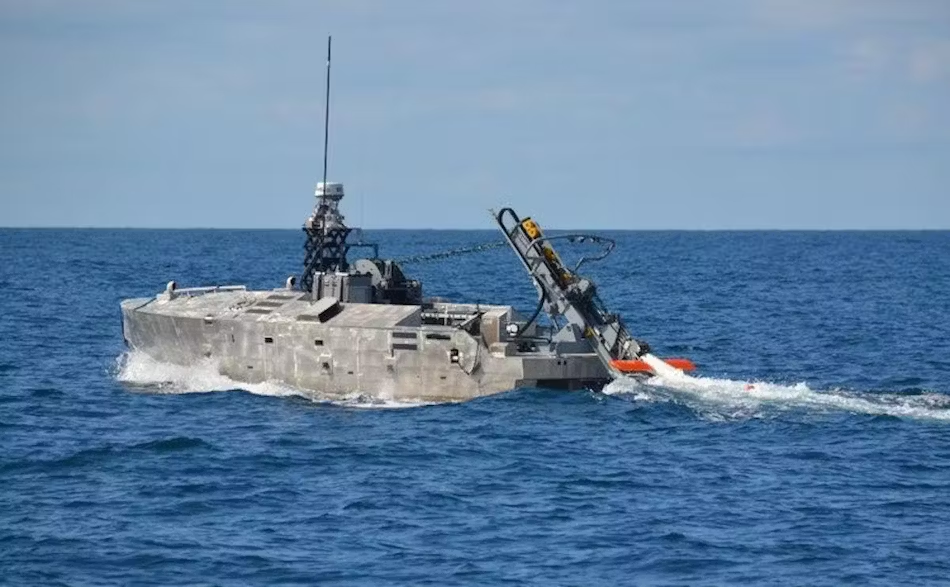
The AN/AQS-24 can be towed through the water by surface vessels and helicopters in areas where naval commanders believe enemy anti-ship mines may be present. The system can work at speeds as fast as 18 knots.
It uses high-resolution side-scan sonar for real-time detection, localization, and classification of bottom and moored mines at high area coverage rates. Its laser line scanner provides precision optical identification of underwater mines and other objects of interest.
Its sonar and laser line scanner can work at the same time to detect and identify sea mines and other underwater objects. The system offers target box cuing and high-speed operation to provide high-resolution optical imagery for target identification.
The AN/AQS-24 offers synthetic aperture sonar and advanced navigation controls and digital signal processing for target positioning. The system is rapidly deployable, and has been towed from aircraft, surface ships, and remotely operated vehicles.
The upgrades were to increase the systems’s performance by adding a high-speed synthetic-aperture sonar, which increases sonar resolution by a factor of three while maintaining 18-knot speed performance, Northrop Grumman officials say. The upgrades also eliminate parts obsolescence issues.
The synthetic aperture sonar enables the device to scan the ocean floor at three times the resolution of the earlier system. The Navy operates the AQS-24B from MH-53E helicopters and Mine Hunting Unmanned Surface Vessels (MHU).
Need Enhanced ASW Capabilities? Bingo!
Japanese shipbuilder Mitsubishi Heavy Industries (MHI) has just named and launched Bingo, set to become the fourth Hibiki-class ocean surveillance vessel of the Japanese Maritime Self-Defence Force (JMSDF).

The ship was launched on Monday at MHI’s shipyard in Tamano, which sits halfway between Hiroshima and Kobe on the south coast of Japan’s main island, Honshu.
As per a recent JMSDF social media statement, the acoustic measurement vessel’s moniker was chosen from the name of a local bay, Bingo-nada, part of the Seto Inland Sea.
Once fitting out is complete, Bingo is scheduled to be commissioned in March next year. According to reports the cost of the vessel, ordered in 2022, is estimated in the region of $130 million.
The Hibiki-class ships are designed as mobile sonar listening stations designed to detect and track submarines in the seas around Japan using towed sonar arrays.
The vessels have an AN/UQQ-2 Surveillance Towed Array Sensor System (SURTASS), which was installed in the United States. Data from the sensors is relayed through the Defense Satellite Communications System and processed and shared with the United States.[8] The data is fed into the Integrated Undersea Surveillance System.
Polish Navy minesweeper ORP Mamry is undergoing sea trials after the completion of a refit carried out by PGZ’s Stocznia Wojenna shipyard.
The vessel, which has been in service since 1992, is one of 21 MCM ships in active service with the Polish Navy. The first boat in her class, she has a crew of 30 and was designed to hunt and dispose of contact and non-contact sea mines.

The hull is constructed of a polyester-glass laminate to reduce her magnetic field to enhance her mine-hunting capabilities.
As per a recent PGZ press statement, her sea trials began earlier this month following completion of the refit, which included new engines and propulsion system, generators, and navigation and communication systems.
The firm stated: “The works carried out significantly increase the unit’s efficiency, improve the crew’s working conditions and reduce operating costs.”
Saab Launches Upgraded HMS Halland Submarine, Enhancing Swedish Navy’s Capabilities
Saab has successfully launched the third and final Gotland-class submarine, HMS Halland, following an extensive mid-life upgrade (MLU) for the Swedish Navy.
The upgraded submarine was recently floated out at Saab’s shipyard in Karlskrona, marking a significant milestone in the modernization of Sweden’s submarine fleet. HMS Halland completes the series of Gotland-class vessels undergoing comprehensive upgrades, which incorporate advanced technologies and systems aligned with those planned for the next-generation Blekinge-class submarines.


This upgrade significantly extends the operational lifespan of HMS Halland, enabling it to perform complex maritime missions for years to come. The vessel now joins its sister submarines, HMS Gotland and HMS Uppland, which have previously completed similar upgrades, collectively strengthening Sweden’s underwater defense capabilities.
Commenting on the launch, Saab highlighted the strategic importance of the upgrade.
“Securing critical underwater infrastructure and sea lanes is more important than ever. The launch of HMS Halland is a testament to Saab’s ability to upgrade and deliver advanced submarines with the capabilities the Swedish Navy requires. With HMS Halland, the Swedish Navy, and by extension NATO, gains additional strength to defend and monitor the Baltic Sea.”
The modernization of HMS Halland not only boosts the Swedish Navy’s operational effectiveness but also enhances the collective maritime security framework in the Baltic region.
U.S. Navy AN/SQQ-89A(V)15 anti-submarine warfare (ASW) systems
Undersea warfare experts at the Lockheed Martin Corp. Rotary and Mission Systems segment in Manassas, Va., will support the U.S. Navy AN/SQQ-89A(V)15 anti-submarine warfare (ASW) systems for surface warships under terms of a $502.2 million contract.
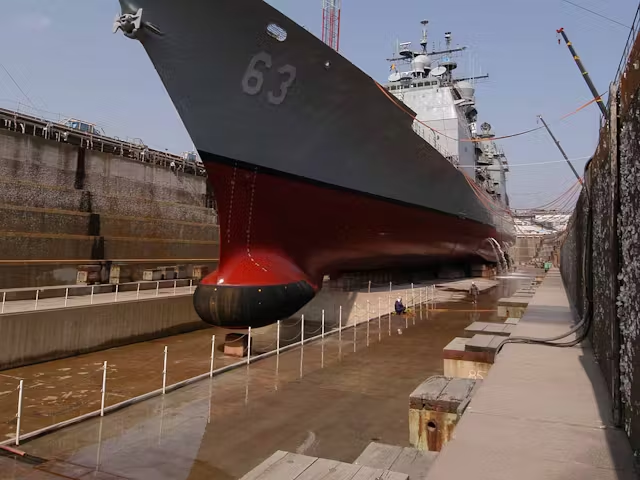

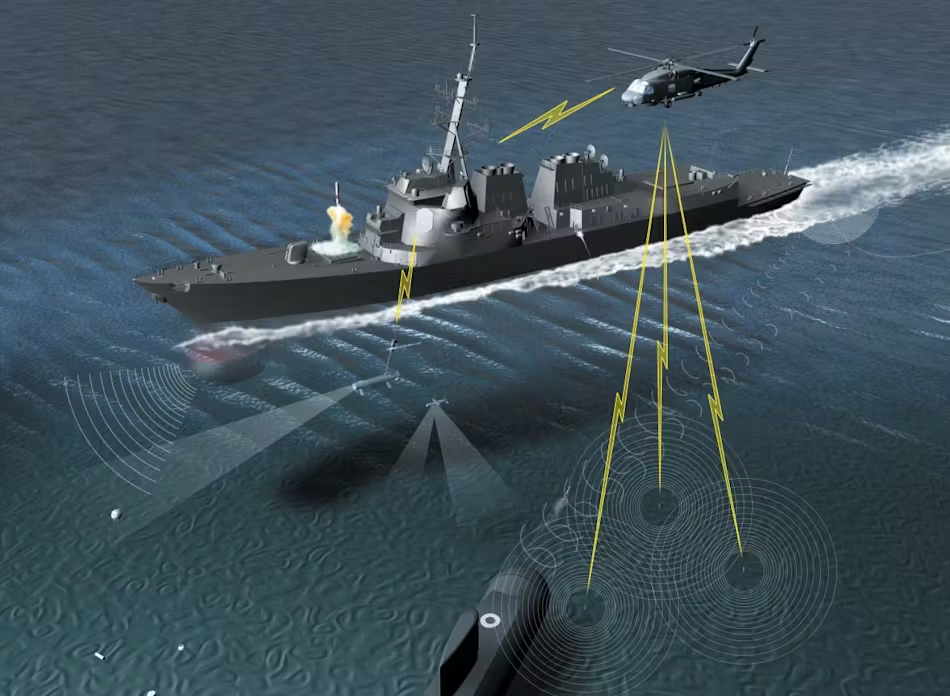
The AN/SQQ-89A(V)15 is an undersea combat system for surface warships is designed to search for, detect, classify, localize, and track underwater contacts; and to attack or avoid enemy submarines, floating, tethered, or bottom-attached mines, and torpedoes.
The AN/SQQ-89A(V)15 uses active and passive sonar to enable Navy Arleigh Burke-class destroyers and Ticonderoga-class cruisers to detect, locate, track, and attack hostile submarines, mines, and torpedoes.
The counter-mine and anti-torpedo system provides multi-sensor track correlation and target track management control, and forwards data to the ship’s weapons and decision-support systems. The AN/SQQ-89A(V)15 works together with the ship’s active and passive hull sonar, multi-function towed array, sonobuoy processing, torpedo alerts, fire-control system, sensor performance predictions, embedded operator, and team training systems.
Swedish FMV selects Teledyne Gavia AUVs to boost MCM
The GAVIA AUVs come with EdgeTech 2205 side scan sonar and Teledyne Flir Blackfly-S camera.

The Swedish Defence Materiel Administration (FMV) has entered a multi-year framework agreement with Teledyne Gavia to procure autonomous underwater vehicles (AUVs).
The agreement focuses on the acquisition of portable modular GAVIA AUVs to bolster Swedish Navy Mine Counter Measures (MCM) capabilities.
These GAVIA AUVs come with EdgeTech 2205 side scan sonar and Teledyne Flir Blackfly-S camera.
The modular design of the AUVs allows for future upgrades and the integration of additional payloads such as synthetic aperture sonar, magnetometers, and multibeams.
U.S. Navy Awards Contract for Deployment of Future Mine Countermeasures Capabilities
The U.S. Navy has recently awarded a series of contracts, under Program Executive Office, Unmanned and Small Combatants (PEO USC), to facilitate Littoral Combat Ship (LCS) Mine Countermeasures (MCM) Mission Package (MP) deployments.


The MCM Unmanned Surface Vehicle (USV) is an unmanned, diesel-powered surface craft that can be launched from an LCS, vessel of opportunity, or shore. Its modular flexibility allows integration with multiple payload delivery systems that perform MCM missions, including minesweeping, mine hunting, and mine neutralization. By awarding these contracts, the Navy is ensuring it has the most advanced unmanned systems to effectively conduct mine countermeasure missions in the littorals.
The Navy awarded the first contract to Bollinger Shipyards for an MCM USV Advanced Material Order (AMO), valued at $7.7 million, which is expected to be completed in September 2025. This contract will procure items needed to improve the MCM USV based on findings from operational testing.
The Navy also awarded a production contract for the Minehunt Payload Delivery System (MH PDS) to Raytheon Technologies. This contract is valued at $18.3 million to produce five units with deliveries by the end of FY26.
Yasen-M Submarines
Russia’s Yasen-M-class submarines are among the most advanced in its fleet, with the capability to fire Tsirkon hypersonic missiles. According to Russia’s TASS news agency, the fifth Yasen-M submarine, Perm, will be the first regular carrier of these advanced missiles, featuring slight structural differences from its predecessors.


In December 2024, Russia commissioned its fourth Yasen-class submarine, further expanding its fleet. If Russia achieves its goal of building up to 11 Yasen-class submarines, with 10 of them being the modernized “M” variants, it could outpace the U.S. in equipping attack submarines with hypersonic weapons by 2028. This concern was raised in Congress by former Chief of Naval Operations Adm. Michael Gilday during earlier stages of the Yasen-M’s development.
The Yasen class dates back more than a decade to the launch of Severodvinsk, but the first Yasen-M variant, Kazan, appeared in 2021, with more planned for construction in the coming years.
The primary sonar suite is the MGK-600 Irtysh-Amfora, a spherical bow array that represents a significant advancement over previous designs. This spherical configuration allows for a larger surface area for hydrophone arrays, resulting in greater sensitivity and improved passive detection capabilities.
In addition to the spherical bow array, the Yasen-class submarines are fitted with flank arrays and a towed array system. The flank arrays, positioned along the sides of the submarine, provide enhanced detection of contacts at various bearings, while the towed array offers superior capabilities in detecting and tracking targets at extended ranges.
The integration of these sonar components enables the Yasen-class submarines to effectively monitor their surroundings, detect potential threats, and maintain situational awareness in diverse maritime environments.
This technology closely mirrors the U.S. Navy’s Large Aperture Bow sonar found on Block III Virginia-class attack submarines.
NOAA awards Fugro new five-year hydrographic survey contract
Fugro has been awarded a new five-year contract by the National Oceanic and Atmospheric Administration (NOAA) for hydrographic survey services.

Under this indefinite delivery/indefinite quantity (IDIQ) contract, Fugro will support the creation and maintenance of highly accurate nautical charts, which will ensure safe and efficient maritime navigation within US waters. Projects can be assigned to any of the six companies holding an IDIQ contract based on the NOAA’s ongoing priorities.
Mystery over World War II ship torpedoed by Nazi Germany finally solved
A World War Two ship torpedoed by Germany has been discovered along the coast of Rio De Janeiro using sonar imaging.
More than 100 soldiers were killed when a German submarine U-861 sank Brazil’s ‘Vital de Oliveira’ in 1942, becoming the country’s only vessel to be destroyed by enemy forces.


A multibeam echo sounder and side scan sonar were deployed to map the ocean floor and create three-dimensional models.
The discovery of the hull of the sunken ship took place on the morning of January 16, about 50 miles off the coast of Macaé, and was aided by local divers.
‘Vital de Oliveira’ was built in 1910 and incorporated into the Brazilian Navy in 1931.
Kelp detection and Calssifaction using Multibeam Sonar
Researchers have developed and tested a method to detect kelp density using multibeam echosounder water column data. The data is processed into a point cloud, and various variables are derived to classify habitats using a Random Forest model. The data was acquired using the KONGSBERG multibeam echosounder EM2040C.

Results showed a 72.5% accuracy for detecting kelp density at 5 m resolution, highlighting the method’s effectiveness even in areas impacted by sidelobe noise.
Modern Multibeam Echosounders can record backscatter data from the water column, capturing the entire acoustic signal along each beam. This allows for the detection and imaging of features or objects within the water column.
These data provide a comprehensive 3D view of the marine environment between the ship and the seafloor, enabling the characterization of features above or extending from the seafloor. Multibeam Echosounders have been used for various applications, such as detecting fish schools and gas seeps. They also have the potential to be used for marine vegetation and may enhance benthic habitat maps.

Klein Side-scan Sonar
Vince Capone of Black Laser Learning shares some outstanding side-scan sonar imagery—all captured using Klein sonars.


With over 35 years of experience in side-scan sonar and a Master’s in Marine Science (with a minor in Experimental Statistics), Vince is widely recognized as an expert in the field. The U.S. Navy and U.S. Federal Court system acknowledge him as a Level IV Subject Matter Expert (SME) in side-scan sonar systems and operations.
Thales will provide the French Navy with sovereign anti-submarine warfare sonobuoys
Thales will enhance the anti-submarine warfare capabilities of the French Navy by providing several hundred SonoFlash sonobuoys. These expendable sonar buoy are the only such models to offer both active and passive modes: they are equipped with a powerful low-frequency emitter and a receiver with high directivity.
Combined with the FLASH dipping sonar, the SonoFlash sonobuoys will enable an airborne platform to search for the presence of submarines over a greater range, and offer greater responsiveness to the evasive manoeuvres of these platforms.
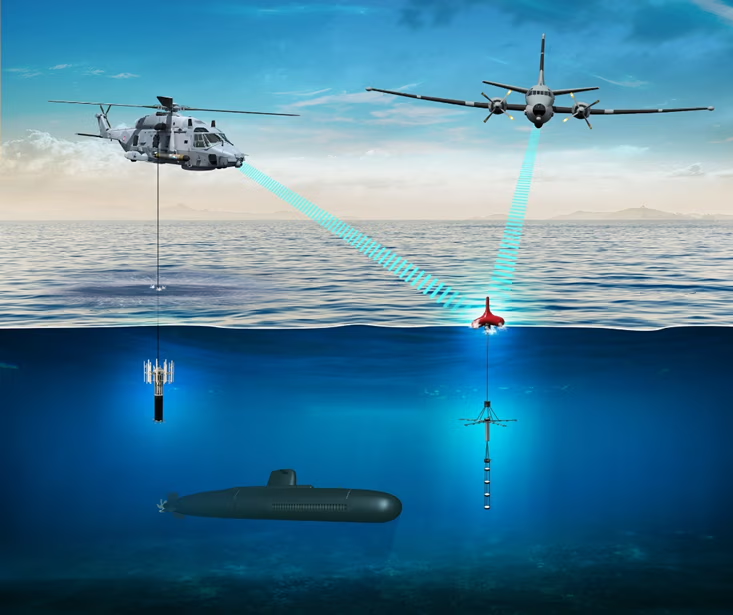
The high-performance communication systems of the SonoFlash enable all surface ships and aircraft, as well as acoustic support centres equipped with a sonobuoy processing system, to receive the data collected by the buoy.
‘Baltic Sentry’ demonstrates NATO MCM core role in countering CUI threats
NATO mine countermeasures (MCM) ships and capabilities make a core contribution to deterring threats to Critical Undersea Infrastructure (CUI) and building wider maritime security, MCM operators participating in NATO’s ‘Baltic Sentry’ activity told Naval News.


As a multi-domain activity, ‘Baltic Sentry’ will deter CUI threats by enhancing surveillance capacity and effect from seabed to space. In this operational context, with the surveillance coverage focused on non-routine shipping activity on the sea’s surface and change detection around CUI on the seabed, the MCM component offers added value.
French Navy Receives First Marine Mine-Hunter Drone
The French Navy has received its first mine warfare surface drone as part of the Future Mine Countermeasures System (SLAMF) program.
The drone includes a towed sonar connected to a portable operations center located in Brest, the country’s second-largest military port.

The Thales towed sonar reportedly features a multi-aspect synthetic aperture to reduce false positives.
As part of the program, France is buying eight extended versions of A18-M Autonomous Underwater Vehicles from Exail, which will be integrated with the SAMDIS 600 sonar from Thales.
“Thales’s new compact SAMDIS sonar is optimised for the detection of all naval mine threats, down to deeper waters,” according to Thales.
“Featuring a unique advanced multi-view capability, it captures images from multiple angles in a single pass.
Integrated with the Mi-MAP sonar data analysis software and Artificial Intelligence-driven algorithms, the SAMDIS 600 achieves exceptionally high detection and classification probabilities, delivering superior performance, which increases operational tempo and efficiency. Read More …
Underwater Mapping in Low-Visibility Lakes
VRT specializes in 3D survey solutions and the use of 3D data through multibeam sonar, laser, and drone inspections. The company conducts high-resolution structural inspections for various applications, including bridges, ports, pipelines, oil terminals, offshore wind farms, and hydro-power plants.


VRT utilizes multibeam sonar for subsurface inspections and laser scanners and photogrammetry for above-surface structures. Operating in harsh GNSS environments, VRT required a reliable solution to ensure accurate positioning and orientation during underwater inspections.
VRT partnered with Trimble Applanix to develop an optimal solution. The company operates two survey vessels equipped with Applanix POS MV to deliver precise position and orientation data. Read More …
Norbit’s new WBMS X Multibeam Sonar
Norbit Subsea introduces the WBMS X, the latest addition to its multibeam sonar family, an ultra-compact system designed with flexibility in mind.
WBMS X can be customized to fit any operational environment. WBMS X standard bundles come with integrated Applanix or SBG GNSS/INS, but you may choose a non-integrated version for applications such as ROV.
Need extra beams for data density? Upgrade to 1024 True Beams. Need even more data density? Add Dual Swath. Need active stabilization for dynamic conditions? Add Pitch and Yaw Stabilization.
Key attributes of the new system include:
- Ultra-compact, high-resolution design
- Curved array receiver for enhanced performance
- Optional tightly integrated GNSS/INS
- Active roll, pitch, and yaw stabilization for high vessel motion environments
- Dual Swath for efficient data collection
- Easy and quick mobilization, regardless of location.
80 years sunk: Another Beaufort bomber traced
Several Bristol Beaufort bomber wrecks of the Royal Australian Air Force downed in World War Two have been located under water in recent years, but the latest has been discovered by chance in the Timor Sea off Darwin, capital of Australia’s Northern Territory.


The twin-engined aircraft A9-497 was known to have ditched during a 1944 mission, but all four of the crew had survived their emergency landing and been rescued the following day, according to the Australian Defence Force (ADF).
The other 2020s discoveries were A9-186, found in 2020 and A9-374 in late 2023, both off Gasmata in Papua New Guinea. Read More …
Royal Navy moves a step closer to deploying autonomous mine-hunting tech on front-line ops
The Royal Navy has taken a step closer to deploying autonomous mine-hunting technology on front-line operations after a successful trial with an autonomous boat in Scotland.

As disclosed, the trial was conducted in the Firth of Clyde in Scotland, and the vessel Apollo, a small uncrewed boat equipped with a mine-hunting kit, was launched from SD Northern River, a Defence Marine Services’ ship.
The goal was to prove that the boat could be used from a commercial vessel, which could be an option in some operational scenarios.
Ultimately, the successful trial in a challenging environment means the Royal Navy will now take full delivery of Apollo once final upgrades are fitted by Thales, having so far been used as a concept demonstrator over the last three years.
Germany deploys ‘Blue Whale’ underwater drone to combat Russia in the Baltic Sea
Autonomous submarine, produced by an Israeli defence firm, will carry out deep sea surveillance to detect and pursue suspicious vessels.
Germany has deployed an underwater stealth drone named “Blue Whale” to patrol the Baltic Sea in its latest attempt to confront Russian and Chinese saboteurs.
As tensions rise over the cutting of undersea cables in the Baltic region, the German navy has test launched the autonomous submarine to carry out deep sea surveillance.


The drone, produced by the Israeli defence firm Elta, can also be used to detect and pursue suspicious vessels, and to spot mines. Read More …
ELAC secures €16.4m for Italian Navy sonar systems
This development is part of a broader agreement involving the delivery of sonar systems for Italy’s new submarine programme.

Initially, in 2021, ELAC SONAR was contracted by Leonardo for more than €49m to supply sonar systems for two U212 Near Future Submarines (NFS).
These are being produced by Fincantieri for the Italian Navy under the management of Organization for Joint Armament Cooperation (OCCAR).
The recent contract modification raises the total agreement value to upwards of €100m, now encompassing sonar systems for four submarines.
The U212 NFS Program involves the development, production, and in-service support of four submarines, alongside advancements in new technologies, a ten-year support plan, and a new Training Centre. Read More …
Exail marks milestone with first sale of DriX O-16 USV
Exail has achieved a significant milestone with the sale of its first DriX O-16, a transoceanic uncrewed surface vessel (USV). This advanced maritime asset, designed for long-range operations, has been acquired by a civil-sector customer in the Indo-Pacific region, reflecting growing confidence in autonomous maritime solutions.

Equipped with cutting-edge sensors, including a full-depth multibeam echosounder, the DriX O-16 delivers high-precision data collection for hydrographic, geophysical, and environmental missions. Its capability to deploy Autonomous Underwater Vehicles (AUVs) and Remotely Operated Vehicles (ROVs) further enhances its versatility, making it a valuable tool for a wide range of operations. Read More …
U.S. Navy joins NATO allies for mine countermeasures exercise in the Black Sea
Under Commander Task Force (CTF) 68, the U.S. Navy’s Explosive Ordnance Disposal Mobile Unit (EODMU) 8 participated in Exercise Poseidon from 31 October to 10 November 2024 in Burgas, Bulgaria. The exercise, led by Bulgaria, Romania, and Türkiye, focused on enhancing mine countermeasures (MCM) capabilities and interoperability among NATO Allies in the Black Sea region.

The exercise marked the third activation of the Black Sea MCM Task Group since its formation. Türkiye held the initial command, with Bulgaria set to take over leadership on 2 January 2025. Task group liaison officers shared insights on regional de-mining efforts and discussed NATO’s role in future operations.
Floating mines remain a significant threat in the Black Sea, with over 120 mines discovered since March 2022, the majority near Ukraine. “Advancing MCM interoperability in this region is crucial at a time of unprecedented risk from floating mines as a result of Russia’s invasion of Ukraine,” Wheat stated.
CTF 68, headquartered in Rota, Spain, oversees U.S. Navy Expeditionary Combat Forces in Europe and Africa. These forces operate in remote and austere environments, bridging the gap between sea and shore. The U.S. Sixth Fleet, based in Naples, Italy, conducts joint and naval operations to promote security and stability in Europe and Africa. Read More ….